The Importance of Self Confidence in Writing


As with most things in life, your level of self confidence will dictate your success in writing. The difficult thing about that is, your mind is something that’s very difficult to change. Tony Robbins-type motivation will only go so far, and even then, only for certain people. For others, re-configuring the way you perceive yourself is an incredibly large hill to climb.

We’ve all seen people struggle with depression and anxiety – if changing their perception was easy, they’d be doing it. I’ve seen and heard of horrific stories of people who just couldn’t change the way they saw things, no matter how much logic was presented to the contrary. It’s heartbreaking. Changing your thinking is hard to do. Some find it impossible.

But as with most things, how confident you are in your work, how much you can make yourself believe in what you’re doing, will play the most significant part in your success. If you don’t believe in yourself, you won’t send your work out, you’ll second guess everything, you’ll think you’re not good enough. If you think that, that will most likely come across in what you do. If you don’t believe in yourself, you’re already making it difficult for anyone else to do so. So what do you do?

If you believe in something, if you feel in your heart that what you are working on is the thing that fulfils and sustain you, the thing that you could do forever and be happy, then you have to work at it. If this is the thing that you can get lost in, that you can be doing for hours on end and not even notice till you look down at the clock, the thing you feel more at home doing than anything else, then you have to go for it. A lot of people never get the chance to find that thing, that perfect merging of elements that can make them feel that this is it for them, this is what makes them happy. Not everyone finds their thing., so if you do find it, you need to explore it, you need to work at it. You need to do it.

It’s not easy. It’s not easy to push yourself, particularly when you don’t have the self confidence to maintain motivation. People are going to tell you that you can’t do it, that you’re not good enough, people are not going to be universally supportive. You can’t expect them to. The supporter you need is you. It involves taking risks, putting yourself on the line, taking the hits. You’re going to feel lost, you’re going to feel down, you’re going to make mistakes and embarrass yourself (oh, the mistakes). But you take it, you learn from it, and you move forward. As soon as you stop taking risks, you stop, period – you have to put yourself on the line, put your heart into what you do. Only you put everything in can you produce something truly great, something resonant. When you can find that plain where you’re sharing emotion, not just words, where you can feel the tension within each breath of each character and every moment in the scene. When it feels as real as anything you’ve lived. Then you know, you know in your heart that this is it for you, this is where you should be. Then you owe it to yourself to push, to keep putting in the work. The more work you do, the better you get.

Self confidence is a key element of success. Believing in yourself will sustain you when nothing else is left. You have to have the strength and courage to follow your heart, and hope that your heart leads you in the right direction. You have to believe that you can, always.

Take risks, send things out, take in the negative. Make it all part of what you do.

You have to believe, you have to work, and you have to make it happen.

You. No one else.


Five Notes to Help Improve the Quality of Your Blog Writing

Reading through a heap of blogs each morning, one thing that stands out is the quality of the writing. Don’t get me wrong, many of them are excellent, but there are some that are well-researched and written by a professional who clearly knows his/her field, yet their writing is flat. It’s like reading an academic paper – very informative and valuable, but a slog, and most of the time I just move on, there’s other content to get through. Some of these posts would be significantly improved if the author noted a few simple changes, language economics, if you will, that can greatly improve the fluidity of your content.

Next time you write a blog post, try applying some of these to your work, test whether they might improve the flow of your piece. These are minor, simple changes that can make a significant difference to your content, and, by extension, it’s reach.

1. Remove all mentions of the word ‘just’. There are, of course, some places where ‘just’ is still necessary, but more often than not, ‘just’ just holds up the sentence flow. When writing a blog post you want to be authoritative, state what you believe. ‘It just won’t work’. ‘It just doesn’t add up’. Anytime you write the word ‘just’, go back and review the sentence and see if it might read better, stronger, without it. If you can say the same thing in fewer words, you should, always. And quite often ‘just’ ends up being just unnecessary.

2. Remove weakening ‘I’ statements. ‘I think…’, ‘I doubt…’ You’re the author of the piece, anything you say is your opinion. There’s really no need to state this again in your article.

I think a better way to do things is…

You have to stand by your words and state them as fact. If you don’t believe they are fact, don’t say them, but if you’ve done your research and you’re making a point, that statement will be more powerful if you take out the self attribution.

A better way to do things is…

Much stronger, that’s a voice readers will pay attention to. ‘I’ statements can be very strong in some contexts, so you shouldn’t remove them wholesale, but it is worth reviewing each to test if the sentence reads stronger without it.

3. Use definitive language. This somewhat reinforces the first two points, but it’s crucial that your statements be definitive when necessary. In my previous job, I remember seeing an e-mail where a salesperson had asked someone from my team whether a job could be done by a certain time. The response the salesperson got was ‘Should be fine.’ ‘Should be fine’ is not good enough – the sales team are dealing with clients, they need to know whether this will or won’t happen, and they shouldn’t have to waste time sending a clarifying e-mail because of this person’s weak response. ‘I think that’s right’ bears significantly different meaning to ‘That’s right’ – the second one gives you the answer, that’s how it is. That person knows what they’re talking about and you can have faith in what they say (so long as they are, in fact, right). You need to be definitive in your language and give clear, authoritative answers. If you’re reviewing your work and you find uncertain statements, clarify them or cut them out.

4. Be mindful of the over-use of adverbs like quickly, rapidly, slowly, etc. Sometimes these are already implied by the surrounding context and only serve to slow up your sentences. ‘He ran quickly’ – well, yeah, he ran, I’d assume he’d do so ‘quickly’. ‘It fell rapidly’. Yeah, gravity’ll do that. Sometimes that secondary adverb is not adding anything to the sentence and can be taken out to better suit the flow of the piece.

5. Try to frame things in the form of questions. This is one that will become more relevant in future, but worth considering now to try and get your head around how it’s going to work. In their most recent algorithm changes, Google made note of the move towards ‘conversational search’ – people speaking their search terms instead of typing them, then using follow-on questions based on the preceding search. When people do this, they won’t phrase things as formally as they would when writing. The functionality of speech based search relies on the text being conversational, how you would speak normally. You should be able to say ‘Where are the best beaches near me?’ and Google should come back with the relevant listings. In future, you’re going to get better search results for your content if you ensure questions like this are built into your blog posts. If you can match likely user questions, you improve your chances of showing up as a relevant item. It can be difficult to do, putting questions in doesn’t always gel with story flow (and the quality of the content should always come first), but keep it in mind. Can you build relevant questions into the piece that will work for both the flow of the content and for future search requirements?

And one other last note – where possible, always let your posts sit for at least twenty-four hours before publishing. I can’t tell you how many times I’ve written something that I thought was brilliant, only to re-read it the next day and be totally deflated. You’ll always find errors and things you want to change if you give yourself some distance from it and clear your head.

These rules are not prescriptive, there are, of course, places where they won’t apply, but it’s worth keeping them in mind as you go, testing your sentence structures and statements and looking for ways to make your work stronger, more bold. Using definitive language will help establish your authority on a topic and make it a more compelling reader experience, improving your content quality and performance overall.

Now read this alternate last sentence and see if you agree:

These rules are not prescriptive, there are, of course, places where they don’t apply, but I think it’s worth keeping them in mind as you go, testing your sentence structures and statements and looking for ways to make your work stronger, more bold. I believe using definitive language can help establish your authority on a topic and make it a more compelling reader experience, improving your content quality and performance overall.

Makes a difference, right?

He Who Must Not Be Named


One time, Christos Tsiolkas told me how he dealt with blocks, passages he’s having trouble with. He walks. He told me how he used to go out and smoke cigarette after cigarette till the sentences became clear through the smoke haze, but then he quit smoking. So now he walks. He walks all over the suburbs where he lives, just taking everything in, observing, thinking things through.

Everyone has their own way of dealing with writer’s block, or not even ‘blocks’ so much (because ‘writer’s block’ is like ‘Voldemort’ to writers – we just don’t mention it), but those points where the sentences don’t flow. When everything’s working, the words flow into each other like drops of water, washing through your head, and it’s beautiful, but with everything I work on there is at least one point where I need to re-think it. Usually I write something, then I leave it for 24 hours (if not more), then I’ll go over it with fresh eyes, see it much more like a reader would come to it, then I’ll move things around, sort out what’s not working, tighten the sentences. And in that stage there’s always a few things that I need to go over – words that don’t feel right in the sentence flow, ideas that aren’t incorporated properly. Those bits that you know don’t quite work.

When I need to think, I go out and shoot baskets in my backyard. I can sit out there for an hour, not really thinking about what I’m doing mechanically, but going over sentences, rolling them over in my mind, even speaking them out loud (not too loud), working out what fits best. I do the dishes, the washing, mundane tasks that require no real engagement from my brain, things that will just occupy me and allow me space to clarify my thoughts and get the ideas to magnetise.

The worst is when I can’t stop thinking about it. If you don’t already have one, you need a notepad or some way to note things down at all times because it’s a killer if you forget that perfect sentence. I’ve had so many great sentences and paragraphs come together in my head just before I’ve fallen asleep (interestingly, studies have shown that you’re more creative in those moments before you fall asleep, where you’re slipping between reality and dream) then I’ve totally forgotten them when I’ve woken up in the morning. Even ideas that I’ve thought were so perfect, fit so well into the piece that there’s no way I could forget them – gone. You need to keep a notepad, or your phone, nearby so you can write a note. I’ve got heaps of barely legible scribbles, hand written in darkness. They’re normally enough to recall the idea, at the least.

It’s really important that writers be out in the world. You can’t create without ideas and inspiration to mould into stories, and the best place to get them is outside of your study. Reading, too, is crucial, but you need to get out and see things, feel things. So if you’re ever feeling blocked, ever re-reading and getting to that point where it feels like it’s all cardboard and the words barely seem to link up at all, just turn off your monitor. Get out of the house. Even if it’s the middle of the night. You need to get out, get away for a moment, think it through from a distance. And you need to experience life, feel it flowing against your skin.

Her

Her

Spike Jonze sets himself a tough task in his first feature film screenplay. He needs to make the audience believe that a man can fall in love with a voice. In ‘Her’, he succeeds, but goes even further than that. This is the best film I’ve seen in dealing with the heartache of breaking up and the wandering of loneliness. The attention to detail is amazing – the film is set in a not-to-distant future, but that’s never the focus, it’s the backdrop for the characters’ every day life. There is no time wasted on exposition, explaining the future, it just is. Joaquin Phoenix is excellent and is really coming into his own as an actor since that weird mockumentary film that never really worked. Amy Adams, too, once again proves herself to be a major talent worthy of significant roles.

I noted after I’d seen Her that ‘if you’ve never been in love and had your heart broken, this film might not be for you. For everyone else – must see’. I felt every emotion that main character Theodore Twombly felt, it had me from the start. And the subtle way Jonze plays the emotional notes, without ever overplaying or getting caught up in the scenery is pure genius. Jonze has a great sense of the romantic and can find simple, beautiful moments in the mundane. Just like real life, if you have a moment to take it in. His preceding short film ‘I’m Here‘ had similar moments that captured that perfect feeling of being so lost in love that you’d give anything for this person (literally, in that film). There are moments in Her that I found extremely moving, moments that made me want to be more open to the world. That’s the most any art can do, move you to open your mind and want to experience more of life.

I can’t recommend Her enough, an amazing film, well written, well acted, well executed. You should go see it, as soon as you can.


Are You a Writer?


Why are we afraid to call ourselves writers? This often comes up if you’re in a writing course or at a writing event, if you were to ask the room ‘who here would identify themselves as a writer?’ you’ll see a lot of hesitancy. People aren’t sure they have the right to take that label. It’s as if saying you’re a writer is aggrandising yourself, as if, by owning it, you’re immediately putting yourself up alongside Hemmingway and Tolstoy and writers you’ve idolised your whole life. ‘What right do you have to such a title? Because you ‘try’ to write?’

Why are we afraid to say ‘I’m a writer’?

Here’s a couple of things to consider:

There are billions of great stories in the world, more than could ever be told in the history of time. There are not billions of great storytellers. That’s the way it is, not everyone’s a great writer destined to produce works of literary brilliance. Almost everyone has at least one great story to tell, but for the majority of us, that story will never be heard or written. For every great film or book you read, there are probably thousands more you’ll never experience, because they simply don’t exist.

There are billions of writing tips and strategies and people who’ll tell you what, in their experience, is the best way to go about creating stories. But they’re not all right. There is no ‘right’ way to go about producing literature. There are certain things that you should do – like writing everyday, reading everything you can, learning and taking on feedback – but no one can say ‘you do these things and you’ll become a published author’. Because there is no one way to go about it. If there were, everyone would do it. It always reminds me of Mark Haddon’s ‘The Curious Incident of the Dog in the Night Time’, a novel which includes pictures as part of the text. Next time you go to your writing class or group, you put your hand up and ask whether you should put images in as part of the text in your novel. No doubt you’ll hear scoffs and someone will tell you ‘no, absolutely not’, which makes sense, you would advise against it. But that book sold more than 10 million copies worldwide. There are no definitive rules on how to write great literature. You can make anything work, within reason.

The thing is, if people are afraid to own the label ‘writer’, people are at least somewhat afraid to write. At the least, people are afraid to show their work to people, because ‘it’s just something silly I’ve been working on, nothing really, forget about it’. If people are afraid to be writers, we’re missing out on great stories. You need to do it, you need to put your words down, do what you feel. You need to get it out there – yeah, you might get criticised, but that’s part of the process. Every author gets rejected and trashed and hurt. You take on what you can while staying true to yourself, want to achieve. What you think makes your work great. You only have to answer to yourself, know that you’re doing the best you can to achieve what you want.

We need people to own that label, to stand up and say ‘I’m a writer’, because we don’t want to miss out on great stories. It’s quite possible that the greatest novels of all time have never been put to paper, and that’s a massive shame. And maybe your stuff isn’t going to change the literary landscape, sell millions of copies, affect the lives of people in generations to come. But it might. Why not you? Kurt Vonnegut sold cars before he became ‘Kurt Vonnegut’. JK Rowling was a secretary. Great writers are people, just like you, doing the same things you are. Why can’t you succeed like them?

And that’s the one thing to keep in mind.

There are billions of people in the world. But there is only one you. No one else can write what’s in your head. And if you write, you are a writer. So be it.

I am a writer.

Maybe one day, you’ll read my stuff.


How to be a Better Writer

Sometimes people will ask how they can get better at writing. What do you do? How do you come up with ideas? How do you start on something? The answer to all these questions is: you write. I have been writing for as long as I can remember – I was writing hand written, 20 page horror stories in grade four. I was writing a novel when I was 15 (by page 54 I was at the end, so not really long enough). I have always been writing.

I write 1000 words, every day. Not all of it is good, quite a lot of it will never see the outside of my hard drive, but I do write, every day. It’s like when you get to that tipping point when you’re doing a regular exercise routine, where you feel guilty if you take a day off. That’s how I feel about writing, I can’t stand not doing it.

It’s one of the hard things to explain to people – the ability to write well is not something you can pick up and start straight away. Everyone can write, but not everyone can communicate through words, and even fewer can convey emotion or feeling through language. To be able to find the emotional centre of what you’re writing about and re-create those feelings in the body of the reader is incredibly difficult. Only the best can do it consistently, and that’s after years and years of work. It’s hard to explain that I can write well, because I’ve spent years doing it. And even then, I’m still working everyday to get anywhere close to that next level.

How you get better at writing is you write. And you research. You read everything you need to form an entire city of ideas inside your head, till the story flows through your fingers and daydreams come to you in complete sentences. I research everything, from the specific sound of a punch, to the smell of the inside of a jail cell. I recently wrote a piece where I light-heartedly used Shakespearean language – no one would have noticed, but I researched the differences between ‘thy’, ‘thee’ and ‘thine’ for authenticity’s sake. I love the research, I love getting to know the world I’m working in. And I love to read. And I guess that’s the key point of the whole thing.

How you get better at writing is you write, you research. And you love it. You don’t love it and your readers will know. You’re not passionate about it, your writing will be flat. You might write something quite good, but the key to great writing is that you have to love it. You have to love sentences and paragraphs and the feeling that can be captured in the smallest details. How one line can break your heart or make your day. You have to love the content, find the heart of it and bring it out. If you’re not real, if you’re not able to put humanity into what you do, you’re never going to reach that next level. It’s hard to do, and it’s difficult to open yourself up to readers and put yourself on the line. But that’s what you have to do.

How you get better at writing is you write, you research and you love it. And you make it your own.

And the key to getting better is you have to do it. Every day.

Undeniable

Artifact

I was watching the 30 Seconds to Mars documentary ‘Artifact’ recently when lead singer Jared Leto said something that really stuck with me. The documentary, for those who haven’t seen it, is about how 30 Seconds to Mars had been signed to some ridiculous contract whereby despite their global success, the band members were not actually making any money at all. The band then sought to change the terms of their contract and were subsequently sued by the label for $30 million. The film looks at the challenges of the modern music industry and the issues faced by artists in trying to make money from their work, and it’s a really well made film. Their music doesn’t do it for me (though I’m not the target demographic) but the film was compelling and definitely made me empathise with the situation.

So there’s one scene where Jared Leto is talking to one of the other band members – they’re lamenting their position and debating whether they even go on as a band. They’re facing building legal costs in a battle they aren’t likely to win, things are not looking great. Then Leto says this:

‘Don’t you wanna’ make something that lives forever? That’s phenomenal. That’s great. That’s undeniable.’

For some time in writing my second novel I’ve been trying to think of a way to describe what’s been the problem with it. I’ve written several drafts, and at least one of them was okay. But it wasn’t brilliant. I’ve been working and re-working and trying to get it on track – my view is that it’s alright, but it’s just slightly off target, like a train running with its wheels off the tracks. If it were on the tracks, it would be smooth, it would flow and it would be not good, not great, but perfect. It would be undeniable. When Jared Leto said this I was like ‘Yes, that’s it, that’s what I’ve been aiming for’.

I imagine this is both the strength and weakness of writers – you want something to be great, so you do all you can and the more work you do, the better it gets, but as your own worst critic, you’re also thinking ‘is it that good? Could it be better?’ I don’t ever want to read great literature and think to myself ‘I’d be happy if I could write something close to this’, because I wouldn’t. My work should hold up when compared to other great work, that’s the way I view it. And of course, brilliance is in the eye of the beholder, one man’s genius is another man’s trash. But I know my ‘brilliant’, and I know I haven’t hit it yet with that book. I remain ever confident that I will. .

Maybe it won’t be a literary classic known the world over and held up as an example for decades to come, but as long as it is, in my eyes, something that I can honestly say ‘that is the absolute best book it could be’, that is what I aim to achieve.

The aim is to create work that is undeniable.

Jared Leto gave me to words to express that desire. Who’d have thought the drug addict from ‘Requiem for a Dream’ would serve as a source of wisdom?


Social Media Today

I’ve had an overwhelming response to some recent articles on Social Media Today looking at SEO and social media best practice and the future of Facebook. There’s been quite a few more visitors to this page because of it (alot more than I’d expected), and I’ve generally kept this page confined to my fiction writing work, but I’m looking to add more social media insights here as soon as possible.

Thanks for reading, will have more info on the ‘Social Media Content and Strategy’ page soon.

That Time I Tried to win a Logie Award

Yes, one time I tried to win a Logie Award. I was not on TV at the time, I had no right or reason to win a Logie Award. But I did it anyway. It went like this.

One day I wrote a fictional article about my attempts to win a Logie Award. The article was about Day One of a campaign I was going to run:

‘My name is Andrew Hutchinson. I want to win a Logie Award. I have no television experience or actual acting ability. I have however, discovered a loop hole in the Logie Awards process which stipulates that they are based on public opinion, not ability (like we didn’t know that already), so my plan is to campaign for a Logie election-style, get the people behind me and triumph over the well and not so well known names of the Australian small screen. “But Andrew”, I hear you say, “why would people vote for you? How will you garner these pledges, get people to join your cause? How do you have the time to waste on this?”

Everyone has a dream, and I believe the people of Australia want a real person to win, a genuine no-namer. An underdog. And I plan to do ANYTHING for the votes.

You can read the whole article here.

I sent this article to a website I’d come across called Work in Progress, which was run by two creative types looking to publish new work. This fitted into what they were after – a work in progress, so I sent it through. The detail I didn’t clarify, I didn’t note this was fiction. The guys loved it, but they were under the impression that it was real and when they asked me if this really happened, what could I say? ‘Of course it did’.

This lead to more articles (Day Two, Day Three), and, in a pretty big surprise, media coverage – below from The Sydney Morning Herald, including TV Week’s response, published the next day and, bottom right, a piece from MX:

articlequest

So it got pretty big, pretty quick and I started to get nervous, because none of this stuff was actually happening. The website set up a contact form where people could put down a challenge for me to do to win their Logie votes and we had a heap of people sign up. I was interviewed on several radio shows, I got onto the Logies ‘Black List’ (after the newspaper article in the SMH, TV Week contacted them (in image above) and told them I didn’t have an ice cube’s chance in hell of winning and were, apparently, pretty annoyed that I was making a mockery of their Awards – see ‘Conversations with TV Week’), things were all moving quick. Then the TV guys started calling.

We got a call from a TV producer who wanted to make a comedy show. He said he had a few known comedians keen and wanted to add the Logie Quest, and other comedy work of mine, to the show.  This was pretty amazing, and of course, I was down for anything. Then ABC TV called, leading to the above video. The main issue with this one was now I would actually have to do all these things, for real. I was extremely nervious, a camera crew followed me around Federation Square for hours to get this footage, but it turned out okay. They then took me to the Logie Awards (‘How I Walked the Red Carpet at the TV Week Logie Awards’) – which was hilarious. Because I was on the ‘Black List’, they couldn’t list me as the talent, so I had to be listed as part of the crew, and one of the ABC TV chiefs at the time really didn’t want to upset TV Week, so he was totally against them taking me, so we were on some covert mission, very funny. Very nerve wracking also, but the people I worked with were excellent, Shelley Horton and Edwina  Throsby were both great.

After the TV show, I kept going back and forth with the producer about the comedy show for a while, then he moved to the US to work on a kids show and by that time it was a few months later and the initial buzz was gone. I also wanted to write serious fiction and was concerned that if I kept doing this it might hurt my reputation and work against that, so I just stopped. The website closed down about a year later, I never heard anything else from the producer. Then it was a just a cool story about that time I went to the Logie Awards and got on TV for being an idiot. And this picture of me standing outside Flinder’s Street Station in my underpants.

flinderssmall


Kinglake

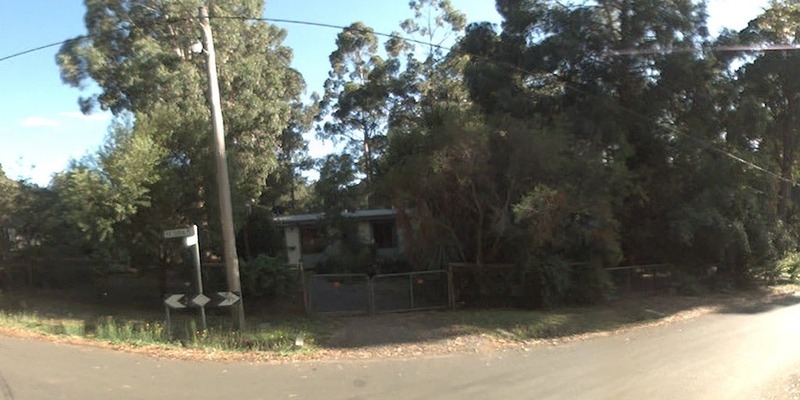
Victoria Road

I grew up in a small town called Kinglake where there is no lake. We would often have people drive into town towing boats and they’d stop and ask us where the lake was at. We’d be there, sitting on the wooden bench outside the milk bar, our BMX’s lying down in the dirt and we’d tell them there wasn’t one. ‘Nah, come on mate, don’t be a smart ass, where is it?’ When I tell this story, people think I’m making it up, that no one could be that stupid to tow a boat all the way up to Kinglake (it was a small town on top of a hill, about 45 minutes from any suburban area) looking for a lake that didn’t exist. I don’t know what to say, it happened, regularly. Like, at least once a month. Maybe people confused it for Lake King, and this was in the days before GPS, I don’t know. But it happened, dudes would ask us where the lake was at. Then we’d give them directions to no where – ‘…left at the roundabout, go as far as you can down that road, then turn right and follow that till the bitumen runs out…’ Who knows where they ended up.

I always had to explain where Kinglake was to people. Even people who lived half an hour a way seemed unaware of it’s existence when I told them where I was from. It was a process of elimination from that point – ‘do you know where St Andrews is? Do you know where Whittlesea is? Greensborough?’ moving closer and closer to the city with each example till they had some vague idea of which Kinglake was in. This got worse as I got older and started working in the city. I was working nights for a while and people were amazed, startled even, that I would drive an hour to get to work and back. An hour was normal for me so I never really thought much of it, though it did get long on those drives home at 8am after work. I did fall asleep at the wheel a few times, though not enough to be seriously dangerous. But now, everyone knows Kinglake. Ever since 2009, when half the town burned down in a bushfire. It was a strange dynamic, going from no one knowing anything about the small town I came from to seeing the Prime Minister shaking hands with kids outside the local fire shed. It became something sympathetic, to be from Kinglake, then respected, like you’d been through a traumatic event, even though I hadn’t lived there for years before the 2009 fires.

I was in Canberra when the bushfires struck. I moved out in 2003, my family moved out of Kinglake in 2008. My brother stayed and was one of the senior officers in the local fire brigade. I have several other relatives who also still live there. And it was weird seeing it all unfold from another state. The town I grew up in was all over the TV – I was watching the scenes on Sky News, the blackened streets and horror stories. It was terrible, I wrote about it here. I rushed back down from Canberra and got into town (they had blockades up and were only letting locals in) and caught up with my brother but by that stage there was not much anyone could do. Everyone was just walking around in a daze, weaving between Army and CFA and police officers with news crews roving round between. It was strange, the whole thing felt surreal.

One of the strangest things for me was that after that Kinglake felt a lot less like my home. I’d grown there, running round the paddocks, swimming in dams, playing in fallen gum trees. It was me, and I felt an ownership of the place. I felt like it was mine, in some part. But after the bushfires it all changed. New buildings came in, the landscape changed. Now when I drive around town, it doesn’t feel as familiar anymore. The family house my Dad had built (in the photo above) burned down, my brother’s house burned down (he built a new, better one on the same block and still lives there), everything became newer – better, I guess, for those living there, but one of the side effects of that day for me was losing my home town. I have so many memories of Kinglake and what it was, and I remember how it contributed to me as a writer, to the stories I want to write, so it was sad to feel the connection frayed. I still love Kinglake, I still like going up there, but it’s not the same as it was. It belongs to the people there now, like I can’t claim a part of it anymore, which is fine, and it makes sense, I moved away from there a decade ago, but it always left me a bit sad. That it, through necessity, had to change. I miss the huge trees in our old backyard on Victoria Road, climbing up them to the point where they thinned out and swayed in the wind. I miss playing basketball on my dirt half-court. Of course, people lost way more than a few memories or connection with their home town, it’s trivial of me to whinge about such minor things in the larger scheme. But every now and then I think about my home town and remember that I can’t really ever go back. It’s everything I was and everything I would be.

I remember writing on my Dad’s computer into the night while the rest of my family slept, losing track of time as I got absorbed into whatever story I was putting together. I remember looking out the curtains in the night, the dirt road trailing off beneath the streetlights. No cars, no traffic. Just silence.