Tagged: inspiration
Celebrity Culture

Why do we perpetuate the notion that celebrities are better than us? Why do we create this plane of existence with ‘us’ down here and ‘them’ up there? Movies and magazines have created this culture where famous people take on superhero-like status – where we never see their mild-mannered, alter egos. In the information age, where everyone has an opportunity to be someone, it’s becoming accepted, even desired, to see all people as real people – flawed, complex, susceptible. We want to be part of communities more than we want to follow leaders. Everyone is someone, everyone is good at something. And equally, everyone has flaws. That’s what makes us human.
Maybe we need to stop putting celebrities on a pedestal, where what they have achieved is something we could never dream of. Maybe we need to start realising we can. We shouldn’t dismiss our own dreams and think we’re not as good as ‘them’. Of course we are. Of course we can be. Celebrities are the same as anyone else, be they actors, sports stars, businessmen, writers. They all started somewhere, just like you. They’re no better or worse than you or I – we can all achieve great things if we’re able to commit the time and effort to something we passionately care about. We, as non-celebrities, need to realise that we’re just as good as anyone else.
The social era is changing celebrity culture in this vein. Great actors have become just as adept at mocking themselves on Funny or Die. Ellen’s selfie at the Oscars is a shining example of celebrities humanising themselves – they took a photo, just like you do with your friends. Stars like Lily Allen and Pink have developed personas around being down to earth – Jennifer Lawrence has achieved this better than anyone, celebrating her flaws and slip-ups as much as her achievements. And what’s more, famous people are starting to beat TMZ at their own game by doing this – if Victoria Beckham slipped over, those photos would be worth hundreds of thousands of dollars, but Jennifer Lawrence falls over and it’s a less of a story. Because she embraces it, she’s human. She’s someone everyone can relate to. In the age of social media, where we’re getting more insight into the real lives of the rich and famous, celebrity culture is changing. Being more relatable, more real, helps them build brand and community. And it shows us that they‘re just people. They eat, they sleep, they read the newspaper. No different to me or you.
The point of this is that everyone is someone. No one is better than anyone else. With dedication, passion and practise, you can achieve your dreams – never has this been more true than right now. The avenues for success are clearer, the opportunities to learn and gain insights more present. No one is better to realise your vision than you.
So go do it.
Make your film.
Paint your picture.
Write your book.
Don’t tell yourself that you’re not on the same level as your idols – you can be. But you have to start somewhere. Just like they did.
We’re all humans. We’re all capable of great things.
And it starts with a blank page.
Writing at Night
Mostly I write best at night, when the house is silent. I’ve always done this – for a while, my girlfriend (now wife) worked nights, and it gave me the perfect opportunity to stay up in the study, all the lights switched off, just the monitor screen to light the way.
When I needed a break, I’d take walks. I liked doing this in summer, when people’s windows were all open to the night and you could catch little pieces of intimate conversations drifting on the wind. You’d hear TV voices whispering, the sound of a baby crying through the streets. I liked to just walk along beneath the street lights and feel the rush of the breeze.
There’s something about the night. The stillness, maybe, the isolation from the waking world. Maybe an escape, of sorts, being free to wander around the world without complication. It was like whole sections of the city were abandoned, waiting for you to find them. The streetlights curving round corners in continuous streams.
I’d always found it easier to block everything out at night, to connect with the words on deeper level than just grammar or logic. When you can see that next level, what’s happening between the words, and you can start to understand the depth of each sentence, the perfect flow and placement of each word. How the detail connect in the readers mind. It’s that hum you can get into, that place where the neurons of the story start to connect and fire, and the piece just comes to life. I’ve got better at being able to tune into it anytime now – mostly through writing everyday – but there’s something about the night that’s always alluring, that appeals to those of us engaged in more solitary pursuits. Some find it in music, some in meditation – I guess it’s in a similar vein to those things. It’s that state you can withdraw into and encase yourself inside an idea – a story, an artwork. Where everything else gets quiet and you can see the full picture developing with each sentence, till it’s clear as any memory. You can smell it, feel it. And then the writing just flows out.
Night time has always provided me the most freedom to find it.
What about you, when do you find is the best time to write?
How Important is a Great Opening to a Novel?
I love opening a new novel. I love going through the bookshop – the smell of books – and I love finding that one that is going to take me away, curl round my brain like a cat and warm me into this whole other world. And one of the great things about new books, one of the reasons that I’ll take it to the counter, is the opening line or paragraph. I love a good cover, but more importantly, I love good writing, and that first section, for me, really sets the tone. A good opening will drop you right into the story and make it hard for you to leave. It will capture your imagination and almost force you to read on. It’s also a great learning tool for writers, working out how the great books begin, understanding how that can be applied to your story. There’s so much to learn from those first lines, it’s worth reading as many as you can to ensure you are using the best starting point for your story.
As an example, here are some of my favourite novel openings:
‘Tyler gets me a job as a waiter, after that Tyler’s pushing a gun in my mouth and saying, the first step to eternal life is you have to die. For a long time though, Tyler and I were best friends. People are always asking, did I know about Tyler Durden.
The barrel of the gun pressed against the back of my throat, Tyler says “We really won’t die.”
With my tongue I can feel the silencer holes we drilled into the barrel of the gun. Most of the noise a gunshot makes is expanding gases, and there’s the tiny sonic boom a bullet makes because it travels so fast. To make a silencer, you just drill holes in the barrel of the gun, a lot of holes. This lets the gas escape and slows the bullet to below the speed of sound.
You drill the holes wrong and the gun will blow off your hand.’
– Fight Club by Chuck Palahniuk
It’s so fast-paced and it perfectly sets the tone for the rest of the novel, which all moves at breakneck speed. Palahniuk drops you right into the chaos and lets you work it out from there – a really good opening.
‘Until the telephone rang, the only sound in my office was the scratching of my pen as I made margins notes, corrections and amendments.
I pressed the speaker button.
‘Carl speaking’
‘Carl’
‘Catherine! I meant to send you home hours ago…’
She interrupted me: ‘I am home. I’ve been home, been out to see a film, eaten a pizza, paid the baby-sitter and watched the end of Newsnight.
The clock on my desk read 11:42. I turned in my chair. The window of my office was floor to ceiling. Through the window, I could see the city glitter and the night sky. No stars – a low cloud layer made the sky glow almost red.
Catherine continued: ‘I’m calling because the last train leaves in twenty-five minutes’.
The Coma by Alex Garland
This also sets the scene for the whole novel, the pace, the steady flow of the narrative. But again, Garland drops you right into the story, not pages of him living his normal life, but right here, right in the midst of where the action is about to take place. It’s an important note – you want to start your story at a compelling point, a point where people need to turn the page and find out what happens next. Granted, this scene is still somewhat commonplace, but we know the narrator is now out in the middle of the night and will struggle to make the train home – and we, as the audience, know what a frightening train journey that midnight trip can be.
‘About the accident itself I can say very little. Almost nothing. It involved something falling from the sky. Technology. Parts, bits. That’s it, really: all I can divulge. Not much, I know.
It’s not that I’m being shy. It’s just that – well, for one, I don’t even remember the event. It’s a blank: a white slate, a black hole. I have vague images, half-impressions: of being, or having been – or, more precisely, being about to be – hit; blue light; railings; lights of other colours; being held above some kind of tray or bed. But who’s to say that these are genuine memories? Who’s to say my traumatized mind didn’t just make them up, or pull them out from somewhere else, some other slot, and stick them there to plug the gap – the crater – that the accident had blown? Minds are versatile and wily things. Real chancers.’
Remainder by Tom McCarthy
Remainder is a real mind twister of a novel, looking at psychology and the depths of the human condition. This opening sets the scene really well – you get, from this, that the narrator was involved in accident in which something fell from the sky and damaged his brain. The novel is about how he doesn’t know what’s real anymore, what are memories and what’s imagined, and this opening clearly aligns to that theme. I like this because McCarthy has explained a lot very quickly, very cleverly, almost without you knowing it. But again, it drops you into the story, rather than starting with long-winded context or backstory.
‘He’d cut His throat with the knife. He’d near chopped off His hand with the meat cleaver. He couldn’t object, so I lit a Silk Cut. A sort of wave of something was going across me. There was fright, but I’d daydreamed how I’d be.
He was bare and dead face-down on the scullery lino with blood round. The Christmas tree lights were on then off. You could change the speed those ones flashed at. Over and over you saw Him stretched out then the pitch dark with his computer screen still on.’
Morvern Callar by Alan Warner
The detached, confused emotion of the narrator streams all the way through Morvern Callar, and again, the author has dropped us right into the story, leaving Morvern at home with her deceased boyfriend – what will she do next? I also love the detail in this scene, the image of the Christmas lights flicking on and off gives it a real sense, an authenticity and feeling, through such a small but important detail.
Not every novel starts out by dropping you into the action like this, but the vast majority do. It’s a powerful tool, and an important lesson for writers to learn, that the story starts where the action does. Your readers will work out the details and you can communicate back story through their interactions within the narrative – in that sense, it’s like someone telling you a story in real life. People generally tell you the highlight, the most shocking element up front, then explain the detail of how it got to that point. That peak moment is the hook that will gets the audience in, and it’s important to use that to compel your readers to turn the page.
One other thing I’ve heard when discussing good opening lines is ‘yeah, but those are great novels’ – as if their own work could not, and should not, be compared to works of this calibre. But why shouldn’t it? Why wouldn’t you hold your own work up for comparison against the greats? If you want your book to stand side by side with them in a book store, you have to aspire to being compared with them on quality, on compulsion. It’s important you do compare your work to established authors, you should be as good as them. Every author of every book was once a nobody. They started with nothing behind them. A blank page. The only difference now is that they made it. So your work should be compared to them. Because that’s the way that you can make it too.
Write What You Know
In one of the writer’s groups I’m part of, they were recently having a debate about the old writing adage ‘write what you know’. There was a surprising amount of differing opinions on this, people taking it literally, people suggesting a more abstract meaning. I’ve never really been that tied up about writing what I know in a specific literal sense, but I also don’t think that’s the intended meaning of that statement. Write what you know does not mean, literally, write what you know.
If the intention was to take this in its literal sense, how many great science fiction and fantasy stories would never have taken form? Some things, you can’t know, but again, that’s not the intended meaning of that sentiment. The intention is to highlight the importance of honesty in your work, of writing from the heart – and not necessarily your heart, but the heart of the characters in the story you’ve created. When writing, you are beholden to the honesty of the story you’re presenting. If a character does something, you have to know why he or she did it. It can’t be that you need a plot device, you can’t have things happening at random, that’s simply not real. That is the essence of ‘write what you know’, that you write with honesty and remain true to the characters as you know them. As they would be in the reality of the world you’ve created.
For instance, you need to know all the traits and history of your characters. You need to know that your main character was raised mostly by his mother, that his father never knew how to deal with him, that he took longer than normal to speak clearly because he didn’t feel confident around the other kids. That his first love never even looked at him, that he was intimidated by male teachers because of his absent father, that he was easily lured into trouble by peer pressure. That he didn’t want to go into the abandoned house, but the kids made him do it, then rode off on him, and left him scared and distressed when the police came.
This sort of summary, a basic rundown of the general moments in a character’s life, these details might never come up in your story, but they are the elements that will lead you to knowing and understanding how he will react in all situations. Now you know, no matter where you take the story, that the character is intimidated by older men. Maybe that’s a key plot element, maybe not. The point is, this is something you know, you’ve come to know this through your character development.
Normally I work in the opposite direction – I think of the major plot points then work backwards through the character’s history to understand what would have made him take the actions he/she did in order drive the story – but by doing that, as the story develops, the characters start to take on a life of their own, as you know all the things that have happened to them. You know how they’d react if this or that happened. Because you know them. They’re real, not plot devices. Ideally, you’d have this depth of knowledge with every significant character in your story.
The important thing to note about ‘write what you know’ is it’s not about what you know. It’s about what you need to know. You need to research, plot and learn your characters so you can know the information you need to communicate your story in an authentic and believable way. You need to be honest to the story, honest to each scene and each interaction – because people can sense fake a mile off. If your characters are inconsistent, that will jar in the reader’s mind. You need to be real, to see the scene in its reality, then present it in its truest form.
You can’t know what the scene would be like in the wake of a nuclear bomb blast. But you can research and know the detail of nuclear winter. You know what winter is like, you know what smoke and haze can be like. Based on what you’ve read and learned – on what you know – you can imagine the reality. Now feel it. Now write it down. That’s the essence of ‘write what you know’.
It should probably be slightly extended:
‘Write what you know, learn what you don’t’
And there’s never any limit on what you can learn.
Reflections on a Societal Default to the Negative
Why you? What makes you’re any different? Who do you think you are? Why would they listen to you? How are you gonna’ do that? What do you know about it? You’ll never do it. You’ll never make it. You don’t know what you’re getting yourself into. Over your head. Out of your mind. Out of your depth. Do you know how many people are trying to do that? No hope. Not a hope in hell. Hopeless. Hope you’ve got a back-up plan. Hope’s only gonna’ take you so far. You can’t live on hope, you know? Fat chance. Snowball’s chance. Zero chance. Not a chance of that happening. Chances are slim. What are the chances? Honestly though, you don’t have a chance. You can’t. You won’t. Why bother? Why even consider it? Impossible. Unlikely. Doubtful. You’re better off to just forgetting about it. Are you crazy? Don’t get ahead of yourself. Don’t think you’re better than you are. Just leave it. Move on. Give up. Give it away. Let it go. Take a look around you. Take a good, hard look at yourself. Look at your situation. Look at the reality. Reality is. Not in this reality. Face the facts. Face the truth. Honestly. Seriously. Be serious. Be real. Be realistic. Wake up. Wake up to yourself. Open your eyes. Stop dreaming. Really. Why you?
It’s a wonder anyone ever tries anything out of the ordinary.
Time to change your way of thinking.
On Dealing with Criticism (and the Pain that Comes with it)
Here’s something that’s true in everything in life – criticism is hard to take. No one wants to hear what they’re doing wrong. Even helpful criticism, like ‘you’re breath stinks’ is generally deflating. In writing, criticism is a required element, a constant that will hurt every time you hear it. But it’s necessary. It gets easier over time as you learn to take in what you need and discard what you don’t, but if being told where you’ve gone wrong is something that cuts you deep, you’re gonna’ find it tough to succeed in the writing world.
I know the pain. When my novel came out I was, of course, incredibly excited. I bought the newspapers every weekend hoping to find a review of my book – and all the feedback I’d had on it to that stage was positive, so I was hoping for more of the same. The first review I read was in The Age – The Age being the most respected newspaper for literary content in my home state. The reviewer, Thuy On, had this to say:
‘Rohypnol tries a bit too hard to impress by following the “boys behaving badly and lashing out at society’s moralistic strictures” template, but we’ve read it all before and it doesn’t offer anything else to this particular sub-genre.’
It hurt – oh, it hurt. My life’s biggest achievement, something I’d been wholly committed to for years, torn down in one sentence. I felt shamed, depressed. People I grew up with would be reading this, all my bragging rights as a published author shrunk down to a passing remark. Maybe I wasn’t good enough, maybe the publisher had got it wrong and I wasn’t talented. I know the pain all too well – and this was in a major newspaper.
And there were others.
From The Australian:
‘When a novel begins with the line “Troy f—ed up”, you can probably guess its ambition will be to shock and that this is unlikely to be carried out successfully. A ready use of expletives, like shape poems and the liberal application of exclamation marks, are devices that quickly lose their effect and purpose.’
Yep. The Australian is a national publication. This is what people were going to read about my pride and joy, Australia-wide.
A commentator on GoodReads had this helpful critique:
‘Wanting to be an author myself I figured I should start supporting Australian fiction, so I bought this as it looked interesting and as though it may have something to say. Even though I wasn’t going into it expecting Heart Of Darkness I still came away majorly disappointed. No wonder Aussie fiction doesn’t get much recognition; the characters are 2-D, unbelieveably stereotypical and bland and the story makes no sense. The characters are like try-hard anarchists, date raping women and turning their backs on their parents and society at large. Having the main character follow these flimsy ideals makes the whole premise seem ridiculous. Plot holes also abound, not the least of which the fact a well known group of date rapists live within the community and are never confronted nor questioned by peers. Picked this up wanting to like it, but for drug induced humour and working class violence and profanity I’ll stick with Irvine Welsh.’
Weak characters? Plot holes? Excuse me? This isn’t something I just chucked together on a weekend, this is the result of hundreds of hours of work, and you’re just taking me down like that? And worse, I’m the reason you’ve lost faith in Australian fiction as a whole? That’s quite the weight to bear.
Compare these to the worst critiques you’ve ever had. I’m guessing they’re worse or, at the least, on par.
Every single criticism hurts, but you have to take it in. You have to absorb the info, process it, then cross-check those comments against what you’re trying to achieve. Were they valid criticisms? Were they accurate to your intentions? Are you confident that your work is as good as it could be? This last one is the key – you have to know you’ve done the work, that you’ve done all you can, and that the finished product is what you want it to be. If you can have faith in that and be true to yourself, you’ll be more resilient to the critical swipes and stings. You have to be strong, trust your instincts, and stick to what you do. Because there is one other aspect of criticism that’s important to keep in perspective, a crucial balancing point to counter the pain of negativity.
Criticism comes trailing behind success. The more successful you are, the more people read your work, and the more people read your work, the higher the chance some people are going to dislike it. Nothing in the world that is universally liked. There are millions, maybe even billions, of people who love Justin Bieber, but I don’t know any of them. And as you or I sit back and scoff at Bieber’s latest antics, there are way more people looking at that same story with wide-eyed adoration. We are not the target audience, but as his popularity expands, we’re exposed to his work. And we don’t like it. We’re haters only because he’s big enough to be within our realm of awareness. The more widely known you are, the more people are going to see your work, which, inevitably, means more people are going to hate it. That’s how it is. So in some ways, criticism can be seen as a measure of how well you’re doing – in order for people to criticise you, they have to be aware of you. And one person’s opinion is never going to define your success. Don’t let it sink you – your stuff isn’t their thing, no problem, there are billions of others who might check it out. A single opinion is not indicative of what you do.
To support that point, and to close out the post on a positive, below are a couple of the notes of praise that the book also received. On balance, I got way more positive comments than negative (the book generally averages 4-star reviews on most book review sites), but like anything, the bad ones stand out. You can’t let negativity get into your heart – read it, go for a walk, think it through, then keep the notes you need and discard the ones you don’t. You need to keep learning, keep improving and keep pursuing what you’re passionate about. And one piece of advice that was given to me very early on: Don’t ever respond to critical reviews of your work. No good ever comes of that.
‘Andrew Hutchinson’s debut novel Rohypnol is a great read. It’s assured, convincingly portrayed and grippingly plotted’ – Andy Murdoch, MX Magazine
‘Hutchinson weaves this plot with fierce authority and it is this that makes it such a standout debut. From the first paragraph you are confident this storyteller knows exactly where he is going to take you and, with such an assured, strong voice, he has the power to take you anywhere. This is no small feat.’ Louise Swinn, Sydney Morning Herald
‘A blistering, almost terrifying novel about social alienation, wrought in stark and pitiless prose, it paints a disturbing portrait of a nameless protagonist whose violence is without social cause or particular reason.’ – Kathleen Mitchell Award 2008 shortlist comments
What Writers Can Learn from Game of Thrones

As many would be aware, the teaser trailers for Season 4 of Game of Thrones have started coming through. It’s exciting to have the show return, but the pending disappointment of having to wait so long when the season ends always lingers, bittersweet. As I was watching the latest teaser, I tried to think over what makes Game of Thrones so good. Sure, the acting, the sets, there are a lot of factors involved in making the show what it is, but it started from a book series – it’s core strength is in it’s writing. So here are five elements that I think are George R.R. Martin’s greatest storytelling cornerstones in Game of Thrones – the keys to it’s success, and the lessons writers, can take from them.
1. It constantly subverts expectations. The most refreshing thing about Game of Thrones is that it doesn’t go where you expect. I remember the first season, with Sean Bean up on the platform about to be killed. I remember his daughter weaving through the crowd, the tension rising. And I remember thinking ‘Sean Bean’s the biggest star on the show, they’re not going to kill him off’. But they did. It was so great, so amazing to have my expectation smashed, and I’ve found this over and over again with GOT – as soon as you think you’ve got it worked out, that this person or that one is going to come out on top, they’re gone. Killed, maimed, chained up and mutilated. There’s a whole science to why police procedurals are so popular, that it makes people feel more intelligent when they can work out the details of each case. GOT is almost the complete opposite, and it succeeds by switching up on you every chance it gets. It’s exciting storytelling, and hard to do in the modern era, where everyone has theoretically seen every story before in some form. GOT does this better than any other show I’ve seen. The takeaway for writers: Subvert expectation, don’t go down the well-worn path. Think about what you can do that will surprise and excite your readers.
2. It’s honest to the reality in which the characters live. As a writer, you’re only true obligation is to be honest to the story and world you’ve created. You can do whatever you want, so long as the actions and consequences are honest to the rules you’ve established for the world you’re writing about. GOT does this really well – if there were a medieval type world where the strongest ruled, generally by brute force, then there wouldn’t be the usual fairytale romances and maidens in towers. The key to success in that world would essentially be a willingness to do what others would not. Backstabbers and liars would rise, those willing to kill would seize power – it would be a pretty unpleasant place where you’d have to constantly watch your back (or resign to the life of a peasant). It somewhat aligns with the first point, but in GOT, the bad guys, more often that not, win. Because they don’t have the morals, the ethics of the hero. They’ll do what they need to take and maintain power. In the reality of that world, that’s how it would be. It’s that authenticity, that conceptual depth, that Martin has harnessed so well. The key note for writers is to stay honest to the reality you’ve created. Think through the impacts to ensure things don’t jar or stand out as obvious plot devices which don’t fit into that world.
3. The story develops organically. Or more accurately, the story feels like it develops organically. Martin has created such deep, true to life characters that every action has a reaction, every step resonates with someone else. And you pretty much know how each of the characters is going to respond. There’s a real logic and humanity to each of these interactions and no one ever gets away with anything, nothing is ever confined to one plotline. The characters respond as you’d expect real people to, and that changes their story arc. Someone who was once hell bent on one course of action can be swayed by emotion, and that change shifts the entire scene. It doesn’t feel like anything is planned or set in stone, which again, adds to that unpredictability. As a storyteller, the note to take away is to consider every action, not only from a core storyline standpoint, but for how it will ripple through to the rest of your fictional world. This attention to detail will add an important layer of authenticity to your work.
4. The characters are deep. I noted this in the previous point, but it’s a key one to highlight. The characters in Game of Thrones all feel like they could have a mini-series of their own to explain their back story. Martin knows each one very well, has got into tune with who they are and what they want. All of them have a level of humanity that is tangible, allowing the audience to be taken in by them. Well, except Joffrey, I guess. The key point – you need to know you’re characters. Not just ‘he was sixteen with brown hair…’ you need to know them, know where they’ve come from, what they’ve experienced, how those things have affected their world view. Once you do, once you can conceptualize a character to this level, the writing gets a heap easier. Because you know how they’ll react, what they’ll do in response to any action. Knowing your characters is key to writing great stories – research them, understand them. Even if you do all that work and a lot of it never makes it to the page, you’ll know it and your writing will be better for it.
5. Very little of Game of Thrones is revealed in exposition. I’m talking about the TV show here, not the books (which I haven’t read) but on the show, there’s very few sections of blatant exposition – characters delivering monologues on the reasons why things have come to be in this world. This is pretty rare, particularly for these fantasy realm stories, where you need to set up the parameters. GOT pretty much throws you into the politics and lets you work it out. And it’s much better for it. I liken this to something like ‘The Wire’ – when I first started watching The Wire I had to re-check I started on episode one, cause I had no idea what was going on. But four episodes in, I was totally immersed by it. Not knowing the detail made me concentrate harder and take in more to catch up. Of course, you don’t want to make it so complex that the audience doesn’t understand, but there’s definitely something to be said about writing a story that’s lived in, where things are how they are. Your characters wouldn’t, in their reality, sit down and go over the details of why things are how they are, and often you don’t need to, and shouldn’t, do this in your writing. People are smart, they’ll work it out, just give them what they need to make them want to turn the page and you’ll have them. It’s the old ‘show don’t tell’ principle – don’t spell it out, allow your readers into it, let them see it with the characters, engage with the story in a more organic way.
Game of Thrones is an excellent example of storytelling, and there’s a heap for writers to learn from it. Keep these elements in mind as you watch, try to work out how they utilise storytelling elements – and more importantly, how you can use the same tricks in your own work.
Why Gotye is One of my Biggest Inspirations
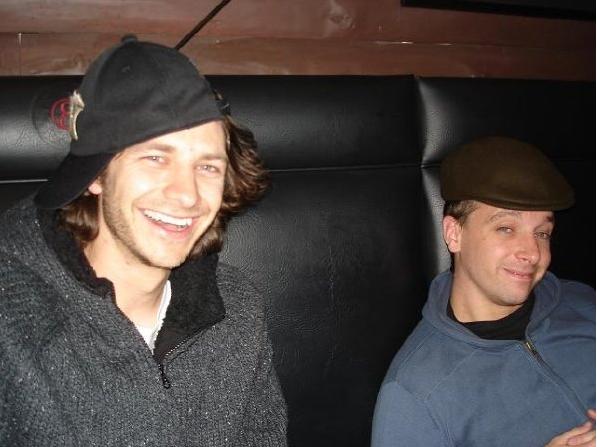
I recently had a chance to catch up with my friend Wally. Wal is one of my biggest inspirations and it’s always great to get a chance to catch up with him and talk about what he’s been working on, creative processes, inspirations, etc. What makes Wal slightly different, in context, is that he’s also known as ‘Gotye’. You know, that guy who used to know somebody? Wal is one of the hardest working and most intelligent people I’ve ever met, and his passion for what he does is infectious. But while most people would be aware of ‘that song’, many are not aware of the long road it took for Wal to become an overnight success.
I met Wally a couple of years after he’d finished high school. Wal had been in a band with some high school mates, a very good and well-known band (locally) called ‘Downstares’, but after graduation the band drifted apart, the guys moving on to their respective next things. You could see this kinda’ broke Wal’s heart, he loved music and he loved performing, but without a band he had no outlet. Wal was studying at uni and working part-time, but there was definitely something missing. He wanted to make music again.
It was around the same time that The Avalanches’ album ‘Since I Left You’ was going well, and DJ Shadow had just released his second album, ‘The Private Press’. In retrospect, I would say that these two albums were among the most influential in the Gotye project coming into being – not musically, necessarily, but in terms of them showing Wal the possibilities of sample-based music. Wal had never really considered using samples – he’s an excellent drummer and pianist, and I imagine the thought of samples seemed somewhat inferior or not as tangible as actually playing an instrument. Either way, he’d never seriously considered it, then one night he tried it out, mucking around with records, playing with sounds on his PC. Wal’s a perfectionist, so once he’d started on it, there was no stopping him, and he worked with the samples till he had something he felt was great. And it was. His first tracks were amazing, way beyond what anyone would have expected. Wal was excited, he’d found a way to make music again, now he just had to work out what to do next.
Wal read up on agents and record labels and radio stations, sifted through the phone book to find as many contacts as he could. Wal hand made hundreds of four-track CDs, printing up the CD labels and hand writing the track listing on each sleeve. I remember seeing the pile of worn down brown pencils in his room. He sent the CDs out to everyone he could, then followed each one up with a phone call. The workload was amazing – Wal was driven to do whatever he could to find an audience for his music. Early feedback was limited. Most places didn’t respond, some did but weren’t able to offer anything. Wal kept calling, kept making CDs, kept chasing, and kept making new music. Eventually, Triple J added one of his songs to their playlist, an amazing day. I still remember hearing Wal on the radio for the first time. It was an incredibly proud moment. I think some other smaller stations played a track or two, and Wal was getting mentioned in street press, nothing major, but the first stages of Gotye had begun.
Wal released two more four track CDs, all hand made (though he cut out the hand written business after the first one).They got limited attention, but music critics were highlighting his stuff in their weekly columns, even if it wasn’t getting added to radio playlists. Wal continued to get support from Triple J and he gained enough attention to develop on a live show – a small gig in a city bar with a bed sheet as a projector screen. Wal worked extremely hard to try and perfect a live show, unsure of how to do it with sample based music. And afterwards he thought it was crap (one of the difficulties of Wal’s perfectionist nature is he always notices every tiny error – in his head those errors are highlighted way more than the audience would ever notice).
Eventually a small record label agreed to distribute an album of Wal’s music, a selection of highlights from those first four-track CDs. This was another amazing milestone, Wal’s CDs were in JB Hi-Fi, in between ‘God Speed You Black Emperor’ and ‘Green Day’. I remember going into stores just to see it on the shelves. Wal was a legit superstar in our eyes, but even at this stage, Wal was still doing all the work – the label was distributing the music, but Wal still had to work on all the production and manage every aspect, along with creating new tracks. After all the work and all the effort, Wal went quiet in Gotye stuff for a little bit. He was still working on it, but he’d started playing in another band and he’d moved house and he just hadn’t been able to give his new music the time he needed for a little bit. And in some ways, I think the whole process burned him out a little. This was probably three years after he started recording music as Gotye.
We were on a group holiday on the Gold Coast when Wal first played us his new tracks. He’d put together an album, had had it all mastered, professionally done, it was a major step up from the previous stuff. The album was called ‘Like Drawing Blood’ and as soon as Wal played the first track, ‘The Only Way’, I just wanted to listen to it over and over again. ‘Like Drawing Blood’ is an amazing album, and not only good because he’s a friend, a seriously amazing album, among the best of any released that year. Rightfully, it was recognised with an ARIA Award along with many other accolades. His track ‘Hearts a Mess’ was number 8 in the Triple J’s Hottest 100 in 2006. Wal had become a fully-fledged rock star. People recognised him in the street (it’s still pretty cool seeing it, seeing people do a double-take as he passes), he played sold out shows and huge, surging crowds sang along to his tracks. And people stopped believing me when I told them I know him. For years, I’d been pushing his music at people, saying they needed to listen to his stuff, now I couldn’t even convince people that he was a mate. It was all pretty great – amazing, inspiring stuff.
Then Wal waited a couple of years, recorded his next album in amongst his other musical and professional commitments. Quietly, patently, took his time getting it right. Then he released that song. No doubt you know the rest. Wal’s first Gotye recordings were in 2001 in his basement bedroom in Montmorency. In 2011, Wal released ‘Making Mirrors’, his third album. Ten years to become an overnight success.
Why is this overly long Gotye history lesson relevant?
As noted, Wal is one of my biggest inspirations. He has taught me so much about following your dreams and allowing yourself to be creative, and about how much work it takes to achieve something great. Wal’s story highlights three important things:
1. Persistence is key. Wal had to work so hard to get recognition. There were so many times when things seemed like they might never go anywhere and Wal could easily have walked away. But he never did. No one wants to be sending out hundreds of copies of their work knowing that many of them will never even get read or listened to. No one wants to follow up with phone calls and hassle people who probably have no interest in talking to you. But this is what had to be done, and Wal did it because he was driven to succeed. He believed in what he was doing, he believed in his music, and he worked and worked and did whatever he could to get it heard. You have to be willing to put yourself out there and to put in the consistent effort required to succeed. It took a decade of persistence for Wal to achieve that ultimate success. An even now, he’s still working on his music, every day.
2. Practice makes perfect. Wal is an amazing musician, always has been, but it took time for him to work out how to perfect his sound. He had to learn a heap of new instruments, read through pages of software documentation (the worst of all documentation) and he had to practice over and over and over to get things right. One time Wal told me how about he records around 100 vocal takes for every track. He knows what he wants and he tries and tries again till he gets it exactly right. Wal practiced over and over again to get to the point where he can produce the amazing live shows he does today, none of that came easy. He’s tried, he’s failed, he’s been dejected, then he’s tried again. You have to practice to get it right. As much as you possibly can.
3. Passion is your push. No one made Wal succeed. No one pushed him, and as noted, he could’ve given up several times. But he was passionate about what he was doing, he wanted it more than anything. That’s what makes Wal the success he is. It’s not his intelligence or his natural ability – those elements play a big part, but Wal taught himself most of the skills he needed because he had the impetus to do so. Because he was totally driven by his passion. If you’re passionate about something, you can achieve great things. You work hard, there’s nothing you can’t learn to support your art. You have to be self-driven, you have to make it happen, and you have to be willing to listen and learn and take in everything you can along the way. Take risks, be strong in your self-belief, trust in your ability even when no one else does. If you do these things will that turn you into an international superstar? Probably not, but it’s these fundamental elements that position you to achieve your greatest success.
Also if you’ve been living on an island with a volleyball as your only companion for the past few years, go check out www.gotye.com and listen to Wal’s music – if you’ve read through this whole post, surely that’s enough context to pique your interest.
The Importance of Self Confidence in Writing
As with most things in life, your level of self confidence will dictate your success in writing. The difficult thing about that is, your mind is something that’s very difficult to change. Tony Robbins-type motivation will only go so far, and even then, only for certain people. For others, re-configuring the way you perceive yourself is an incredibly large hill to climb.
We’ve all seen people struggle with depression and anxiety – if changing their perception was easy, they’d be doing it. I’ve seen and heard of horrific stories of people who just couldn’t change the way they saw things, no matter how much logic was presented to the contrary. It’s heartbreaking. Changing your thinking is hard to do. Some find it impossible.
But as with most things, how confident you are in your work, how much you can make yourself believe in what you’re doing, will play the most significant part in your success. If you don’t believe in yourself, you won’t send your work out, you’ll second guess everything, you’ll think you’re not good enough. If you think that, that will most likely come across in what you do. If you don’t believe in yourself, you’re already making it difficult for anyone else to do so. So what do you do?
If you believe in something, if you feel in your heart that what you are working on is the thing that fulfils and sustain you, the thing that you could do forever and be happy, then you have to work at it. If this is the thing that you can get lost in, that you can be doing for hours on end and not even notice till you look down at the clock, the thing you feel more at home doing than anything else, then you have to go for it. A lot of people never get the chance to find that thing, that perfect merging of elements that can make them feel that this is it for them, this is what makes them happy. Not everyone finds their thing., so if you do find it, you need to explore it, you need to work at it. You need to do it.
It’s not easy. It’s not easy to push yourself, particularly when you don’t have the self confidence to maintain motivation. People are going to tell you that you can’t do it, that you’re not good enough, people are not going to be universally supportive. You can’t expect them to. The supporter you need is you. It involves taking risks, putting yourself on the line, taking the hits. You’re going to feel lost, you’re going to feel down, you’re going to make mistakes and embarrass yourself (oh, the mistakes). But you take it, you learn from it, and you move forward. As soon as you stop taking risks, you stop, period – you have to put yourself on the line, put your heart into what you do. Only you put everything in can you produce something truly great, something resonant. When you can find that plain where you’re sharing emotion, not just words, where you can feel the tension within each breath of each character and every moment in the scene. When it feels as real as anything you’ve lived. Then you know, you know in your heart that this is it for you, this is where you should be. Then you owe it to yourself to push, to keep putting in the work. The more work you do, the better you get.
Self confidence is a key element of success. Believing in yourself will sustain you when nothing else is left. You have to have the strength and courage to follow your heart, and hope that your heart leads you in the right direction. You have to believe that you can, always.
Take risks, send things out, take in the negative. Make it all part of what you do.
You have to believe, you have to work, and you have to make it happen.
You. No one else.
Undeniable

I was watching the 30 Seconds to Mars documentary ‘Artifact’ recently when lead singer Jared Leto said something that really stuck with me. The documentary, for those who haven’t seen it, is about how 30 Seconds to Mars had been signed to some ridiculous contract whereby despite their global success, the band members were not actually making any money at all. The band then sought to change the terms of their contract and were subsequently sued by the label for $30 million. The film looks at the challenges of the modern music industry and the issues faced by artists in trying to make money from their work, and it’s a really well made film. Their music doesn’t do it for me (though I’m not the target demographic) but the film was compelling and definitely made me empathise with the situation.
So there’s one scene where Jared Leto is talking to one of the other band members – they’re lamenting their position and debating whether they even go on as a band. They’re facing building legal costs in a battle they aren’t likely to win, things are not looking great. Then Leto says this:
‘Don’t you wanna’ make something that lives forever? That’s phenomenal. That’s great. That’s undeniable.’
For some time in writing my second novel I’ve been trying to think of a way to describe what’s been the problem with it. I’ve written several drafts, and at least one of them was okay. But it wasn’t brilliant. I’ve been working and re-working and trying to get it on track – my view is that it’s alright, but it’s just slightly off target, like a train running with its wheels off the tracks. If it were on the tracks, it would be smooth, it would flow and it would be not good, not great, but perfect. It would be undeniable. When Jared Leto said this I was like ‘Yes, that’s it, that’s what I’ve been aiming for’.
I imagine this is both the strength and weakness of writers – you want something to be great, so you do all you can and the more work you do, the better it gets, but as your own worst critic, you’re also thinking ‘is it that good? Could it be better?’ I don’t ever want to read great literature and think to myself ‘I’d be happy if I could write something close to this’, because I wouldn’t. My work should hold up when compared to other great work, that’s the way I view it. And of course, brilliance is in the eye of the beholder, one man’s genius is another man’s trash. But I know my ‘brilliant’, and I know I haven’t hit it yet with that book. I remain ever confident that I will. .
Maybe it won’t be a literary classic known the world over and held up as an example for decades to come, but as long as it is, in my eyes, something that I can honestly say ‘that is the absolute best book it could be’, that is what I aim to achieve.
The aim is to create work that is undeniable.
Jared Leto gave me to words to express that desire. Who’d have thought the drug addict from ‘Requiem for a Dream’ would serve as a source of wisdom?
 twenty six