Tagged: inspiration
Criticism is a Challenge – How Will You Respond?
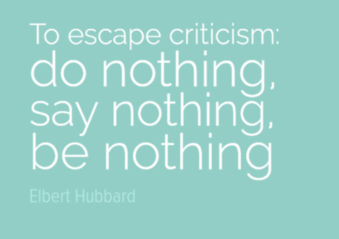
Criticism is a big part of becoming a better writer (or a better anything, really). More specifically, how you deal with criticism plays a major role in your improvement and ultimately, the level of success you’ll achieve with your work. As noted in a recent post, a large part of this is your internal critic, your ability to distance yourself from your work and analyse your output, but external criticism, while sometimes difficult to take, is just as important, and how you interpret feedback, how you respond, is the actionable element of the process, the part you need to excel at.
I was playing basketball once and we were up against the best team in the competition. This was a group of guys who had played at a really high level, much higher than the competition we were in, and they were well better than the rest of our league, won the grand final season after season. I was talking to a teammate before we played them one time and he was like ‘I hate playing this team, coming out on a cold night just to get your ass kicked’. And he was right, it was annoying – it’s no fun going into a match knowing that you’re about to get destroyed – but my view on this was actually the opposite of his. I told him I like playing these guys – the problem is more that we only get to face them once every eight weeks. Playing them was an opportunity, a chance to see how you matched up and to try and work them out, maybe even get a few over on them. Yes, they were going to win, but maybe we could put some pressure on them, hit a few shots, remind them not to leave us open. Playing against them was an opportunity to improve – because if you didn’t, you were just gonna’ get trampled over and over again. You either worked harder or you gave up – it was that simple. I wasn’t prepared to give up and drop down to the next grade below, so the only other option was to take them on, keep trying. The only thing you could do was to keep working to improve.
This is how I view criticism. Critiques force you to improve. Just as an athlete trains and works out and builds herself into a better player, you need to read, you need to edit and you have to put in the work, every day. The more you do this, the more you’ll improve. Criticism is an important element of this, because while it’s not always right, it’s worth taking in, worth listening to, even just as motivation to prove them wrong. The more you face up to criticism and accept it as a challenge, something to improve and aspire to, the better off you’ll be. And here’s the thing – you will improve. You see it all the time in sports, players improve year-on-year, they get better because they have to. Because the only other option is to give up. The only way criticism will defeat you is if you give up. If you accept it, if you agree with it, and if you decide you don’t have the energy to put in the effort anymore, then you’ll have decided your own fate. But if you believe you can, that you want to succeed despite whatever odds you face, then you will. You just need to put in the work. You need to train, analyse, study successful people in your field and build an understanding of what it takes to get to that next level.
Writing is work, it’s consistent effort, consistent reading and practice to understand and improve. The only way you stop improving is when you stop. Period. If you’re happy with where you’re at, that’s fine, no need to put in any more work. If you think those professional writers and authors on bookstore shelves are well above your standard, that they’re too high to even consider comparing your work against, then you’re right. But if you really want to succeed, if you take criticism as a call to action, rather than a cue to shut down, then you will improve. And you’ll keep progressing towards that next level of success.
Poetry May Not Be What You Think It Is
I’m not sure we take the right approach in how we teach kids poetry. From a young age we’re exposed to poems via nursery rhymes and what we’re taught is that poetry is rhyming couplets. Dr Suess tells us, then later pop music – the only real exposure we get to what poetry is rhyme, repeated patterns and verse. And that’s fine, in no way would I ever disparage the skill it takes to create great rhyming poetry, but it’s also a very narrow view of what poetry is and can be. The problem is, we’re given such limited exposure to other forms of poetry. What’s more, while there are many brilliant examples of rhyming poetry, it is a true skill to master, and there are even more examples of bad rhyming couplets – and let’s face it, even amidst the greatest rhyming poems there’s normally a couple of laboured lines and references that have been jammed in, in order to stay in theme.
My issue with this is that we might be restricting people’s view of what poetry is by teaching them only one narrow view of the form. When people hear poetry, they think ‘Roses are red…’, that sort of light, generic, often tacky, form of expression. They think of jokes, of rhythmic language that’s used in movie clichés. They think of kids books, that poetry is something for kids, when really, the means of expression via poetic form are so wide, so unrestricted, and rhyming verse is only one small part of the equation. Poetry is the closest thing to connecting thoughts through language. It’s translating emotion, creating connections in the readers’ brains that connect on a higher level than the language alone. Poetry can be transformative and transcendent and more than most people might think it to be.
I know how many people view poetry. I know, because I once viewed it that way too – I’m a story writer, and have always been focussed on story. Poetry was like a joke to me – you put a few words together that may or may not mean something and if you can find the right balance between being vague enough that people can find their own meaning, and so vague that the words don’t even connect, then you’ve got yourself a poem. I even tested this in high school – we were doing poetry in English and one of my classmates asked how you do it. I wrote a poem about crying in the rain, with deliberately vague lines like: ‘My optimistic pessimism’. It got published in the school paper, then it got published in a state-wide street press publication:

This reinforced my view, poetry was easy and not to be taken seriously.
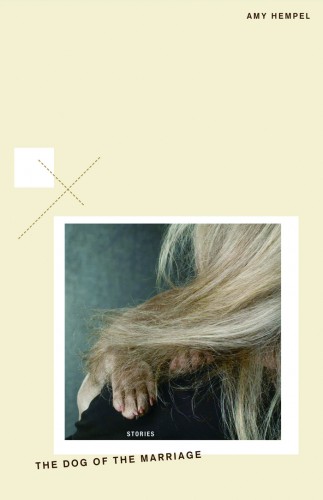
My view changed on this after reading Fight Club. This wasn’t because the language of Fight Club was so poetic, but from Fight Club I researched all I could about the author, Chuck Palahniuk. Palahniuk listed one of his favourite authors as Amy Hempel, so I went on to read all her stuff. Hempel is phenomenal – if you haven’t read any of Amy Hempel’s work, you’re missing out, and you need to get over to Amazon now and order a couple of her books. Her short story collection ‘Reasons to Live’ changed the way I think about writing – Hempel’s style is something that can’t be replicated, so intricate and subtle that, as Palahniuk says: ‘all you can do is lie on the floor, face down, and praise it.’
Fran Lebowitz still writes about the moment she first looked at a clock and grasped the concept of telling time. Hempel’s work is nothing but these flashes, and every flash makes you ache with recognition. –Chuck Palahniuk on Amy Hempel
Hempel is both a short fiction writer and a poet, with several volumes of both in circulation. The combination of the two is what makes her so brilliant – Hempel can extract the emotion from the most mundane moment and translate it into a thing of beauty. This is not ‘Hempel the Writer’, at work, it’s ‘Hempel the Poet’, but the two have become so intertwined that her prose transcends the parameters of either form. For example, here is one of my favourite Amy Hempel stories – the first story of hers I read, and the one that made me want to buy everything she’d ever written:
My heart — I thought it stopped. So I got in my car and headed for God. I passed two churches with cars parked in front. Then I stopped at the third because no one else had. It was early afternoon, the middle of the week. I chose a pew in the center of the rows. Episcopal or Methodist, it didn’t make any difference. It was as quiet as a church. I thought about the feeling of the long missed beat, and the tumble of the next ones as they rushed to fill the space. I sat there — in the high brace of quiet and stained glass — and I listened.
At the back of my house I can stand in the light from the sliding glass door and look out onto the deck. The deck is planted with marguerites and succulents in red clay pots. One of the pots is empty. It is shallow and broad, and filled with water like a birdbath.
My cat takes naps in the windowbox. Her gray chin is powdered with the iridescent dust from butterfly wings. If I tap on the glass, the cat will not look up. The sound that I make is not food.
When I was a girl I sneaked out at night. I pressed myself to hedges and fitted the shadows of trees. I went to a construction site near the lake. I took a concrete-mixing tub, slid it to the shore, and sat down inside it like a saucer. I would push off from the sand with one stolen oar and float, hearing nothing, for hours.
The birdbath is shaped like that tub.
I look at my nails in the harsh bathroom light. The scare will appear as a ripple at the base. It will take a couple of weeks to see.
I lock the door and run a tub of water.
Most of the time you don’t really hear it. A pulse is a thing that you feel. Even if you are somewhat quiet. Sometimes you hear it through the pillow at night. But I know that there is a place where you can hear it even better than that. Here is what you do. You ease yourself into a tub of water, you ease yourself down. You lie back and wait for the ripples to smooth away. Then you take a deep breath, and slide your head under, and listen for the playfulness of your heart.
It’s a perfect example of Hempel’s work – simple but complex, mundane but poetic. It isn’t straight-forward storytelling, but there is such a resonant story there, even this very short piece. It’s a connective work, the way Hempel has used language to build layer upon layer. It’s more than just prose writing, it’s another level of literary expression. And I wanted to read more.
Hempel’s work lead me onto Sharon Olds, who’s an amazing poet, one of the best I’ve ever read. Like Hempel, Olds’ work transcends the confines of what you may think poetry can be. While Olds doesn’t have the prose leanings of Hempel, her poems tell a story nonetheless, and she’s often able to tell a more powerful story than many can in novel-form. One of my favourite Olds poems is this:
Summer Solstice, New York City
By the end of the longest day of the year he could not stand it,
he went up the iron stairs through the roof of the building
and over the soft, tarry surface
to the edge, put one leg over the complex green tin cornice
and said if they came a step closer that was it.
Then the huge machinery of the earth began to work for his life,
the cops came in their suits blue-grey as the sky on a cloudy evening,
and one put on a bullet-proof vest, a
black shell around his own life,
life of his children’s father, in case
the man was armed, and one, slung with a
rope like the sign of his bounden duty,
came up out of a hole in the top of the neighboring building
like the gold hole they say is in the top of the head,
and began to lurk toward the man who wanted to die.
The tallest cop approached him directly,
softly, slowly, talking to him, talking, talking,
while the man’s leg hung over the lip of the next world
and the crowd gathered in the street, silent, and the
hairy net with its implacable grid was
unfolded near the curb and spread out and
stretched as the sheet is prepared to receive at a birth.
Then they all came a little closer
where he squatted nest to his death, his shirt
glowing its milky glow like something
growing in a dish at night in the dark in a lab and then
everything stopped
as his body jerked and he
stepped down from the parapet and went toward them
and they closed on him, I thought they were going to
beat him up, as a mother whose child has been
lost will scream at the child when it’s found, they
took him by the arms and held him up and
leaned him against the wall of the chimney and the
tall cop lit a cigarette
in his own mouth, and gave it to him, and
then they all lit cigarettes, and the
red, glowing ends burned like the
tiny campfires we lit at night
back at the beginning of the world.
This is a story, right? This is more prose-like than you’d expect a poem to be, but it’s also definitely a poem. The words carry such weight, each line is crafted and precise. Olds’ poetry taught me the importance of ‘language economics’, of the need to be concise and ensure each sentence reaches it’s full potential – there’s so much more to this poem that the words on the page. Great poetry uses the experiences and associations of the reader to build the greater context, rather than explaining it to them – which is true also of great prose writing – but nothing illustrates this point better than a great poem. One line can change everything, can hit you so hard. Poetry taught me the importance of rhythm and timing, and word placement in general. These are the tools you need to be able to communicate well. Poetry showcases those skills better than any other form.
Knowledge of poetry better informs you as a writer and helps you find better ways to communicate your story. Cormac McCarthy’s ‘The Road’ is one of the best examples of poetic description in prose form, and it’s so much more resonant because of it. A sequence like this:
By then it was already evening. Just the slow periodic rack and shuffle of the oarlocks. The lake dark glass and windowlights coming on along the shore. A radio somewhere. Neither of them had spoken a word. This was the perfect day of his childhood. This the day to shape the days upon – Cormac McCarthy, The Road
This is poetry, this is connecting emotion via language – sentence construction aligned with thought. It’s more than just the sum of its parts, than just the words alone, there’s a beauty to it’s simplicity. If I’d presented this as a poem, you’d not have thought twice about it. But it’s used in prose, in a Pulitzer Prize winning novel, no less. This is the potential of poetic expression. It’s far more than just rhyme.
With a newfound respect for poetry, I started to investigate and appreciate other forms of the medium. And while it’s often lambasted as the height of pretentiousness, spoken word poetry, when done well, can be extremely powerful. The thing that many miss is that the performance is a major part – it’s ‘performance poetry’ not a poetry reading. At the Melbourne Writers’ Festival a few years back, I remember Canadian performance poet Shane Koyczan had done a session. Koyczan had his mostly female audience swooning, all because of his delivery of lines like:
looking at you it occurred to me
I could sit around all day
wearing nothing but your kiss– Shane Koyczan, Skin 2
And one of my favourite performances was by ‘Coded Language’ by Saul Williams.
It’s passionate, resonant and again, it’s more than the sum of it’s parts, more than the words alone.
So this is why I don’t think we take the right approach to how we teach poetry, because I would have never thought to look at these things, I’d have never come across the greater opportunities of creative expression through poetry without finding it in my own way. I realise one of the main challenges of education is engagement, finding ways to get kids interested in what’s being taught, and no doubt that’s a barrier, but I feel like we need to reinforce that real poetry is so much more than rhyming couplets. Maybe I’m wrong, maybe educators are doing all they can, but there’s so much opportunity for expression through poetry, so much more than what people might interpret ‘poetry’ to be. While it’ll never be mainstream, by highlighting all these other avenues, maybe we can encourage more participation in poetic expression, and get in touch with more amazing writing as a result. At the least, knowledge of poetic expression will improve your written communication, in all forms.
You’re Not Totally Unique – and Why That’s Not Such a Bad Thing
We all like to think that our likes are interests are totally unique, right? We’re into this new show that you may not have heard about, we’ve read this new book that’s just come out – we all like to believe that our likes and interests are very different from anyone else. But they’re not. Stereotypes exist for a reason – the things you like the most probably have a large following that you may or may not be aware of. Things like Game of Thrones, for example – when that first came out, I remember thinking it was amazing, but no one was really watching it, like I’d found something that I had to share with everyone else. But actually, I was put onto it by a friend who’d read the books, and it’s now one of the most popular TV shows in the world, even though it’s full of violence and bad language and things that you’d expect might confine its audience size to some degree. Because the things people like tend to be things others will like also – your interests and cultural leanings are just not that unique.
But here’s the thing – that also means that you should trust yourself more. Remember how you were drawn to the character of Boba Fett in Star Wars even though he wasn’t one of the main players? You thought no one else paid that much attention to him, but Boba Fett was actually everyone’s favourite character. When they were doing that interview on TV the other day, you couldn’t take your eyes off the chumps in the background, smiling and waving at the camera and calling their friends at home, asking them to switch over and check them out, right? The things you notice, the details that stand out to you that you think might have been missed by the rest of the world – nope, we all noticed the same thing. What stands out to you most probably stands out to everyone else, and what this should highlight to you is that your responses are more common than you think. So trust them.
This is something that you need to understand as a writer or blogger or creator of any kind, really – the details that stand out to you will stand out to other people. This is not a bad thing, it’s actually reassuring, knowing that the world you see is shared by many other people – we’re more connected than you think. Maybe we can’t all communicate it, maybe we’re restrained in our connection with other people, but that guy on the train reading the paper, you’d probably be able to talk to him for hours about 90’s movies. That woman over ordering a juice, she’d totally relate to your anecdotes about living in a shared house. Our experiences are not as dissimilar as we train ourselves to believe, strangers are not as strange, and what this really means is that you can put more trust in yourself, more trust in your audience, and share things the way you see them. More often than not, you don’t need to over-explain, you don’t need to second-guess the way you’re communicating, people will get it. Put yourself in the position of the audience, think of how you’d respond to your work, what reaction would you have to reading this? Your viewpoint will likely be shared, and while it’s never easy to analyse your work from an impartial perspective, you need to trust yourself and rely on your instincts – if this were written by someone else, would it work for you?
Everyone else lives in the same world you do, we all experience similar things, similar problems and troubles. Everyone’s overcome difficulties, everyone feels down sometime – the things that make others happy are most likely the things that make you happy. Definitely, our overall perspectives are different, our viewpoint is ours alone, and that’s what provides opportunities for new stories, new and interesting ways of connecting, but we’re not as dissimilar as we tend to believe. So don’t stress about communicating with people, about saying the wrong things, being the right person. Remain true to yourself and trust that what you have to say is important. While you can always improve on how to do this effectively, you should also realise that you are not alone and create with that in mind.
Levelling Moments
There are certain moments in life that level you. Sometimes, something will happen that will just tune out everything else and make you see things for what they are. These are the moments that can define you, that stay with you long after, and that you go back to, hoping you’ve learned something from them. Here’s three such moments from my life:
- When I was 13 I was caught trying to steal a G.I. Joe action figure from Kmart. It was the worst, the most shameful, embarrassing incident. I also had my younger brother with me, he would have been seven at the time, walking around, holding my hand as we went. But the moment that levelled me was when they called my Mum up on the loud speaker, when she came in and saw me. At first, she was concerned, she thought there must have been an accident or something, but then they told her why they’d called her. Her face. I felt worthless, stupid. Nothing I’d ever done had levelled me as much. I can see how, in a moment like that, how it could go either way for some people – you could either ensure it never happens again, or you could accept that look of disappointment and just become that, just be ‘that’ kid who’s no good. I chose the former, I would never even dream of stealing anything again, and from there I really started concentrating on doing better at school and working on my writing. But it was just, everything, that day, it took me down to nothing, no better than anyone or anything. I felt like I’d destroyed any trust, faith or hope my Mum had in me.
- Also when I was younger, probably about 11 or 12, I once went to pat my younger brother on the back and he flinched and ducked a little bit, like I was going to hit him. It was terrible, a sick, dark feeling in my gut. Was that what I was like to him? Was I a bully who scared my younger brother so much that he expected, when I raised my hand, that I’d hit him? We mucked around a lot, we were boys, but I never intentionally hurt him, and I definitely didn’t want him to think I’d smack him one out of no where, for no good reason. It was only a moment, and my brother probably forgot about it within that same split-second, but it stayed with me. It reminded me that I needed to be more wary of my actions. I can’t have people I love flinching at my touch. Why would he do that? Violence is as much perceptual as physical – what you think is nothing could be terrible to someone else. I needed to ensure the people closest to me always felt safe and knew I’d never do anything to hurt them. It changed my perspective, made me want to be a better person.
- When I was 16 or so, I was going out with this girl. We hung out all the time, we’d always be doing stupid stuff together. But one thing that annoyed me was that she was always non-committal. ‘We’re not going out’ she’d tell me. ‘I’m not your girlfriend’. Every time she said this, it hurt. Why would she be so against being linked to me like this? And what did that mean, that she could go out some time and be with someone else and I’d have no right to be upset about it? After about 6 months, I accepted that she’d never be my ‘girlfriend’, that she was really saying I didn’t mean much to her, and one night, at a friend’s party, I kissed another girl. When I spoke to her next, I told her and she was upset and she hung up. She called back about a week later and asked me why I did it. I told her that she wasn’t my girlfriend. She was crying, I could hear it through the receiver. I told her I was sorry she was upset. ‘You broke my heart’, she told me and she hung up. It was a terrible feeling, one I’ll never forget. I never wanted to be that person, be responsible for someone being so upset like that, again. It reminded me that all actions have consequences, that all relationships are emotional, no matter what’s been communicated. That you have to be aware of how your actions can hurt others.
These random moments are some among many points in time that have helped shape who I am, and importantly, they’ve shaped how I write. These incidents, the things that have levelled me, also remind me of the basic elements of humanity, of the things we all face. Everyone would have similar stories, moments where they’ve been reduced to nothing, left stripped, their ears ringing, feeling like a ghost. These moments make us, and reflecting on them now, they’ve formed big parts of the issues I’ve tried to explore in my writing. What I’ve found is, re-examining these moments can be powerful, can awaken those raw emotions, and when you’re writing, that’s what you need. You need to be open, you need to be able to feel what’s happening in your scenes. By remembering these moments, I’ve found that it’s helped capture the emotion of other, completely different scenes, more accurately. It’s an interesting excercise, remembering those moments, and might be worth you trying out, just to feel them again, awaken yourself to what you might have learned or taken from them.
Do you have any levelling moments like this?
Dreams and Realities
It’s always so hard to understand when a person takes their own life. It’s more so when that person seems to have everything going for them, success, popularity, wealth. What reason would that person have to feel so low? It’s a reminder that success is not the cure for all that ails a person. Achievement is in the eye of the beholder, you can never know the workings of another person’s mind. Sometimes, no matter how great your status, you can still feel alone, hopeless. You still struggle to understand where you fit in the world.
Events like this are also a reminder that reaching your dreams won’t necessarily ‘fix’ your life. To me, this was the underlying message of Darren Aronofsky’s film ‘Requiem for a Dream’. In the film (and Hubert Selby’s book), we start out with the main characters, Harry and Marion, breaking into a building to get up onto the rooftop and look out over the city, flying paper planes along the wind. It’s a beautiful scene, simple, there’s a perfection to that moment they share, their life together. From there, Harry seeks to make something of himself, to build a better future for them, and he starts dealing drugs and getting more involved in the drug trade. His mother, too, dreams of being on a game show, her one driving passion in life. She starts taking pills to help her lose weight so she can fit into her dream dress for her pending TV appearance.
As both storylines move on, their situations sink further and further down. Drugs get harder to come by in the city, making it more expensive to buy product and stay in business. Harry eventually convinces Marion to sleep with her psychiatrist for money, which she does, but after another deal goes bad, Harry has to head interstate to buy more drugs, leaving Marion adrift. This leads to one of the most heartbreaking scenes I’ve ever seen in a film – Harry, his arm now amputated due to an infection stemming from drug use, and in jail after being reported by the hospital who admitted him, he calls Marion, who’s turned to prostitution to feed her own habit:
It hurts to watch, I still get emotional seeing it, but this scene, to me, is the film. All she wants is for Harry to be there, nothing else matters, not money, not where they live. All either of these people want is to just be together again, to go back to that one moment, on top of the building, throwing paper planes across the blue sky. And they both know it’ll never happen. His mother, too, descends into amphetamine-induced madness from which there’s no escape. In the end, they all dream of returning to their lives at the beginning.
Requiem for a Dream, in my view, is a story about the pitfalls of ambition, of ‘the grass is always greener’ mentality. These people were not rich, they didn’t have everything in life. But they were okay. Things were good, there was a beauty to what they had. But none of them could see it, all they could see was that they didn’t have all they wanted, so much so that it consumed them and they lost everything in their attempts to achieve their notions of a better life. But they failed to recognise the good things that they already had. Sure, it wasn’t perfect, but they had all they needed. They could’ve been happy, had they been able to take into account the good aspects, rather than just seeing the disappointments.
This, of course, is not to say ambition is bad – everyone needs to have dreams, things they aspire to beyond their day-to-day, they’re the things that drive us on. But at the same time, people need to take stock of what they do have, right now. Family, friends, a comfortable place to live. We all want to be financially secure and have the best of things, but it’s worth noting that even if you did have all these things, if you’d achieved everything you ever wanted, it still might not be enough. You’ll still see and feel things the same. Your problems might be different, but nothing’s ever perfect. Achieving your goals might not deliver you ultimate happiness.
I guess what I’m saying is, it’s worth taking note of the things you have in your life, rather than obsessing about what you don’t. Think of things you love and appreciate, things that make you happy that you’ve achieved or gained. Take note of where you are, of what you like and what you can do, right now. Because life ain’t so bad. And no matter what, every day you get a chance to try something new.
Photo credit: Jonas Ahrentorp, flickr
On Finding Your Literary Voice…
In reading literary reviews, or writing reviews in general, one note that commonly comes up how the author has found his or her voice. ‘This writer has found his voice…’ ‘She’s established her own voice…’ ‘His unique voice comes through loud and clear in his writing’. The problem with this note, for prospective writers in particular, is that it can be a bit vague – what does that mean? How can someone find their literary ‘voice’? Your ‘voice’ is your distinctive presence, your way of communicating a story, and in that sense, there’s not really any way a person can say ‘here’s how you find your voice’, because it’s unique, it’s who you are – and not only that, it’s who your characters are, the authentic voices of your story. It’s the voice of the piece needs to be reflective of the story and true to the reality of the world that you’ve created.
While I can’t tell you how you can find your voice as a writer, what I can tell you are some of the things writers’ often do that are counter to finding their voice. We’re all trying to ‘be writers’, all trying to do what writers do, as opposed to what we, normal-folk, do, and inevitably, that leads to us adopting some practices which go totally against the mission of finding one’s own unique voice. Here’s a few things to avoid, or think about, as you go about your writing work.
Not every detail has to be painstakingly poetic
This is probably the most common mistake people make, they’ll try to create epic, poetic descriptions of even the most mundane and irrelevant details of the scene in order to conform to what they believe is a literary approach. It’s one of the easiest traps to fall into – you get self-conscious about your writing, you think you need to make everything more stylised, more beautiful, and you end up wasting paragraphs on details that serve no purpose to the wider piece. The greatest stories have a flow to them, an effortless beauty, a sense that every word, every description, is rested right there, in it’s correct place. That sense comes from knowing the story, from having every detail relate back to the core of the piece. Everything you describe, every element, should all be adding to the wider themes and ideas of the world of the story.
For instance, I read a piece recently where a writer had spent sentences describing the details of the way a room was set out. The story had nothing to do with room detail, and the characters didn’t have any psychological predispositions to noting down such elements. The description was purely there because the writer felt like they needed to include complex description. Now, if the character did have a leaning towards being caught up in intimate details – if, for instance, the character was having a life moment and such details reflected a wider sense of his/her own position at that time, those details would be relevant, but painting literary embellishments without direct story purpose is often jarring and representative of your own lack of confidence in your writing. Every detail you note should have a reason for being there. If it doesn’t, cut it out, it’s just weighing down your prose.
Trust what you know
A big part of establishing your own literary identity is trusting what you know. Your voice is exactly that – your voice. You have to know what you’re trying to achieve with your work. You know how people talk, you know what interactions feel genuine. You also know, in your own experience, what makes people do the things they do, what life events lead to people being how they are. Your experiences on this front are totally unique – you’ll have seen and heard of people doing things for different reasons, and you know those sequences as truths, as things that have happened. Those understandings are what you need to reflect in your work – if something happens, if someone does something, it’s not just a random event. What made that person do that thing? What compelled them to act in the way they did? You know what would most likely lead to a person being in the state of mind they’re in, and that is the truth that you need to reflect and tap into in your descriptions. That’s not to say you need to go into every detail of their life, but you need to know your characters, who they are, what they do, what their motivations are. If you know that detail, you can ensure their perspective is reflected in every action – how they react is how they would respond in real life. And that’s based on what you know – that’s where your own authenticity comes from, not from movies or books or what you think other people might think. You have to trust your own knowledge and understanding and ensure that that honesty is reflected in your work. If something happens that doesn’t feel true to you, it’ll likely feel totally fake to another reader.
Your only obligation is to the honesty of the story
This particularly relates to the voice of your work – the way the characters speak, the way the story is presented, these details need to reflect what’s best for your story. You know the characters, how they talk, how they act. The way it’s communicated, in your words, should reflect the voice of the piece. If you want it to be slow and dreamy, read other writers’ who’ve written in that way and study what they’ve done that works. Use thematic images in your writing area and music to inspire your thoughts and get the words flowing through your head. But above all, ensure that the voice you use for your work is true to the story you want to present. If it’s first person, get in the head of your character and describe the world as he/she would see it. If it’s third person, understand the flow you’re going for, how distant or intimate you need to be, and ensure that perspective is maintained – but always be true to the feel of the story, the characters, the drive. How do you want the reader to feel when reading it? What elements will keep them glued to your words as they flow through the piece? Don’t write in the voice that you think a ‘real writer’ might go for, write in the voice of the story, of the characters. Write as if they’re telling the story themselves, how they would describe it. You have to inhabit the story, be part of it, see things from the interior of the book. Once you get in there, in between the words, you’ll start to see your own voice shine through and move from being influenced by other works to being contained within your own piece.
As I’ve discussed before, there’s no sure fire way to be a successful writer – if there was, everyone would do it. It’s a lot of introspection, a lot of observation and a lot of daydreaming, allowing yourself to get caught up in your imagination. Finding your voice is difficult – it’s something that gets thrown about like it’s a goal to aspire to. But more often than not, you find your voice by not specifically looking for it. Be honest to your work, to the world’s you’re creating, to the characters you’re building, and through that honesty and focus, your voice and style will develop all on it’s own.
Music That Fuels Imagination…
Music has always played a big part in my writing. Not so much as I’m writing, as I like to be fully enclosed within the words (sometimes strangled by them), but when I’m thinking, when the story is percolating inside my head, it’s good to have a background theme. I used to live in Kinglake, which is about 40 minutes drive away from anything – a rural town stranded on top of a mountain. The distance meant you had a lot of time alone with your thoughts, travelling from one place to the next. I worked in the city, which is about a 3 hour round trip, and the best thing about it was having that time and space to open your mind, to allow your creative thoughts to drift and evolve. I found music often played a big part in this, certain songs or albums would wriggle into my consciousness and form a soundtrack for my expanding imagination.
While it’s different for everyone, I thought I’d share a couple of my favourite idea accompaniments. If you’ve not heard these or haven’t given them a re-listen in a while, maybe this will motivate you to load them up and let your mind wander through the tracks.

‘Pieces in a Modern Style’ – William Orbit
It takes some people a moment to get their head around this one – William Orbit is an electronic music producer, and he took some of his favourite classical pieces and re-worked them using digital sounds. And some of them, I can get totally lost in – most notably ‘Ogive Number 1’, (track 3). Each track inspires it’s own visual idea in my mind, and it’s a great album to just press play on and go about your thoughts. Try listening to it as you drive through the city at night, or along the freeway at dusk.
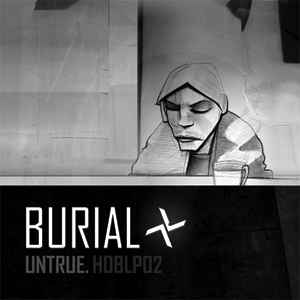
‘Untrue’ – Burial
I find all of Burial’s music to be incredibly vibrant, in a visual sense. The titles of his tracks alone inspire certain narrative ideas (‘In McDonald’s’, ‘Homeless’, ‘Night Bus’). There’s a sorrow and detachment in Burial’s music, which is reflected in the man himself (in the few interviews he’s done). But in that too, there’s beauty, something that entices you to take a better look at the world around you, to take in the various elements. It’s the detail that he seems to bring out, the heart of a moment, encapsulated in musical form. Again, best for listening to at night – though I do most of my writing at night, so there may be a reason for that motif.
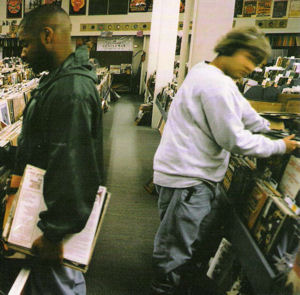
‘Endtroducing…..’ – DJ Shadow
That’s not a spelling error, the album is called ‘Endtroducing…..’, the diamond in the catalogue of sample genius DJ Shadow. Very few artists come as close to creating a perfect album as Shadow did with this one, and it’s been both a blessing and a curse for his career – he obviously garnered huge amounts of fame and acclaim for it, but everything he’s done since has inevitably been compared to it, and also, inevitably, fallen short. For his part, Shadow has always said he’s produced music he loves, and he’s stood behind every album, regardless of critical sentiment – and some of them do have moments of greatness (his follow-up, ‘The Private Press’, is amazing). But ‘Endtroducing…..’ is such a high benchmark, it’d be near impossible for anyone to live up to. There’re so many great moments on this album, songs that inspire such amazing feeling and nostalgia. It really is on another level, something everyone should experience in a dark room with no other stimuli to distract them. Just listen and feel the emotional depth of the work (Shadow has said he was in despair while making the record, and you can feel those edges of emotion breaching through the beats).

‘Lift Yr. Skinny Fists Like Antennas to Heaven!’ – Godspeed You Black Emperor
Really, you can listen to any GYBE album and be transported to another time and place, but there’s something about this album which transcended their other work. It’s by far their best known album, and it definitely does have an extra element that stands out, something that elevates it. Essentially, GYBE create soundtracks – they’ve contributed to several actual movie soundtracks, but even without the movie backing, their music is narrative driven, just, most of the time, without the actual narrative. Some people find it hard to get into, I find it best to just play on low volume to start with and just let it build with your thoughts.
There’s a heap of other albums, tracks and sections that have inspired my work, but these are the ones that stood out the most, and ones I think others might also get something out of. If you’re ever struggling with a section or idea, maybe sit down with one of these and see if they take you out of your day-to-day for a moment, expand your imagination and sense of place.
Do you have any albums or tracks that inspire you? I’d love to know, always keen to try out new music and ideas as I write.
Author Interview: James Phelan

In my time at writing and literary events, I’ve had opportunity to meet a lot of authors. Most of them are pretty quiet, all of them have been pretty nice, normal people, but a couple have become genuine close friends. It’s great to have a few writer friends, some people who know what it’s like to commit yourself to such a solitary act. It’s also great to have them to bounce ideas off, talk about your frustrations or concerns, just share with folk who’ve gone through a lot of the same things.
One of those people, for me, is James Phelan. I met James at the Newcastle Writers Fesitval in 2006 and we hit it off straight away. What’s always been really interesting for me is James writes in a completely different style to what I do. James’ novels are action/thrillers, and I’ve never been able to get into them. But hearing such a difference perspective on writing and the writing/publishing process has always fascinated me. James is the guy I go to when I need to ramble about writing and the challenges I’m having, the guy I seek out if I don’t know how this or that works in the industry. He’s also a close friend whose always been willing to listen to my ramblings.
I asked James to answer a few questions on writing and his writing process:
When did you decide to pursue a career as a writer?
I was 15 when I knew I wanted to be a novelist but I thought you had to be an old dude to do it. So, I figured I’d give it a try when I retired from a “real job”. I studied architecture and worked for a couple of firms, and by 20 I knew that I had to give writing a serious try. I wrote my first novel by 21, got a job at a newspaper, did an MA and PhD in Lit, and had my first novel published published at 25.
What’s the most challenging aspect of being a full-time writer?
Deciding what to do next. I’ve written series for adults, young adults, and kids, and each has its pros and cons. The adult stuff has complete freedom, YA slightly less so, and the kids stuff has a whole bunch of things that the publishers tell me I can’t do or say on the page. The YA and kids stuff involves way more PR, on average a day per week, and while that’s great in terms of meeting enthusiastic readers, it sucks time away from writing. Publishing books for adults is more about Crystal, Maybachs, diamonds on your timepiece, jet planes… you know the rest. Publishing books for kids sells about 10x more.
What’s the key to ongoing success?
Working hard. It’s easy for a writer to procrastinate, and there’s creative merit in that, sure. I write every day, starting early in the cafe nearby. Depending on which stage of writing I’m at, I’ll be sitting with my notebook or laptop or print out. Every day. That’s the writing side. The business side – you need good agents (and an accountant) who you trust will give you good advice when you need it, look over your contracts, and support you through the process.
Best tip for keeping ideas flowing and avoiding/beating writers’ block?
It’s my belief that if you write every day you’ll keep things moving along. That, and knowing your ending. Whether I’m writing a short story or a 40,000 word novel for kids or 90,000 for adults, I always know how I want my ending to play out. Not so much beat for beat, but in my ending I need to know the feeling that I want to create in the reader, be it comedic, dramatic, tragic etc. Usually by the time I write the ending, it will play out different to how I envisaged, but that value will stay always the same, and by knowing where I was going I managed to get there. I’ve been a full-time novelist since 2007, and it’s all about working hard.
Best tip for writers starting out?
Don’t ever sign a 13 book deal. Only recently have I finished all my contracts, and the freedom is incredible. So, enjoy your freedom, while it lasts. Write what you want to write. Make it shine through revisions, then decide what you’re going to do with it. I still think that agents are worth their commission, so get one of those. How? By getting published. How do you get published? By having an agent, or already being published. I know, right? Oh, and don’t forget to read as much as you can and as broadly as you can. Good luck.
[Note: Not everyone’s as luck to be offered a 13 book deal, and I’m sure most would jump at the chance, but as noted by James, it can be double-edged]
James Phelan’s latest adult thriller is ‘The Spy‘, and the first books of his YA series ‘The Last Thirteen‘ are also available now. He’s also on Twitter.
Also, this punch really hurt him.

The Best Films of 2014 (So Far…)
I’ve been catching up on some films recently, and got into a stretch of great ones that I wanted to share. So rather than write individual posts for each, with us now at the midway point of the year, it’s a good time to go over the best films I’ve seen, thus far, in 2014. Some of them I’ve already written about, so I’ll try not to repeat myself, but here’s my top five from the last 6 months:
Enemy
There’s so much I could say about this film, so much I’d love to go on about, but it’s one of those ones you’re best not knowing anything about going in. Directed by Denis Villeneuve (whose previous film ‘Prisoners’ was on my ‘Best of 2013’ list), Enemy is a lesson in film-making. Everything about it is precisely placed and planned, everything is deliberate. All I can say about Enemy is the film you’re watching is not the film you think it is. It’ll make sense in the end. Probably.
Under the Skin
Another one I’d love to go on about for pages and pages. Directed by Jonathan Glazer (Sexy Beast), Under the Skin starts off with a woman (Scarlett Johansson) driving around Scotland in a large, white van, looking for directions. But then she’s looking for something else, a phone, a different road. Then you realise, she’s not looking for directions at all, she’s trying to lure each man she speaks to into the van. From there, she seduces them, then takes them to abandoned buildings. What happens next, in terms of the way it’s shot, the set design, the music, is mesmerising, and so great, and the story leads on from there. Under the Skin is based on a novel by Michel Faber – though it’s a loose adaptation, major sequences and plotlines are altered from the book. It’s a great example of restraint, of allowing the plot to develop on its own, combined with some amazing visual elements. A great, great film, one I’ll no doubt be watching over and over.
X-Men: Days of Future Past
I already geeked out over X-Men: Days of Future Past in a previous post, so I won’t go on about it again. For me, this is the ultimate superhero film – of all the ones that have come before it, X-Men: Days of Future Past has the strongest combination of amazing visual effects, solid story and deep characters (in superhero film terms, at least). People will praise Chris Nolan’s Batman films or Joss Whedon’s Avengers as the best superhero films, and to some degree, it depends on which comics you grew up with. For me, X-Men: Days of Future Past is the best – it sticks to the real roots of the comics, it brings characters to life you never thought possible and it all just looks so great, no expense is spared on the detail.
Blue Ruin
I came across this film recently, one I hadn’t heard a heap about. Blue Ruin is the story of a broken man who returns to his home town to enact revenge, and the consequences of his actions then spiral further and further out of control. Blue Ruin pulled me in pretty quick and I had to know how it all ended. It’s well acted (by relative unknowns) and plotted and, most importantly, it moves. The story pushes ahead at such a pace, remaining compelling and engaging throughout – it’s a good lesson in plot development and raising the stakes to sustain engagement. It’s an intriguing, violent film, but one that’s well worth seeing.
About Time
This one sort of crept up on me. We watched About Time, essentially, because I thought my wife would like it – she’s into romantic films, The Notebook being her favourite, and this has McAdams in it and it’s by the guy who made Love Actually – it has all the makings of a film she’d love. But I actually really liked it. It’s got depth and heart, a reflective element to it, which is normally non-existent in romantic dramas which play out the obvious notes. About Time is about a guy who can travel back in time. Not anywhere he wants though, only back to places he’s been and experiences he’s lived – like, if he embarrassed himself the first time he spoke to a girl, he can go back and change it. That sounds really amazing, right, and slightly difficult for a film (how do you create tension in a scene when the audience knows he can just re-do it?), but it actually moves in a direction I didn’t expect and ends up being an interesting reflection on life and how we approach it. About Time isn’t going to go down as an artistic masterpiece, but it raises really interesting questions, and it’s definitely worth checking out.
So there they are, my top films of 2014 (so far). In terms of writing, all of these films have great written elements, great plot development points that are worth taking note of. I really loved that most of them went places I didn’t expect, opening my thinking to other angles in my own plot development efforts. It’s like when you read a great book and it opens up all these possibilities in your mind and then you get that electricity, that momentum that compels you to just get writing. All these films had elements of that for me, all triggered ideas and tangents, new perspectives and elements I could consider. Each one got me thinking – especially the first two on this list – and anything that gives your creative mind a kick is worth taking a couple hours out of your day for. If you’re looking for inspiration, seeking out a great film is always a worthy avenue to try.
Film Review: Enemy

I have to restrain myself in talking about Dennis Villeneuve’s ‘Enemy’ because… it’s quite possibly my favourite film of all time. That’s a big call to make, and as soon as you do make it, people will scrutinize the film in a different way and instinctively try to tear it down, moreso than they would if you’d just said ‘yeah. It’s good’. Not that I don’t think the film holds up, but I hesitate only because I want everyone to see this film and experience it for all it is. Enemy is so well made, so well done and so amazing – it’s something that you need to let yourself be absorbed into.
Every element of Enemy has been planned to the nth degree. Every scene, background to foreground, is deliberate, all the pieces fit perfectly into where they should be. What might seem like nothing is actually carefully positioned to achieve best effect and the cinematography perfectly captures the feel of the film. The performances are great, and the way the story builds and shifts drags you further and further into the rabbit-hole-type story. Some have criticised the film’s heavy handed use of metaphor, but I think it’s exactly what it needs, at exactly the right times, in order to let you know there’s more happening than what you see. I can’t talk about the story, but I will say that it expands a whole different way of viewing it, outside of the film itself.
Enemy is exactly what I look for in a film. It’s storyline is intriguing, the film construction is thorough and it has an extra layer to it that forces the viewer to think about its meaning and subtext. It’s more than the sum of its parts, and while it won’t work for everyone, it was definitely one of my favourite viewing experiences of all time. Writers, in particular, can learn a lot from the story’s clever construction.
See it.
…
 twenty six