Tagged: Writing
Author Stereotypes – And What to do When You Meet Them
Over the years I’ve had the opportunity to meet many writers – from really famous types to amazingly talented unknowns. The thing that has always stood out to me is that most writers are totally normal. You get an idea, an image in your head as to what this writer will be like in real life, how they might talk and act. That image is almost universally incorrect, most of them are the most normal, down-to-earth types you’re ever gonna’ meet. Award-winners to day-dreamers, the majority of writers I’ve met have been open, friendly and utterly normal folk.
But there have been some exceptions.
I have noted a few ‘types’ in my travels, a couple of categories of writers, stereotypical personalities that have been replicated amongst the storytellers I’ve met. There are a few, you’ve probably met them yourself. Some of the stereotype writers I’ve met along my journey are:
Super Normal, Super Controversial Content
I’ve met a few writers that have written, or do write, hard core sex and/or violence, and, surprisingly, they were totally normal. Almost uncomfortably so. Like, that dark element must be hiding someplace, you start to wonder when it’s going to come out. I met a female writer once who was totally normal, easy to talk to, funny. She wrote hardcore erotica, like, full-on stuff. I’ve also met super opinionated writers who seem almost intimidating in print form. But in real-life – normal. You’d never even know of their extreme stances if you hadn’t read their work. Everyone has layers and you can never judge a book by its cover, but this one is definitely a common stereotype. They’re actually pretty fun, you should hang with them, but maybe don’t go back to their place. At least not on the first date.
Super Quiet, Super Talented
I’ve met quite a few of these, those quiet bookish types who take everything in, listen to the world around them. They often have an acute understanding of what it takes to be great. They are their own strongest critics, which makes them more resilient to the harsh realities of the writing world, and they are constantly reading and researching, adapting their style. Sonya Hartnett is a bit like this – fairly quiet, fairly reserved, not interested in the hype of promotion and literary fame. Just loves writing great stories. And she’s super good at what she does. Not all the quiet ones are super talented, but often, if you get to see their work, they’re way better than they’d project. It’s worth getting to know them, understanding their perspective on the world. It might change your own viewpoint.
Super Confident, Super Sensitive
You know the ones. They’ve been told all their lives that their writing is amazing. All the way through primary school and high school – ‘amazing’. Nothing else. This is the only feedback they’ve ever had, and they come out self-assured, convinced they’ll be the next literary luminary, destined for greatness. And then comes the pain. They’ve never experienced criticism before, everyone told them they were great. No-one’s ever picked out an error or suggested a possible issue. It hurts – you can see it dragging down their face. I feel for these guys – they’ve not been hardened enough in the developmental stages and, unfortunately, many of them fade away. It’s a shame, alot of them are good writers, but you’ll never advance if you can’t absorb criticism and translate it into improvement. Tread carefully, hope they don’t ask for feedback, and make sure you tell them about any criticism you’ve received (at first, they’ll nod, thinking you are different from them, but in time they’ll understand – everyone cops a critical beating every now and then).
Super Serious, Super Pretentious Content
These ones are the worst. There are some people who adopt a persona when they are publicising their work, a way of supporting their message, communicating in a certain way. Then there are others who just are that way. Everything is super-serious, you can’t have a conversation that doesn’t have geo-political implications and headache inducing verbosity. When they do a reading it gets worse, as you’re subjected to a sort of self-gratification through language. It’s like seeing someone do a strip show for themself in front of a full length mirror. These ones usually write for the social status it gives them, being a writer is critically engrained into who they perceive themself to be. I try to steer clear of these types – whatever makes them happy is fine, but I’ll just be over here, minding my own business. You have fun.
Super Confident, Super Talented
And then there’s these. The best writers I’ve ever met are super talented, of course, but also super fascinating in real life. They are so open to the world, so fascinated by everyday life that they absorb all these amazing stories and experiences. Most of them aren’t especially confident types, but they’re so into what they’re doing that they can talk about it with no ego or self-conscious restriction. Writing is their passion, and they love nothing more than absorbing themselves in it, discussing it. And it’s totally fascinating. Maybe it’s because I love to see them express their passion, maybe it’s because I would love to imagine I’m somehow like them, but the greatest writers have always been able to hold my attention. Even writers I’ve never heard of, if I’ve heard them talking passionately, telling stories that drag me in – nine times out of ten I’ll love their writing. That correlation probably makes perfect sense, but there’s something infectious about the greats. They can talk in a way that makes you tune in to every word – not because it’s part of a show, not because they’ve learned to engage an audience. But because they love what they do. Actually love it. If you ever get a chance to catch a talk by a great writer, I highly recommend you take it.
As I say, most writers are totally normal, but these are the most common stereotypes I’ve come across. What about you, what types of writers have you met along your own writing path?
Why Gotye is One of my Biggest Inspirations
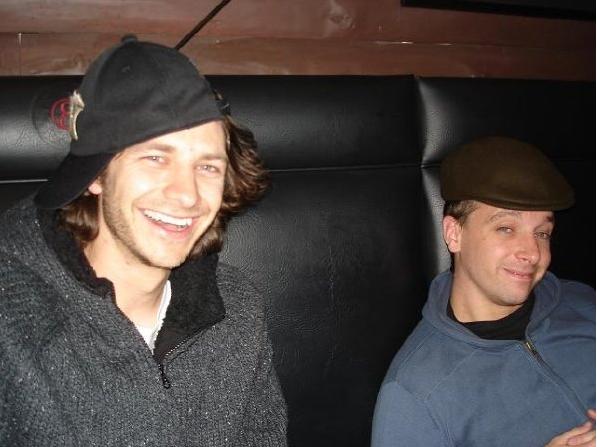
I recently had a chance to catch up with my friend Wally. Wal is one of my biggest inspirations and it’s always great to get a chance to catch up with him and talk about what he’s been working on, creative processes, inspirations, etc. What makes Wal slightly different, in context, is that he’s also known as ‘Gotye’. You know, that guy who used to know somebody? Wal is one of the hardest working and most intelligent people I’ve ever met, and his passion for what he does is infectious. But while most people would be aware of ‘that song’, many are not aware of the long road it took for Wal to become an overnight success.
I met Wally a couple of years after he’d finished high school. Wal had been in a band with some high school mates, a very good and well-known band (locally) called ‘Downstares’, but after graduation the band drifted apart, the guys moving on to their respective next things. You could see this kinda’ broke Wal’s heart, he loved music and he loved performing, but without a band he had no outlet. Wal was studying at uni and working part-time, but there was definitely something missing. He wanted to make music again.
It was around the same time that The Avalanches’ album ‘Since I Left You’ was going well, and DJ Shadow had just released his second album, ‘The Private Press’. In retrospect, I would say that these two albums were among the most influential in the Gotye project coming into being – not musically, necessarily, but in terms of them showing Wal the possibilities of sample-based music. Wal had never really considered using samples – he’s an excellent drummer and pianist, and I imagine the thought of samples seemed somewhat inferior or not as tangible as actually playing an instrument. Either way, he’d never seriously considered it, then one night he tried it out, mucking around with records, playing with sounds on his PC. Wal’s a perfectionist, so once he’d started on it, there was no stopping him, and he worked with the samples till he had something he felt was great. And it was. His first tracks were amazing, way beyond what anyone would have expected. Wal was excited, he’d found a way to make music again, now he just had to work out what to do next.
Wal read up on agents and record labels and radio stations, sifted through the phone book to find as many contacts as he could. Wal hand made hundreds of four-track CDs, printing up the CD labels and hand writing the track listing on each sleeve. I remember seeing the pile of worn down brown pencils in his room. He sent the CDs out to everyone he could, then followed each one up with a phone call. The workload was amazing – Wal was driven to do whatever he could to find an audience for his music. Early feedback was limited. Most places didn’t respond, some did but weren’t able to offer anything. Wal kept calling, kept making CDs, kept chasing, and kept making new music. Eventually, Triple J added one of his songs to their playlist, an amazing day. I still remember hearing Wal on the radio for the first time. It was an incredibly proud moment. I think some other smaller stations played a track or two, and Wal was getting mentioned in street press, nothing major, but the first stages of Gotye had begun.
Wal released two more four track CDs, all hand made (though he cut out the hand written business after the first one).They got limited attention, but music critics were highlighting his stuff in their weekly columns, even if it wasn’t getting added to radio playlists. Wal continued to get support from Triple J and he gained enough attention to develop on a live show – a small gig in a city bar with a bed sheet as a projector screen. Wal worked extremely hard to try and perfect a live show, unsure of how to do it with sample based music. And afterwards he thought it was crap (one of the difficulties of Wal’s perfectionist nature is he always notices every tiny error – in his head those errors are highlighted way more than the audience would ever notice).
Eventually a small record label agreed to distribute an album of Wal’s music, a selection of highlights from those first four-track CDs. This was another amazing milestone, Wal’s CDs were in JB Hi-Fi, in between ‘God Speed You Black Emperor’ and ‘Green Day’. I remember going into stores just to see it on the shelves. Wal was a legit superstar in our eyes, but even at this stage, Wal was still doing all the work – the label was distributing the music, but Wal still had to work on all the production and manage every aspect, along with creating new tracks. After all the work and all the effort, Wal went quiet in Gotye stuff for a little bit. He was still working on it, but he’d started playing in another band and he’d moved house and he just hadn’t been able to give his new music the time he needed for a little bit. And in some ways, I think the whole process burned him out a little. This was probably three years after he started recording music as Gotye.
We were on a group holiday on the Gold Coast when Wal first played us his new tracks. He’d put together an album, had had it all mastered, professionally done, it was a major step up from the previous stuff. The album was called ‘Like Drawing Blood’ and as soon as Wal played the first track, ‘The Only Way’, I just wanted to listen to it over and over again. ‘Like Drawing Blood’ is an amazing album, and not only good because he’s a friend, a seriously amazing album, among the best of any released that year. Rightfully, it was recognised with an ARIA Award along with many other accolades. His track ‘Hearts a Mess’ was number 8 in the Triple J’s Hottest 100 in 2006. Wal had become a fully-fledged rock star. People recognised him in the street (it’s still pretty cool seeing it, seeing people do a double-take as he passes), he played sold out shows and huge, surging crowds sang along to his tracks. And people stopped believing me when I told them I know him. For years, I’d been pushing his music at people, saying they needed to listen to his stuff, now I couldn’t even convince people that he was a mate. It was all pretty great – amazing, inspiring stuff.
Then Wal waited a couple of years, recorded his next album in amongst his other musical and professional commitments. Quietly, patently, took his time getting it right. Then he released that song. No doubt you know the rest. Wal’s first Gotye recordings were in 2001 in his basement bedroom in Montmorency. In 2011, Wal released ‘Making Mirrors’, his third album. Ten years to become an overnight success.
Why is this overly long Gotye history lesson relevant?
As noted, Wal is one of my biggest inspirations. He has taught me so much about following your dreams and allowing yourself to be creative, and about how much work it takes to achieve something great. Wal’s story highlights three important things:
1. Persistence is key. Wal had to work so hard to get recognition. There were so many times when things seemed like they might never go anywhere and Wal could easily have walked away. But he never did. No one wants to be sending out hundreds of copies of their work knowing that many of them will never even get read or listened to. No one wants to follow up with phone calls and hassle people who probably have no interest in talking to you. But this is what had to be done, and Wal did it because he was driven to succeed. He believed in what he was doing, he believed in his music, and he worked and worked and did whatever he could to get it heard. You have to be willing to put yourself out there and to put in the consistent effort required to succeed. It took a decade of persistence for Wal to achieve that ultimate success. An even now, he’s still working on his music, every day.
2. Practice makes perfect. Wal is an amazing musician, always has been, but it took time for him to work out how to perfect his sound. He had to learn a heap of new instruments, read through pages of software documentation (the worst of all documentation) and he had to practice over and over and over to get things right. One time Wal told me how about he records around 100 vocal takes for every track. He knows what he wants and he tries and tries again till he gets it exactly right. Wal practiced over and over again to get to the point where he can produce the amazing live shows he does today, none of that came easy. He’s tried, he’s failed, he’s been dejected, then he’s tried again. You have to practice to get it right. As much as you possibly can.
3. Passion is your push. No one made Wal succeed. No one pushed him, and as noted, he could’ve given up several times. But he was passionate about what he was doing, he wanted it more than anything. That’s what makes Wal the success he is. It’s not his intelligence or his natural ability – those elements play a big part, but Wal taught himself most of the skills he needed because he had the impetus to do so. Because he was totally driven by his passion. If you’re passionate about something, you can achieve great things. You work hard, there’s nothing you can’t learn to support your art. You have to be self-driven, you have to make it happen, and you have to be willing to listen and learn and take in everything you can along the way. Take risks, be strong in your self-belief, trust in your ability even when no one else does. If you do these things will that turn you into an international superstar? Probably not, but it’s these fundamental elements that position you to achieve your greatest success.
Also if you’ve been living on an island with a volleyball as your only companion for the past few years, go check out www.gotye.com and listen to Wal’s music – if you’ve read through this whole post, surely that’s enough context to pique your interest.
The Importance of Self Confidence in Writing
As with most things in life, your level of self confidence will dictate your success in writing. The difficult thing about that is, your mind is something that’s very difficult to change. Tony Robbins-type motivation will only go so far, and even then, only for certain people. For others, re-configuring the way you perceive yourself is an incredibly large hill to climb.
We’ve all seen people struggle with depression and anxiety – if changing their perception was easy, they’d be doing it. I’ve seen and heard of horrific stories of people who just couldn’t change the way they saw things, no matter how much logic was presented to the contrary. It’s heartbreaking. Changing your thinking is hard to do. Some find it impossible.
But as with most things, how confident you are in your work, how much you can make yourself believe in what you’re doing, will play the most significant part in your success. If you don’t believe in yourself, you won’t send your work out, you’ll second guess everything, you’ll think you’re not good enough. If you think that, that will most likely come across in what you do. If you don’t believe in yourself, you’re already making it difficult for anyone else to do so. So what do you do?
If you believe in something, if you feel in your heart that what you are working on is the thing that fulfils and sustain you, the thing that you could do forever and be happy, then you have to work at it. If this is the thing that you can get lost in, that you can be doing for hours on end and not even notice till you look down at the clock, the thing you feel more at home doing than anything else, then you have to go for it. A lot of people never get the chance to find that thing, that perfect merging of elements that can make them feel that this is it for them, this is what makes them happy. Not everyone finds their thing., so if you do find it, you need to explore it, you need to work at it. You need to do it.
It’s not easy. It’s not easy to push yourself, particularly when you don’t have the self confidence to maintain motivation. People are going to tell you that you can’t do it, that you’re not good enough, people are not going to be universally supportive. You can’t expect them to. The supporter you need is you. It involves taking risks, putting yourself on the line, taking the hits. You’re going to feel lost, you’re going to feel down, you’re going to make mistakes and embarrass yourself (oh, the mistakes). But you take it, you learn from it, and you move forward. As soon as you stop taking risks, you stop, period – you have to put yourself on the line, put your heart into what you do. Only you put everything in can you produce something truly great, something resonant. When you can find that plain where you’re sharing emotion, not just words, where you can feel the tension within each breath of each character and every moment in the scene. When it feels as real as anything you’ve lived. Then you know, you know in your heart that this is it for you, this is where you should be. Then you owe it to yourself to push, to keep putting in the work. The more work you do, the better you get.
Self confidence is a key element of success. Believing in yourself will sustain you when nothing else is left. You have to have the strength and courage to follow your heart, and hope that your heart leads you in the right direction. You have to believe that you can, always.
Take risks, send things out, take in the negative. Make it all part of what you do.
You have to believe, you have to work, and you have to make it happen.
You. No one else.
Five Notes to Help Improve the Quality of Your Blog Writing
Reading through a heap of blogs each morning, one thing that stands out is the quality of the writing. Don’t get me wrong, many of them are excellent, but there are some that are well-researched and written by a professional who clearly knows his/her field, yet their writing is flat. It’s like reading an academic paper – very informative and valuable, but a slog, and most of the time I just move on, there’s other content to get through. Some of these posts would be significantly improved if the author noted a few simple changes, language economics, if you will, that can greatly improve the fluidity of your content.
Next time you write a blog post, try applying some of these to your work, test whether they might improve the flow of your piece. These are minor, simple changes that can make a significant difference to your content, and, by extension, it’s reach.
1. Remove all mentions of the word ‘just’. There are, of course, some places where ‘just’ is still necessary, but more often than not, ‘just’ just holds up the sentence flow. When writing a blog post you want to be authoritative, state what you believe. ‘It just won’t work’. ‘It just doesn’t add up’. Anytime you write the word ‘just’, go back and review the sentence and see if it might read better, stronger, without it. If you can say the same thing in fewer words, you should, always. And quite often ‘just’ ends up being just unnecessary.
2. Remove weakening ‘I’ statements. ‘I think…’, ‘I doubt…’ You’re the author of the piece, anything you say is your opinion. There’s really no need to state this again in your article.
‘I think a better way to do things is…’
You have to stand by your words and state them as fact. If you don’t believe they are fact, don’t say them, but if you’ve done your research and you’re making a point, that statement will be more powerful if you take out the self attribution.
‘A better way to do things is…’
Much stronger, that’s a voice readers will pay attention to. ‘I’ statements can be very strong in some contexts, so you shouldn’t remove them wholesale, but it is worth reviewing each to test if the sentence reads stronger without it.
3. Use definitive language. This somewhat reinforces the first two points, but it’s crucial that your statements be definitive when necessary. In my previous job, I remember seeing an e-mail where a salesperson had asked someone from my team whether a job could be done by a certain time. The response the salesperson got was ‘Should be fine.’ ‘Should be fine’ is not good enough – the sales team are dealing with clients, they need to know whether this will or won’t happen, and they shouldn’t have to waste time sending a clarifying e-mail because of this person’s weak response. ‘I think that’s right’ bears significantly different meaning to ‘That’s right’ – the second one gives you the answer, that’s how it is. That person knows what they’re talking about and you can have faith in what they say (so long as they are, in fact, right). You need to be definitive in your language and give clear, authoritative answers. If you’re reviewing your work and you find uncertain statements, clarify them or cut them out.
4. Be mindful of the over-use of adverbs like quickly, rapidly, slowly, etc. Sometimes these are already implied by the surrounding context and only serve to slow up your sentences. ‘He ran quickly’ – well, yeah, he ran, I’d assume he’d do so ‘quickly’. ‘It fell rapidly’. Yeah, gravity’ll do that. Sometimes that secondary adverb is not adding anything to the sentence and can be taken out to better suit the flow of the piece.
5. Try to frame things in the form of questions. This is one that will become more relevant in future, but worth considering now to try and get your head around how it’s going to work. In their most recent algorithm changes, Google made note of the move towards ‘conversational search’ – people speaking their search terms instead of typing them, then using follow-on questions based on the preceding search. When people do this, they won’t phrase things as formally as they would when writing. The functionality of speech based search relies on the text being conversational, how you would speak normally. You should be able to say ‘Where are the best beaches near me?’ and Google should come back with the relevant listings. In future, you’re going to get better search results for your content if you ensure questions like this are built into your blog posts. If you can match likely user questions, you improve your chances of showing up as a relevant item. It can be difficult to do, putting questions in doesn’t always gel with story flow (and the quality of the content should always come first), but keep it in mind. Can you build relevant questions into the piece that will work for both the flow of the content and for future search requirements?
And one other last note – where possible, always let your posts sit for at least twenty-four hours before publishing. I can’t tell you how many times I’ve written something that I thought was brilliant, only to re-read it the next day and be totally deflated. You’ll always find errors and things you want to change if you give yourself some distance from it and clear your head.
These rules are not prescriptive, there are, of course, places where they won’t apply, but it’s worth keeping them in mind as you go, testing your sentence structures and statements and looking for ways to make your work stronger, more bold. Using definitive language will help establish your authority on a topic and make it a more compelling reader experience, improving your content quality and performance overall.
Now read this alternate last sentence and see if you agree:
These rules are not prescriptive, there are, of course, places where they don’t apply, but I think it’s worth keeping them in mind as you go, testing your sentence structures and statements and looking for ways to make your work stronger, more bold. I believe using definitive language can help establish your authority on a topic and make it a more compelling reader experience, improving your content quality and performance overall.
Makes a difference, right?
He Who Must Not Be Named
One time, Christos Tsiolkas told me how he dealt with blocks, passages he’s having trouble with. He walks. He told me how he used to go out and smoke cigarette after cigarette till the sentences became clear through the smoke haze, but then he quit smoking. So now he walks. He walks all over the suburbs where he lives, just taking everything in, observing, thinking things through.
Everyone has their own way of dealing with writer’s block, or not even ‘blocks’ so much (because ‘writer’s block’ is like ‘Voldemort’ to writers – we just don’t mention it), but those points where the sentences don’t flow. When everything’s working, the words flow into each other like drops of water, washing through your head, and it’s beautiful, but with everything I work on there is at least one point where I need to re-think it. Usually I write something, then I leave it for 24 hours (if not more), then I’ll go over it with fresh eyes, see it much more like a reader would come to it, then I’ll move things around, sort out what’s not working, tighten the sentences. And in that stage there’s always a few things that I need to go over – words that don’t feel right in the sentence flow, ideas that aren’t incorporated properly. Those bits that you know don’t quite work.
When I need to think, I go out and shoot baskets in my backyard. I can sit out there for an hour, not really thinking about what I’m doing mechanically, but going over sentences, rolling them over in my mind, even speaking them out loud (not too loud), working out what fits best. I do the dishes, the washing, mundane tasks that require no real engagement from my brain, things that will just occupy me and allow me space to clarify my thoughts and get the ideas to magnetise.
The worst is when I can’t stop thinking about it. If you don’t already have one, you need a notepad or some way to note things down at all times because it’s a killer if you forget that perfect sentence. I’ve had so many great sentences and paragraphs come together in my head just before I’ve fallen asleep (interestingly, studies have shown that you’re more creative in those moments before you fall asleep, where you’re slipping between reality and dream) then I’ve totally forgotten them when I’ve woken up in the morning. Even ideas that I’ve thought were so perfect, fit so well into the piece that there’s no way I could forget them – gone. You need to keep a notepad, or your phone, nearby so you can write a note. I’ve got heaps of barely legible scribbles, hand written in darkness. They’re normally enough to recall the idea, at the least.
It’s really important that writers be out in the world. You can’t create without ideas and inspiration to mould into stories, and the best place to get them is outside of your study. Reading, too, is crucial, but you need to get out and see things, feel things. So if you’re ever feeling blocked, ever re-reading and getting to that point where it feels like it’s all cardboard and the words barely seem to link up at all, just turn off your monitor. Get out of the house. Even if it’s the middle of the night. You need to get out, get away for a moment, think it through from a distance. And you need to experience life, feel it flowing against your skin.
Are You a Writer?
Why are we afraid to call ourselves writers? This often comes up if you’re in a writing course or at a writing event, if you were to ask the room ‘who here would identify themselves as a writer?’ you’ll see a lot of hesitancy. People aren’t sure they have the right to take that label. It’s as if saying you’re a writer is aggrandising yourself, as if, by owning it, you’re immediately putting yourself up alongside Hemmingway and Tolstoy and writers you’ve idolised your whole life. ‘What right do you have to such a title? Because you ‘try’ to write?’
Why are we afraid to say ‘I’m a writer’?
Here’s a couple of things to consider:
There are billions of great stories in the world, more than could ever be told in the history of time. There are not billions of great storytellers. That’s the way it is, not everyone’s a great writer destined to produce works of literary brilliance. Almost everyone has at least one great story to tell, but for the majority of us, that story will never be heard or written. For every great film or book you read, there are probably thousands more you’ll never experience, because they simply don’t exist.
There are billions of writing tips and strategies and people who’ll tell you what, in their experience, is the best way to go about creating stories. But they’re not all right. There is no ‘right’ way to go about producing literature. There are certain things that you should do – like writing everyday, reading everything you can, learning and taking on feedback – but no one can say ‘you do these things and you’ll become a published author’. Because there is no one way to go about it. If there were, everyone would do it. It always reminds me of Mark Haddon’s ‘The Curious Incident of the Dog in the Night Time’, a novel which includes pictures as part of the text. Next time you go to your writing class or group, you put your hand up and ask whether you should put images in as part of the text in your novel. No doubt you’ll hear scoffs and someone will tell you ‘no, absolutely not’, which makes sense, you would advise against it. But that book sold more than 10 million copies worldwide. There are no definitive rules on how to write great literature. You can make anything work, within reason.
The thing is, if people are afraid to own the label ‘writer’, people are at least somewhat afraid to write. At the least, people are afraid to show their work to people, because ‘it’s just something silly I’ve been working on, nothing really, forget about it’. If people are afraid to be writers, we’re missing out on great stories. You need to do it, you need to put your words down, do what you feel. You need to get it out there – yeah, you might get criticised, but that’s part of the process. Every author gets rejected and trashed and hurt. You take on what you can while staying true to yourself, want to achieve. What you think makes your work great. You only have to answer to yourself, know that you’re doing the best you can to achieve what you want.
We need people to own that label, to stand up and say ‘I’m a writer’, because we don’t want to miss out on great stories. It’s quite possible that the greatest novels of all time have never been put to paper, and that’s a massive shame. And maybe your stuff isn’t going to change the literary landscape, sell millions of copies, affect the lives of people in generations to come. But it might. Why not you? Kurt Vonnegut sold cars before he became ‘Kurt Vonnegut’. JK Rowling was a secretary. Great writers are people, just like you, doing the same things you are. Why can’t you succeed like them?
And that’s the one thing to keep in mind.
There are billions of people in the world. But there is only one you. No one else can write what’s in your head. And if you write, you are a writer. So be it.
I am a writer.
Maybe one day, you’ll read my stuff.
How to be a Better Writer
Sometimes people will ask how they can get better at writing. What do you do? How do you come up with ideas? How do you start on something? The answer to all these questions is: you write. I have been writing for as long as I can remember – I was writing hand written, 20 page horror stories in grade four. I was writing a novel when I was 15 (by page 54 I was at the end, so not really long enough). I have always been writing.
I write 1000 words, every day. Not all of it is good, quite a lot of it will never see the outside of my hard drive, but I do write, every day. It’s like when you get to that tipping point when you’re doing a regular exercise routine, where you feel guilty if you take a day off. That’s how I feel about writing, I can’t stand not doing it.
It’s one of the hard things to explain to people – the ability to write well is not something you can pick up and start straight away. Everyone can write, but not everyone can communicate through words, and even fewer can convey emotion or feeling through language. To be able to find the emotional centre of what you’re writing about and re-create those feelings in the body of the reader is incredibly difficult. Only the best can do it consistently, and that’s after years and years of work. It’s hard to explain that I can write well, because I’ve spent years doing it. And even then, I’m still working everyday to get anywhere close to that next level.
How you get better at writing is you write. And you research. You read everything you need to form an entire city of ideas inside your head, till the story flows through your fingers and daydreams come to you in complete sentences. I research everything, from the specific sound of a punch, to the smell of the inside of a jail cell. I recently wrote a piece where I light-heartedly used Shakespearean language – no one would have noticed, but I researched the differences between ‘thy’, ‘thee’ and ‘thine’ for authenticity’s sake. I love the research, I love getting to know the world I’m working in. And I love to read. And I guess that’s the key point of the whole thing.
How you get better at writing is you write, you research. And you love it. You don’t love it and your readers will know. You’re not passionate about it, your writing will be flat. You might write something quite good, but the key to great writing is that you have to love it. You have to love sentences and paragraphs and the feeling that can be captured in the smallest details. How one line can break your heart or make your day. You have to love the content, find the heart of it and bring it out. If you’re not real, if you’re not able to put humanity into what you do, you’re never going to reach that next level. It’s hard to do, and it’s difficult to open yourself up to readers and put yourself on the line. But that’s what you have to do.
How you get better at writing is you write, you research and you love it. And you make it your own.
And the key to getting better is you have to do it. Every day.
Undeniable

I was watching the 30 Seconds to Mars documentary ‘Artifact’ recently when lead singer Jared Leto said something that really stuck with me. The documentary, for those who haven’t seen it, is about how 30 Seconds to Mars had been signed to some ridiculous contract whereby despite their global success, the band members were not actually making any money at all. The band then sought to change the terms of their contract and were subsequently sued by the label for $30 million. The film looks at the challenges of the modern music industry and the issues faced by artists in trying to make money from their work, and it’s a really well made film. Their music doesn’t do it for me (though I’m not the target demographic) but the film was compelling and definitely made me empathise with the situation.
So there’s one scene where Jared Leto is talking to one of the other band members – they’re lamenting their position and debating whether they even go on as a band. They’re facing building legal costs in a battle they aren’t likely to win, things are not looking great. Then Leto says this:
‘Don’t you wanna’ make something that lives forever? That’s phenomenal. That’s great. That’s undeniable.’
For some time in writing my second novel I’ve been trying to think of a way to describe what’s been the problem with it. I’ve written several drafts, and at least one of them was okay. But it wasn’t brilliant. I’ve been working and re-working and trying to get it on track – my view is that it’s alright, but it’s just slightly off target, like a train running with its wheels off the tracks. If it were on the tracks, it would be smooth, it would flow and it would be not good, not great, but perfect. It would be undeniable. When Jared Leto said this I was like ‘Yes, that’s it, that’s what I’ve been aiming for’.
I imagine this is both the strength and weakness of writers – you want something to be great, so you do all you can and the more work you do, the better it gets, but as your own worst critic, you’re also thinking ‘is it that good? Could it be better?’ I don’t ever want to read great literature and think to myself ‘I’d be happy if I could write something close to this’, because I wouldn’t. My work should hold up when compared to other great work, that’s the way I view it. And of course, brilliance is in the eye of the beholder, one man’s genius is another man’s trash. But I know my ‘brilliant’, and I know I haven’t hit it yet with that book. I remain ever confident that I will. .
Maybe it won’t be a literary classic known the world over and held up as an example for decades to come, but as long as it is, in my eyes, something that I can honestly say ‘that is the absolute best book it could be’, that is what I aim to achieve.
The aim is to create work that is undeniable.
Jared Leto gave me to words to express that desire. Who’d have thought the drug addict from ‘Requiem for a Dream’ would serve as a source of wisdom?
Kinglake
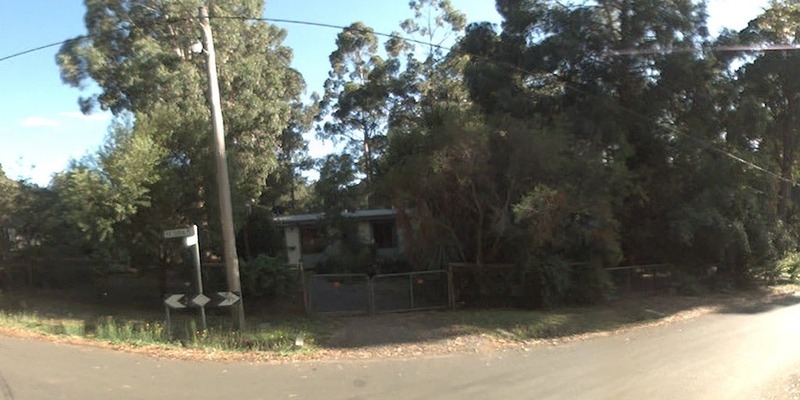
I grew up in a small town called Kinglake where there is no lake. We would often have people drive into town towing boats and they’d stop and ask us where the lake was at. We’d be there, sitting on the wooden bench outside the milk bar, our BMX’s lying down in the dirt and we’d tell them there wasn’t one. ‘Nah, come on mate, don’t be a smart ass, where is it?’ When I tell this story, people think I’m making it up, that no one could be that stupid to tow a boat all the way up to Kinglake (it was a small town on top of a hill, about 45 minutes from any suburban area) looking for a lake that didn’t exist. I don’t know what to say, it happened, regularly. Like, at least once a month. Maybe people confused it for Lake King, and this was in the days before GPS, I don’t know. But it happened, dudes would ask us where the lake was at. Then we’d give them directions to no where – ‘…left at the roundabout, go as far as you can down that road, then turn right and follow that till the bitumen runs out…’ Who knows where they ended up.
I always had to explain where Kinglake was to people. Even people who lived half an hour a way seemed unaware of it’s existence when I told them where I was from. It was a process of elimination from that point – ‘do you know where St Andrews is? Do you know where Whittlesea is? Greensborough?’ moving closer and closer to the city with each example till they had some vague idea of which Kinglake was in. This got worse as I got older and started working in the city. I was working nights for a while and people were amazed, startled even, that I would drive an hour to get to work and back. An hour was normal for me so I never really thought much of it, though it did get long on those drives home at 8am after work. I did fall asleep at the wheel a few times, though not enough to be seriously dangerous. But now, everyone knows Kinglake. Ever since 2009, when half the town burned down in a bushfire. It was a strange dynamic, going from no one knowing anything about the small town I came from to seeing the Prime Minister shaking hands with kids outside the local fire shed. It became something sympathetic, to be from Kinglake, then respected, like you’d been through a traumatic event, even though I hadn’t lived there for years before the 2009 fires.
I was in Canberra when the bushfires struck. I moved out in 2003, my family moved out of Kinglake in 2008. My brother stayed and was one of the senior officers in the local fire brigade. I have several other relatives who also still live there. And it was weird seeing it all unfold from another state. The town I grew up in was all over the TV – I was watching the scenes on Sky News, the blackened streets and horror stories. It was terrible, I wrote about it here. I rushed back down from Canberra and got into town (they had blockades up and were only letting locals in) and caught up with my brother but by that stage there was not much anyone could do. Everyone was just walking around in a daze, weaving between Army and CFA and police officers with news crews roving round between. It was strange, the whole thing felt surreal.
One of the strangest things for me was that after that Kinglake felt a lot less like my home. I’d grown there, running round the paddocks, swimming in dams, playing in fallen gum trees. It was me, and I felt an ownership of the place. I felt like it was mine, in some part. But after the bushfires it all changed. New buildings came in, the landscape changed. Now when I drive around town, it doesn’t feel as familiar anymore. The family house my Dad had built (in the photo above) burned down, my brother’s house burned down (he built a new, better one on the same block and still lives there), everything became newer – better, I guess, for those living there, but one of the side effects of that day for me was losing my home town. I have so many memories of Kinglake and what it was, and I remember how it contributed to me as a writer, to the stories I want to write, so it was sad to feel the connection frayed. I still love Kinglake, I still like going up there, but it’s not the same as it was. It belongs to the people there now, like I can’t claim a part of it anymore, which is fine, and it makes sense, I moved away from there a decade ago, but it always left me a bit sad. That it, through necessity, had to change. I miss the huge trees in our old backyard on Victoria Road, climbing up them to the point where they thinned out and swayed in the wind. I miss playing basketball on my dirt half-court. Of course, people lost way more than a few memories or connection with their home town, it’s trivial of me to whinge about such minor things in the larger scheme. But every now and then I think about my home town and remember that I can’t really ever go back. It’s everything I was and everything I would be.
I remember writing on my Dad’s computer into the night while the rest of my family slept, losing track of time as I got absorbed into whatever story I was putting together. I remember looking out the curtains in the night, the dirt road trailing off beneath the streetlights. No cars, no traffic. Just silence.
Be True
There’s one certainty in writing, or in doing anything creative for that matter – not everyone is going to like your stuff. In fact, there’s always going to be people who hate what you do. It’s just not their thing, they’re not going to like it no matter how you go about it. You can’t expect everyone to be supportive or positive about your work, because it won’t happen. Same as you, people like some things, don’t like others, that’s going to be the case with editors, publishers, judges – sometimes your stuff just won’t be their thing. You can’t take it personal.
The best way to combat this is to know who you are and what you want. I was listening to a podcast by artist David Choe once, where he was talking about his life and how he became an artist. Choe was basically a juvenile delinquent, vandalising whatever he could. He talked about how he grew up doing stupid drawings of G.I. Joe figures and his early drawings that you can find online are just that, scribbles no better than anything you could do (Choe notes this himself in one of his books). But he stuck with it, and over time he developed his own personal style. His work (in my opinion) is amazing, but as impressive is his persistence and dedication to his art. It wasn’t created for anyone else, it wasn’t designed with a commercial strategy in mind – Choe has said his options were become an artist or end up in prison (he ended up doing both, but that’s another story).
What David Choe’s story highlighted to me was that you need to do your art for you. You need to know what you want and be happy with what you’re doing. And to a large degree it doesn’t matter what anyone else thinks, you stick with what you want to create, what you feel passionately about doing, and you can create something that will be wholly fulfilling. Anything can be art, any means of communication you choose for what you want to create can work, can come together, you just need to be true to yourself and be able to envision want from your work. It doesn’t matter what anyone else wants, you put your heart into something and that is something that cannot be replicated. You are putting your individuality into your work, no one else can do that. As long as you can feel happy with what you’ve created, feel that it is all it can be, then it’s right.
And that’s an important note to keep in mind – that it’s all it can be. Most times you’ll know when something’s done right, it will feel complete. You’ll also know when it’s not complete, when you haven’t given it your all. If you put out work that you know isn’t complete, that’s likely to come across, that’s the feedback you’ll get, and you have to be honest with yourself. If someone criticises something you’ve done, you have to think ‘is this the best I could do?’ Sometimes you need to be confronted with tough feedback to get the best out of your work – it’s not a stop sign, not a signal for you to give up. You need to take feedback on and use it. Keep in mind what it is you want to achieve.
My approach with my writing is that I will listen to any and all feedback from readers who want to give it to me, good or bad. If one person says they didn’t like a section, I won’t necessarily go back and re-do it (it would depend on their reasons for disliking it). But if that same section is highlighted by more than one reader, I will definitely go back and re-read it and make sure it’s communicating the story I want to tell. If I can read my work back and feel happy with it, especially if I’m reading it back months after first writing it, then I know it has something. It may need more work to polish it, but I know there’s something there and I’ll stick with it.
You, as a writer, as an artist, should never be afraid of criticism or feedback. You need to get your work out there. But you need to know your work is, at it’s core, the best it can be from your perspective. New perspectives will help you enhance it, but you need to be the one who feels confident – it’s your work. It needs to be you, not what you think someone else might want. You’re going to get rejected and criticised, but that’s how it is. All writers get rejected. All of them. Don’t let rejection get in the way of what you want. If you know that you have done all you can, that your work is the best it can be, in alignment with what you want to achieve, then you should stick with it. Keep working, keep developing your own style. You only fail as an artist when you give up.
 twenty six