Tagged: Writing tips
Four Ways to Be Your Own Best Critic and Greatly Improve Your Writing
One of the biggest factors contributing to the success of your writing is how good of an internal critic you are. How objectively can you view your own work? How much are you able to put yourself into the mind of your readers when you edit and re-write? This is crucial and probably the most significant difference between a good writer and a great one – it’s one thing to be able to write a story, it’s another to view that story as someone else would, and to be able to cut and edit your sentences from that point of view. With that in mind, here are a few tips to help improve your own editing process.
1. Let everything you write rest before editing
Nothing increases objectivity like distance – it’s like when you end a relationship and it’s devastating and you’re a wreck, but then over time you start to see things more clearly, see the issues and problems that existed beneath your rose-coloured memories. Writing is the same – you’ve spent a long time thinking about the piece, you’ve worked on it in your head, it’s kept you up at night going over it and some of those sentences have arrived to you in such pristine fashion, there’s no way they won’t make the final cut. Once you’ve let something sit, you’re able to review it without that level of emotional attachment. The longer you can leave it, the less likely you’re going to be blinded by personal connection and the more likely you’ll be able to view it as just another piece of writing – and that’s the best way to edit. If you can read your own work as if it’s someone else’s, like you would any other piece, then you can truly unlock your objectivity and see flaws for what they are. And then you can correct them.
2. If your mind’s drifting as you re-read, there’s a problem
I’ve spoken to writers who’ve justified this, to some degree, by saying they might have trouble focussing on the piece because they wrote it, they’re intimately familiar with the story. If you created it, it’s going to be harder for you to be excited or engaged, right? In the vast majority of cases, I don’t believe that way of thinking is correct. If your thoughts are wandering as you read, it’s likely your readers are going to drift too, and if they drift, then your work hasn’t connected and you’ll lose them very quick. Don’t dismiss flow issues or engagement lapses, they’re all indicative of problems you need to, at the least, re-assess. If a section loses you, you need to review the structure and understand why the sequence seems off. You can go crazy on this, I know, you can get hung up on small issues that’ll never feels quite right, but it’s important that you do investigate and understand any areas where things don’t sit as they should. It’s like when you get feedback – you take in all feedback, listen to what the person has to say, then you re-read the section. If it communicates what you intended, that’s fine, but even if you don’t agree with their criticism, it’s worth re-assessing, ensuring the message is delivered as you want.
3. Editing is going to take you way more time than writing
If it doesn’t, you’re either extremely lucky or you’re not maximising the potential of your work. I was reading an interview with a musician once who talked about how he’ll do more than 50 vocal takes for every track he creates to ensure that he gets the best version for his final piece. This is ‘the work’, as he explained it, and he’d seen many musicians who weren’t willing to do ‘the work’ fall by the wayside because they would do three takes, feel one of them was perfect, then want to move on. Attention to detail is the difference between good and great. This is true in everything, but very much so in writing. How many times has a small error in a piece stood out to you? How many times have you seen an error in a piece by an accomplished writer? Attention to detail is a sign of professionalism, and while people can get over a minor mistake here or there (everyone makes them, I probably have in this post), you don’t want to give your readers anything that could divert their attention from the piece. A small mistake is like a bump in the road, it can distract you from the main narrative momentarily. Too many bumps, and they become the narrative themselves. You should always edit, then edit, then edit again before you even think about releasing your work, because you’ll always, always, always find issues, no matter how naturally gifted you think you are. Always.
Accepting that editing is just as significant a part of the writing process is important, but ideally, you also need to make yourself just as excited about the editing process as the writing itself. How? By thinking of your readers, by keeping in mind why you’re doing ‘the work’. Because the better it is, the better it’ll be received and the more likely you’ll reach a wider audience. And it can be an engaging process – you’ve written your first draft, but now you get to go back and find ways to improve it, to make it even better. That’s genuinely exciting, it’s great to read through and find ways you can make sentences better, to think over progressions and words and improve the final product. You are not only the writer of each piece you create, you’re the first reader, and you have the chance to shape that story into what you want. How many times have you watched a movie and thought ‘it would’ve been better if…’ The more objective you can be, the more you can actually do this with your own drafts.
4. Is that how you would say it?
One of the more common pieces of writing advice is to ‘write like you talk’. And like most tips (e.g. ‘write what you know’) there’s really more of a middle ground truth to this. Definitely, you should review your writing and ensure it flows naturally. The reader will have a voice in their head as they read, and if that voice sounds inauthentic or starts saying things that stumble in the flow, it’s another bump in the road that could, potentially, turn them off. I highly recommend reading your work out loud to ensure the flow is right – it’ll highlight things no other method can, and the more you do it, the more your internal monologue gets attuned to sentence flow, and you’ll make fewer mistakes in your initial drafts. But you need to also ensure that you’re communicating effectively for each piece, which is not always exactly like you talk. For example, if you’re writing fiction, it’s crucial that you write how the characters would talk, not you. For non-fiction, you can’t use slang as you might in regular conversation for every piece. There’s a level of self-awareness required to accompany this advice – it’s not necessarily how you would talk, it’s how you would talk to the intended audience of the piece.
The most common errors I see on this front are things like ‘you are’ when it would read better as ‘you’re’, ‘it is’ instead of ‘it’s’. These types of common contractions are very much in tune with how we communicate – a simple sentence like ‘it is crucial that you are aware of this’ is grammatically correct, but no one would say it like that in real life. Your words are translated into a voice in the reader’s mind, and it’s important you communicate like a real person to avoid any chance of losing their attention.
Being able to distance yourself and view your own work with a critical eye is integral to your success as a writer. If you write one draft, don’t re-read, and send it out, I guarantee you will fail. No one, no writer in the world gets it perfect in one try. You need to embrace editing and improve your self-awareness by benchmarking your work against the best (as a comparison, not in admiration) and come to it as the first reader of your content. The better you can do this, the more likely you’ll make your work the best it can possibly be.
Levelling Moments
There are certain moments in life that level you. Sometimes, something will happen that will just tune out everything else and make you see things for what they are. These are the moments that can define you, that stay with you long after, and that you go back to, hoping you’ve learned something from them. Here’s three such moments from my life:
- When I was 13 I was caught trying to steal a G.I. Joe action figure from Kmart. It was the worst, the most shameful, embarrassing incident. I also had my younger brother with me, he would have been seven at the time, walking around, holding my hand as we went. But the moment that levelled me was when they called my Mum up on the loud speaker, when she came in and saw me. At first, she was concerned, she thought there must have been an accident or something, but then they told her why they’d called her. Her face. I felt worthless, stupid. Nothing I’d ever done had levelled me as much. I can see how, in a moment like that, how it could go either way for some people – you could either ensure it never happens again, or you could accept that look of disappointment and just become that, just be ‘that’ kid who’s no good. I chose the former, I would never even dream of stealing anything again, and from there I really started concentrating on doing better at school and working on my writing. But it was just, everything, that day, it took me down to nothing, no better than anyone or anything. I felt like I’d destroyed any trust, faith or hope my Mum had in me.
- Also when I was younger, probably about 11 or 12, I once went to pat my younger brother on the back and he flinched and ducked a little bit, like I was going to hit him. It was terrible, a sick, dark feeling in my gut. Was that what I was like to him? Was I a bully who scared my younger brother so much that he expected, when I raised my hand, that I’d hit him? We mucked around a lot, we were boys, but I never intentionally hurt him, and I definitely didn’t want him to think I’d smack him one out of no where, for no good reason. It was only a moment, and my brother probably forgot about it within that same split-second, but it stayed with me. It reminded me that I needed to be more wary of my actions. I can’t have people I love flinching at my touch. Why would he do that? Violence is as much perceptual as physical – what you think is nothing could be terrible to someone else. I needed to ensure the people closest to me always felt safe and knew I’d never do anything to hurt them. It changed my perspective, made me want to be a better person.
- When I was 16 or so, I was going out with this girl. We hung out all the time, we’d always be doing stupid stuff together. But one thing that annoyed me was that she was always non-committal. ‘We’re not going out’ she’d tell me. ‘I’m not your girlfriend’. Every time she said this, it hurt. Why would she be so against being linked to me like this? And what did that mean, that she could go out some time and be with someone else and I’d have no right to be upset about it? After about 6 months, I accepted that she’d never be my ‘girlfriend’, that she was really saying I didn’t mean much to her, and one night, at a friend’s party, I kissed another girl. When I spoke to her next, I told her and she was upset and she hung up. She called back about a week later and asked me why I did it. I told her that she wasn’t my girlfriend. She was crying, I could hear it through the receiver. I told her I was sorry she was upset. ‘You broke my heart’, she told me and she hung up. It was a terrible feeling, one I’ll never forget. I never wanted to be that person, be responsible for someone being so upset like that, again. It reminded me that all actions have consequences, that all relationships are emotional, no matter what’s been communicated. That you have to be aware of how your actions can hurt others.
These random moments are some among many points in time that have helped shape who I am, and importantly, they’ve shaped how I write. These incidents, the things that have levelled me, also remind me of the basic elements of humanity, of the things we all face. Everyone would have similar stories, moments where they’ve been reduced to nothing, left stripped, their ears ringing, feeling like a ghost. These moments make us, and reflecting on them now, they’ve formed big parts of the issues I’ve tried to explore in my writing. What I’ve found is, re-examining these moments can be powerful, can awaken those raw emotions, and when you’re writing, that’s what you need. You need to be open, you need to be able to feel what’s happening in your scenes. By remembering these moments, I’ve found that it’s helped capture the emotion of other, completely different scenes, more accurately. It’s an interesting excercise, remembering those moments, and might be worth you trying out, just to feel them again, awaken yourself to what you might have learned or taken from them.
Do you have any levelling moments like this?
The Intriguing, Frustrating Career of Todd Carney
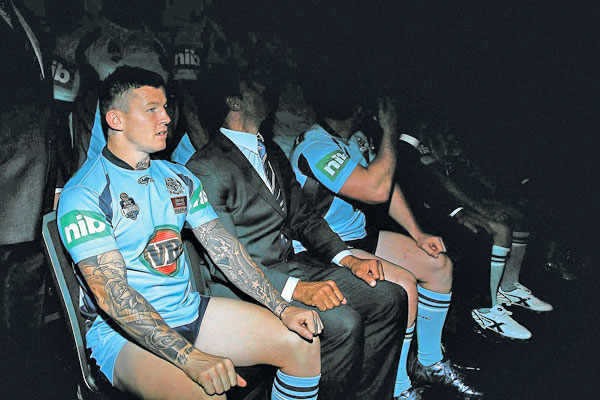
I lived in Canberra from 2006 to 2011 and while I was there I came across a story that absolutely intrigued me. I’m always fascinated by how people end up where they are, why they do what they do. When you read a story in the newspaper of how some guy, for example, murdered his wife, you’re only ever skimming the surface of the real details behind the story. But what motivates people to do such things? What could’ve happened in this person’s life to make him decide that this is the course of action he’s going to take? These questions are key to your character development efforts in your own writing – it can’t be that a person just does something, there has to be a reason why, an authenticity in their thought process.
This is how I approached the story of this NRL player that I heard about in Canberra. Being from Melbourne, I know hardly anything about NRL and have very little interest in it. I tried to go to a few games in Canberra, to experience the local culture, as it were, but it never caught on for me – I imagine people from northern states have a similar reaction to AFL. But while I was there, there was this one player who just kept doing really amazingly stupid things. This player was on $400k per season with the Canberra Raiders, had everything going for him, yet he just couldn’t stop himself from getting drunk on the weekend and punching people in the face or breaking things. I read each headline with amazement – Why was he doing this? What renders a person unable to follow basic societal norms for the sake of their livelihood, what they’d worked all their life to achieve?
The player I’m talking about is Todd Carney. You may or may not have heard of him, but he recently got sacked, again, from another NRL club. It makes no sense – he’s a great player, no one debates that, but he just can’t seem to stop himself from making dumb decisions.
For example, here’s a rundown of Carney’s career history:
2004 – Carney makes NRL debut at age 17, wins Raiders ‘Rookie of the Year’, plays for Australian junior side
2006 – Canberra Raiders leading try scorer, team finishes in top 8, selected as captain of Australian junior side. Charged with drink-driving and reckless driving, license suspended 5 years
2007 – Loses chance to play for State of Origin side due to another driving offence – refuses to stop for police, leads them on a chase through Canberra, hits a dead-end street, then flees the scene, leaving team-mate in car. Banned from driving till 2012, told he’ll go to jail if he offends again
2008 – Allegedly urinates on man at a Canberra nightclub. Gets suspended by club, whilst another investigation takes place into driving incident where he left his team-mate, with team-mate saying he was told to keep quiet about the incident. Carney suspended for season, told to accept strict management plan from Raiders – eventually sacked by club and de-listed from NRL for failing to agree to terms. Seeks contract from overseas club but can’t get a visa due to criminal history
2009 – Tries to get back in the NRL, but application denied – respond by smashing a shop window and jumping on cars in Goulburn. Receives 12-month suspended jail term. Released by Raiders to play in lower-level league in Cairns – gets in fights, sets some guy’s pants on fire, eventually signed by Sydney Roosters to new contract
2010 – Joins Sydney Roosters, has great season, wins game’s highest individual honour, the Dally M Medal – so he’s undeniably a great player, despite the off-field issues
2011 – After three separate alcohol-related incidents, Carney sacked from Sydney Roosters. After again trying to play overseas, and again being denied on visa grounds, Carney signs contract with Cronulla Sharks – estimated to be $350k per season for two years
2012 – Plays in State of Origin, has solid overall season, but sits out final games with injury
2013 – Signs on with Sharks for another five years
2014 – Sacked from Cronulla after pictures emerge of Carney seemingly urinating into his own mouth
It’s a pretty amazing record, not only for the indiscretions, but for the amount of opportunities he’s had to straighten up.
Of course, he’s not the first pro athlete to do things like this, things that frustrate us normal folk as we do whatever we can, day0-to-day, to keep our incomings higher than our outgoings. Did you know that 78% of NFL players go broke within five years of finishing their careers? The average NFL salary is $1.9 million p.a. Amazing, right? How do they do it, how can they throw such opportunity away?
Unfortunately, we’ll never be able to see things from their perspective to understand. Carney’s naturally gifted, a top-level athlete. He’s always been better than most at what he does. So while we can’t understand why he doesn’t seem to appreciate his unique position in life, he probably doesn’t understand why we can’t do what he does. Its stories like this that are the reason I write. Not Carney himself, but people, what makes people do the things they do. People will often say that there are really only a certain number of basic plots, and that all literature is just a variation on these outlines. I disagree. There’s so much complexity in people’s actions, so much opportunity, as a writer, to explore new things. Not every human has been born yet, so, to me, not every story has been told. Everyone has a totally unique perspective, different motivations for how they conduct themselves. Writing, for me, is about trying to understand those reasons, the things that cause people to respond the way they do. How people come to be who and where they are.
Cases like Todd Carney’s highlight that we don’t have – that we can’t ever know – all the answers. This is why, as writers, need to keep working to better interpret and understand the complexities of the world. Because things happen everyday that are fascinating, intriguing, amazing. By taking to time to understand them, to view things from a perspective other than your own, you’re stepping beyond the realms of what you, yourself, understand to be true and opening yourself to a wider experience of the human condition. That excites me about literature, that fires the synapses of my brain and gets me thinking, and after I get thinking, I get writing. And I love that plain, that hum you get into when your ideas expand and burst.
Whatever your opinion, whatever the real reason may be, stories like Todd Carney’s remind me of why I love to write.
On Finding Your Literary Voice…
In reading literary reviews, or writing reviews in general, one note that commonly comes up how the author has found his or her voice. ‘This writer has found his voice…’ ‘She’s established her own voice…’ ‘His unique voice comes through loud and clear in his writing’. The problem with this note, for prospective writers in particular, is that it can be a bit vague – what does that mean? How can someone find their literary ‘voice’? Your ‘voice’ is your distinctive presence, your way of communicating a story, and in that sense, there’s not really any way a person can say ‘here’s how you find your voice’, because it’s unique, it’s who you are – and not only that, it’s who your characters are, the authentic voices of your story. It’s the voice of the piece needs to be reflective of the story and true to the reality of the world that you’ve created.
While I can’t tell you how you can find your voice as a writer, what I can tell you are some of the things writers’ often do that are counter to finding their voice. We’re all trying to ‘be writers’, all trying to do what writers do, as opposed to what we, normal-folk, do, and inevitably, that leads to us adopting some practices which go totally against the mission of finding one’s own unique voice. Here’s a few things to avoid, or think about, as you go about your writing work.
Not every detail has to be painstakingly poetic
This is probably the most common mistake people make, they’ll try to create epic, poetic descriptions of even the most mundane and irrelevant details of the scene in order to conform to what they believe is a literary approach. It’s one of the easiest traps to fall into – you get self-conscious about your writing, you think you need to make everything more stylised, more beautiful, and you end up wasting paragraphs on details that serve no purpose to the wider piece. The greatest stories have a flow to them, an effortless beauty, a sense that every word, every description, is rested right there, in it’s correct place. That sense comes from knowing the story, from having every detail relate back to the core of the piece. Everything you describe, every element, should all be adding to the wider themes and ideas of the world of the story.
For instance, I read a piece recently where a writer had spent sentences describing the details of the way a room was set out. The story had nothing to do with room detail, and the characters didn’t have any psychological predispositions to noting down such elements. The description was purely there because the writer felt like they needed to include complex description. Now, if the character did have a leaning towards being caught up in intimate details – if, for instance, the character was having a life moment and such details reflected a wider sense of his/her own position at that time, those details would be relevant, but painting literary embellishments without direct story purpose is often jarring and representative of your own lack of confidence in your writing. Every detail you note should have a reason for being there. If it doesn’t, cut it out, it’s just weighing down your prose.
Trust what you know
A big part of establishing your own literary identity is trusting what you know. Your voice is exactly that – your voice. You have to know what you’re trying to achieve with your work. You know how people talk, you know what interactions feel genuine. You also know, in your own experience, what makes people do the things they do, what life events lead to people being how they are. Your experiences on this front are totally unique – you’ll have seen and heard of people doing things for different reasons, and you know those sequences as truths, as things that have happened. Those understandings are what you need to reflect in your work – if something happens, if someone does something, it’s not just a random event. What made that person do that thing? What compelled them to act in the way they did? You know what would most likely lead to a person being in the state of mind they’re in, and that is the truth that you need to reflect and tap into in your descriptions. That’s not to say you need to go into every detail of their life, but you need to know your characters, who they are, what they do, what their motivations are. If you know that detail, you can ensure their perspective is reflected in every action – how they react is how they would respond in real life. And that’s based on what you know – that’s where your own authenticity comes from, not from movies or books or what you think other people might think. You have to trust your own knowledge and understanding and ensure that that honesty is reflected in your work. If something happens that doesn’t feel true to you, it’ll likely feel totally fake to another reader.
Your only obligation is to the honesty of the story
This particularly relates to the voice of your work – the way the characters speak, the way the story is presented, these details need to reflect what’s best for your story. You know the characters, how they talk, how they act. The way it’s communicated, in your words, should reflect the voice of the piece. If you want it to be slow and dreamy, read other writers’ who’ve written in that way and study what they’ve done that works. Use thematic images in your writing area and music to inspire your thoughts and get the words flowing through your head. But above all, ensure that the voice you use for your work is true to the story you want to present. If it’s first person, get in the head of your character and describe the world as he/she would see it. If it’s third person, understand the flow you’re going for, how distant or intimate you need to be, and ensure that perspective is maintained – but always be true to the feel of the story, the characters, the drive. How do you want the reader to feel when reading it? What elements will keep them glued to your words as they flow through the piece? Don’t write in the voice that you think a ‘real writer’ might go for, write in the voice of the story, of the characters. Write as if they’re telling the story themselves, how they would describe it. You have to inhabit the story, be part of it, see things from the interior of the book. Once you get in there, in between the words, you’ll start to see your own voice shine through and move from being influenced by other works to being contained within your own piece.
As I’ve discussed before, there’s no sure fire way to be a successful writer – if there was, everyone would do it. It’s a lot of introspection, a lot of observation and a lot of daydreaming, allowing yourself to get caught up in your imagination. Finding your voice is difficult – it’s something that gets thrown about like it’s a goal to aspire to. But more often than not, you find your voice by not specifically looking for it. Be honest to your work, to the world’s you’re creating, to the characters you’re building, and through that honesty and focus, your voice and style will develop all on it’s own.
Music That Fuels Imagination…
Music has always played a big part in my writing. Not so much as I’m writing, as I like to be fully enclosed within the words (sometimes strangled by them), but when I’m thinking, when the story is percolating inside my head, it’s good to have a background theme. I used to live in Kinglake, which is about 40 minutes drive away from anything – a rural town stranded on top of a mountain. The distance meant you had a lot of time alone with your thoughts, travelling from one place to the next. I worked in the city, which is about a 3 hour round trip, and the best thing about it was having that time and space to open your mind, to allow your creative thoughts to drift and evolve. I found music often played a big part in this, certain songs or albums would wriggle into my consciousness and form a soundtrack for my expanding imagination.
While it’s different for everyone, I thought I’d share a couple of my favourite idea accompaniments. If you’ve not heard these or haven’t given them a re-listen in a while, maybe this will motivate you to load them up and let your mind wander through the tracks.

‘Pieces in a Modern Style’ – William Orbit
It takes some people a moment to get their head around this one – William Orbit is an electronic music producer, and he took some of his favourite classical pieces and re-worked them using digital sounds. And some of them, I can get totally lost in – most notably ‘Ogive Number 1’, (track 3). Each track inspires it’s own visual idea in my mind, and it’s a great album to just press play on and go about your thoughts. Try listening to it as you drive through the city at night, or along the freeway at dusk.
‘Untrue’ – Burial
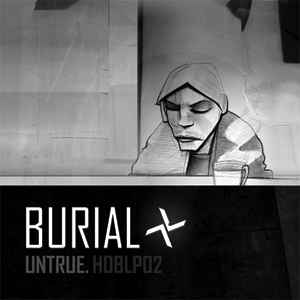
I find all of Burial’s music to be incredibly vibrant, in a visual sense. The titles of his tracks alone inspire certain narrative ideas (‘In McDonald’s’, ‘Homeless’, ‘Night Bus’). There’s a sorrow and detachment in Burial’s music, which is reflected in the man himself (in the few interviews he’s done). But in that too, there’s beauty, something that entices you to take a better look at the world around you, to take in the various elements. It’s the detail that he seems to bring out, the heart of a moment, encapsulated in musical form. Again, best for listening to at night – though I do most of my writing at night, so there may be a reason for that motif.
‘Endtroducing…..’ – DJ Shadow
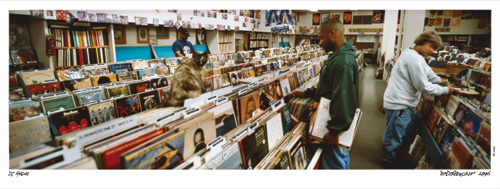
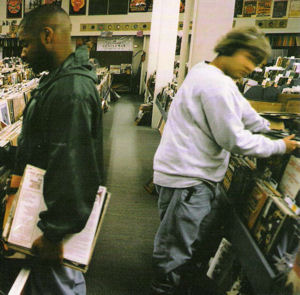
That’s not a spelling error, the album is called ‘Endtroducing…..’, the diamond in the catalogue of sample genius DJ Shadow. Very few artists come as close to creating a perfect album as Shadow did with this one, and it’s been both a blessing and a curse for his career – he obviously garnered huge amounts of fame and acclaim for it, but everything he’s done since has inevitably been compared to it, and also, inevitably, fallen short. For his part, Shadow has always said he’s produced music he loves, and he’s stood behind every album, regardless of critical sentiment – and some of them do have moments of greatness (his follow-up, ‘The Private Press’, is amazing). But ‘Endtroducing…..’ is such a high benchmark, it’d be near impossible for anyone to live up to. There’re so many great moments on this album, songs that inspire such amazing feeling and nostalgia. It really is on another level, something everyone should experience in a dark room with no other stimuli to distract them. Just listen and feel the emotional depth of the work (Shadow has said he was in despair while making the record, and you can feel those edges of emotion breaching through the beats).

‘Lift Yr. Skinny Fists Like Antennas to Heaven!’ – Godspeed You Black Emperor
Really, you can listen to any GYBE album and be transported to another time and place, but there’s something about this album which transcended their other work. It’s by far their best known album, and it definitely does have an extra element that stands out, something that elevates it. Essentially, GYBE create soundtracks – they’ve contributed to several actual movie soundtracks, but even without the movie backing, their music is narrative driven, just, most of the time, without the actual narrative. Some people find it hard to get into, I find it best to just play on low volume to start with and just let it build with your thoughts.
There’s a heap of other albums, tracks and sections that have inspired my work, but these are the ones that stood out the most, and ones I think others might also get something out of. If you’re ever struggling with a section or idea, maybe sit down with one of these and see if they take you out of your day-to-day for a moment, expand your imagination and sense of place.
Do you have any albums or tracks that inspire you? I’d love to know, always keen to try out new music and ideas as I write.
Author Interview: James Phelan

In my time at writing and literary events, I’ve had opportunity to meet a lot of authors. Most of them are pretty quiet, all of them have been pretty nice, normal people, but a couple have become genuine close friends. It’s great to have a few writer friends, some people who know what it’s like to commit yourself to such a solitary act. It’s also great to have them to bounce ideas off, talk about your frustrations or concerns, just share with folk who’ve gone through a lot of the same things.
One of those people, for me, is James Phelan. I met James at the Newcastle Writers Fesitval in 2006 and we hit it off straight away. What’s always been really interesting for me is James writes in a completely different style to what I do. James’ novels are action/thrillers, and I’ve never been able to get into them. But hearing such a difference perspective on writing and the writing/publishing process has always fascinated me. James is the guy I go to when I need to ramble about writing and the challenges I’m having, the guy I seek out if I don’t know how this or that works in the industry. He’s also a close friend whose always been willing to listen to my ramblings.
I asked James to answer a few questions on writing and his writing process:
When did you decide to pursue a career as a writer?
I was 15 when I knew I wanted to be a novelist but I thought you had to be an old dude to do it. So, I figured I’d give it a try when I retired from a “real job”. I studied architecture and worked for a couple of firms, and by 20 I knew that I had to give writing a serious try. I wrote my first novel by 21, got a job at a newspaper, did an MA and PhD in Lit, and had my first novel published published at 25.
What’s the most challenging aspect of being a full-time writer?
Deciding what to do next. I’ve written series for adults, young adults, and kids, and each has its pros and cons. The adult stuff has complete freedom, YA slightly less so, and the kids stuff has a whole bunch of things that the publishers tell me I can’t do or say on the page. The YA and kids stuff involves way more PR, on average a day per week, and while that’s great in terms of meeting enthusiastic readers, it sucks time away from writing. Publishing books for adults is more about Crystal, Maybachs, diamonds on your timepiece, jet planes… you know the rest. Publishing books for kids sells about 10x more.
What’s the key to ongoing success?
Working hard. It’s easy for a writer to procrastinate, and there’s creative merit in that, sure. I write every day, starting early in the cafe nearby. Depending on which stage of writing I’m at, I’ll be sitting with my notebook or laptop or print out. Every day. That’s the writing side. The business side – you need good agents (and an accountant) who you trust will give you good advice when you need it, look over your contracts, and support you through the process.
Best tip for keeping ideas flowing and avoiding/beating writers’ block?
It’s my belief that if you write every day you’ll keep things moving along. That, and knowing your ending. Whether I’m writing a short story or a 40,000 word novel for kids or 90,000 for adults, I always know how I want my ending to play out. Not so much beat for beat, but in my ending I need to know the feeling that I want to create in the reader, be it comedic, dramatic, tragic etc. Usually by the time I write the ending, it will play out different to how I envisaged, but that value will stay always the same, and by knowing where I was going I managed to get there. I’ve been a full-time novelist since 2007, and it’s all about working hard.
Best tip for writers starting out?
Don’t ever sign a 13 book deal. Only recently have I finished all my contracts, and the freedom is incredible. So, enjoy your freedom, while it lasts. Write what you want to write. Make it shine through revisions, then decide what you’re going to do with it. I still think that agents are worth their commission, so get one of those. How? By getting published. How do you get published? By having an agent, or already being published. I know, right? Oh, and don’t forget to read as much as you can and as broadly as you can. Good luck.
[Note: Not everyone’s as luck to be offered a 13 book deal, and I’m sure most would jump at the chance, but as noted by James, it can be double-edged]
James Phelan’s latest adult thriller is ‘The Spy‘, and the first books of his YA series ‘The Last Thirteen‘ are also available now. He’s also on Twitter.
Also, this punch really hurt him.

How Would You Write if the End Result Didn’t Matter?

It’s amazing how much state of mind plays in success. I’ve been playing basketball since I was fifteen, still play a couple of times a week (I’m now 34) and I was talking with a team-mate recently, saying how we play so much better in training than we do in our actual games. Why would that be? The reason is because we approach them differently – in training, we’re playing with mates, guys we’ve played with and against for years and we’re comfortable around. If we win a training match, great, if not, no one cares, so we’re much more likely to take shots we’d think twice about in a real game, much more relaxed, and this, generally, means we play better. Because we’re not over-thinking the importance of making the play or how to beat this or that defender. In training, we’re relying more on instinct, and we’ve been doing it for such a long time that our instincts are pretty good.
The difference between practice and game is totally in our own heads. The opponents we play against aren’t better than the guys we train with, but in our heads, we put more emphasis on it, we get more caught up in doing the right things and not making mistakes. We stress, and that stress makes us tighter, makes us think that little bit too much about the process rather than just allowing ourselves to do it, and we make more mistakes because we get caught up in the detail. We make the situation more difficult for ourselves because of our own self-doubt and mentality. There’s no actual difference in the physical process.
I’ve heard sports stars say this over the years when talking about the difference between the highest levels and the lesser ranks. They always say the psychology is what you have to master, the approach. For a long time I didn’t understand it, but in recent years I’ve come to realise what they mean. There’s a famous quote from Henry Ford which goes: ‘Whether you think you can, or you think you can’t – you’re right’. That pretty much sums it up – if you go out on the court and you think you’re going to get beat or you’re going to play bad, you’re probably going to. If you take to the floor and you’re getting caught up in who your opposition is and stressing over what might happen, you’re starting off on the back foot. You need to be able to change you’re thinking on it, relax yourself, even enjoy playing the game. You need to think ‘how would I play in practice?’, ‘How would I feel right now if the opposition were all guys I know?’ You need to think: ‘How would I play if the end result didn’t matter?’ If you can change your mindset, you can allow your instincts to take over – that’s what the big name sports stars are able to do. Despite the crowds and the money and the expectation lumped on their backs – the best players are able to block it all out and play just like they did on the schoolyard, just like they would any other time. In doing this, they allow themselves to maximise their natural instincts and abilities.
So why the long sports analogy on a writing blog? Well, the next tangent I thought of is how this also relates to my writing. As writers, we often put too much pressure on ourselves, always thinking this isn’t good enough, or we get caught thinking ourselves round in circles trying to work out the best way to explain certain elements or details. Just as in sports, we’d often do better to trust our instincts and rely on the skills and knowledge we’ve developed – you know you can write, you know you can do this, so why are you being held up? Why can’t you get it out the way you want? Just like Michael Jordan, with thousands of fans screaming on all sides, would rise up and take the shot, same as he’s done for years and years, you can write, free of what others might think, clear of expectation and self-doubt.
Some people talk about the benefits of free-writing, where you just get the story down as fast as you can – no editing, no re-reading, just go. I’ve heard several authors praise this process, saying it frees them up and allows them to get down sentences they’d never have come up with if they analysed and agonised. However you go about it, the important thing you need to focus on is writing what you want to write. You’ve read lots, you’ve written a heap, you know, instinctively, what it is you want to do. So just do it, trust in yourself and block out any other influences in your mind – write like you’re just doing a story for your friends, no one else. Write like no one will ever see it, if that helps.
Success or failure depends so much on our mental approach. The thing to remember is, everyone is human. Everyone makes mistakes, everyone mis-steps – no one knows everything. You are just as good as anyone else, you can achieve whatever you want. Definitely, you need to work for it, you need to work at it and build your skills, but if you’ve done the preparation, if you’ve done the research and you know what it is you’re trying to achieve, then the only thing holding you back is you.
How would you write if the end result didn’t matter? If no one cared, if no one was going to judge you or your work? At some point, it will matter, you’ll need to edit and refine – but at the first stage, it can help to alleviate the self-doubt and blocks if you write as freely as possible. Don’t think about where it might go next, don’t think about publishing or competitions. Write instinctively, like you’d have done when you were a kid. Relieve the pressure and expectation and might just open yourself up enough to produce your best work.
Colour/Character Association
An aspect that you need to keep in mind when writing is what you want your readers to feel as they read each section. Fiction writing is, essentially, trying to re-create the emotion you feel for the scene within the body of the reader, and in that, you need to always be aware of how you’re communicating the details. Importantly, what you need to be careful of is what words you use. Sometimes an out of place word can ruin a perfectly good set up – you wouldn’t have the word ‘chook’ in the middle of a scene of romantic resonance, for example. Careful word placement, and even word themes, can help build scene depth, and characters individually.
Here’s something that’s worth trying – assign each character in your story with a colour, based on their personality and traits, what you know of them. Once you have the colours down, write down words you associate with those colours – make a word cloud of 10-20 words that you’d link to it. For example, red might be associated with fire, stop, heat, fast. Once you have your words down, as you write, try to use those words in your descriptions of those specific characters and their actions. What this does is it builds a theme around that specific person – you associate those words with that colour for a reason, and readers will to. With red, anytime those references come up, people will have an association with them, and thus, the character, which creates more of a theme or personality type for each. This can help develop a distinctive persona, making them identifiable in more than just physical attribution. Those words form part of who the person is, and this can help develop depth and definition in a character’s being.
This won’t work for all writers, some may even find it restrictive to their process, but it’s worth trying, even with just a short piece, just to help build more presence around each participant in the story. Even try it in real life – think of someone you know and what colour you would attribute to them. What words do you link to that colour? Do they relate to the person? Normally, you’ll find they do, and this adds to the emotional linkage between character and reader.
It’s worth trying out, just to see what comes of it – even if it’s not for you, it might help open your mind to another way of thinking and improving character depth.
The Power of the Mind (and How to Use it to Your Advantage)

It’s amazing how much your mental state can influence every element of your being. People can convince themselves of almost anything, can think themselves into having heart attacks – their thoughts manifesting themselves in physical form. I’ve seen people held totally captive by their own thoughts, crippled with fear and anxiety and absolutely unable to see things any other way. Their minds have been made up, and once that happens, it can be a very hard thing to change.
I read an article about something similar recently, about how our minds can be tricked into seeing one thing or another in an optical illusion – but once our mind is made up on what we see, it’s almost impossible to change it back and see it another way. It highlights how easy it is for our brains to get locked onto one path and how hard it can be for people to break from that and change their perspective. We always see the worst of ourselves, we always see weaknesses and flaws and imperfections that might be totally oblivious to anyone else. Skin care company Dove ran an advertising campaign based around this very notion, that what we see is not how we’re seen by others. This is never more clearly evident than seeing someone in the midst of depression. The way they see life, the hopelessness they feel, it’s an all encompassing thing. They can’t see out of that tunnel they’re in, can’t see anything there for them to cling to. No matter how you try to tell them otherwise, their minds are locked. It’s scary to see, a heartbreaking thing to witness, and I feel for anyone whose ever been afflicted by such all encompassing sadness.
This is something that affects many writers. We can easily get locked into the idea that we’re no good, that our writing will never be good enough. We’ll read work by other authors and just feel so small, so distant from that level of quality that it can seem like all hope is lost. But what you’re seeing in your work is not necessarily what everyone else reads. Just like an optical illusion, there’s another side that you’re tricking yourself out of, another way of seeing it that you just can’t get your head around. But if you try, if you push yourself, there might be a way. If your brain is strong enough to totally convince you of one thing, why can’t it be trained to also convince you of the opposite?
This is a great challenge for anyone, to convince your brain to look at things from another perspective. Very few people are able to see things from other vantage points, but that’s something we, as fiction writers, do all the time. We see stories from the perspective of other characters, you just need to do that in real life, with your own work, from time to time. Definitely, you need to be objective – writing is a solitary pursuit and most of the time you’re your number one critic, so you need to keep that edge, you can’t go too easy on yourself. But just ask yourself ‘why not?’ Why can’t you do this? Make your brain see it differently and think ‘why can’t I write great literature?’ If you can convince yourself that you can, it makes it easier to commit yourself to the necessary work you’ll need to do to make it happen.
Writing takes self-motivation, you need a level of positivity and belief to push yourself. But you also need to get your work out there, you need to take the feedback you get – some of it won’t be good, but you need to push through and take in the benefits of negative feedback also. It’s not to say you should convince yourself that you’re always right, it’s that you need to take it easy on yourself, don’t see things from the negative point of view all the time, take on any notes and feedback and keep pushing on. Because why can’t you do it? Why not you?
The human brain is a powerful thing, if you can keep it from getting locked into any one way of thinking, you can remain open to all possibilities. And in that state, anything can happen, even things you’ve convinced yourself will only ever be in dream.
The Evolution of Publishing and Why Writers Should be Active on Social Media

Here’s a important fact: The publishing industry is changing. What started with Amazon selling books at increasingly lower prices has now extended with e-books – Kindle sales in 2013 were up 26% on the previous year, eBook sales, which accounted for 0.1% of total book sales in 2006, now make up more than 20%. The change in consumer behaviour has lead to the demise of many booksellers, and I’m sure everyone’s felt that glint of sadness at seeing your local bookshop gutted , the words ‘Closing Down’ plastered across the front window. The industry’s making less money than it once was, and the difficult thing for writers is, less money in the industry means less money to put into projects, making it even harder to get your book published by any of the major players.
You can see a similar impact in the film industry – the squeeze on revenue leads to more producers looking to safer bets. In the 90s, there were more arthouse films, more opportunities for up-and-coming film makers. But as tickets sales have declined – whether due to advances in home theatre or the rise in movie piracy – those investing in films have become cautious. That’s why you see so many sequels and big budget remakes being made – they’re safe bets, they know there’s an audience for them. It doesn’t matter if you think Transformers is total crap, it makes the studios alot of money. We’re seeing this happening in publishing also – while there are still great, exciting and fresh new works being produced, the reduction in retail outlets has seen more emphasis on commercial thrillers and romance books, safe bets that make the publishers money. This atmosphere makes it increasingly difficult for unknown writers to cut through and get the majors to take a risk on your work. On one hand, it’s a sad thought, it was hard enough to get attention before, but there is another aspect in the shift in media consumption that can help, a way authors can help themselves, make themselves more enticing and even build an audience all on their own. Social media has changed the way people communicate, changed the approach to marketing and publication. While opportunities in traditional publishing are getting tougher to come by, the opportunity to build your own brand is greater than ever.
Utilising social media is a must for would be authors – here’s a few notes on the why and how of social for writers.
* You need to get yourself a blog. Obviously I’ve got an inclination towards WordPress, but there are a heap of options out there, and a heap of ways to leverage a blog to build your own audience. Writing is what you do, so you should be sharing it, and a blog is a quick, simple way to build awareness of your work and establish a digital showcase for all your projects.
* Join online writers’ communities. As social media facilitates greater connection throughout the world, it also allows every individual to have a voice. As a writer, this means you have more opportunity than ever to get involved in writers’ groups and communities and build a following that’s interested in what you have to say and what you produce. At the very least, being involved in the various social media communities will give you free education on writing and what’s happening in the industry. The amount of insight and info available is staggering, if you know the right places to look.
* All writers should sign up to Google+. Google+ has a heap of highly active communities, particularly for writers. The learning curve can be steep – G+ is different to other social networks – but the platform’s biggest strength is it’s communities. That’s where you can make connections and find like-minded people to learn from and share ideas with. Being on Google+ also allows you to sign up for Google Authorship, which has it’s own benefits for writers of all types.
* Twitter is an amazingly powerful tool. I know a lot of people are not sold on Twitter, not convinced that you can make much of an impact with 140 characters, but Twitter is the best tool for making connections and sharing your content. Use Twitter’s search function to find other authors and writer-types and follow them, as well as literary publications and organisations that hold writing competitions. Use applications like Hashtagify to locate relevant hashtags which you can use to find active literary conversations, as well as using them to gain exposure for your posts (the tags #writing and #amwriting are very popular and will help others locate your content). Find out what sources publishing industry folk are reading and see if you can get content published on the blogs they’re looking at to raise your profile (there’s an application called Twiangulate which can help you locate the main sources that specific users are looking at). Find Twitter chats on writing and take part if you can (great list of Twitter chats here). Twitter is also great for sharing your content – every time you publish a new blog post or announce that you’ve had something published, post it to Twitter, use relevant hashtags, and track any shares of your content with a management tool like HootSuite. From here, you can thank people for sharing your stuff, start conversations, and make connections that will help build your profile and establish your position. Writing the content is only one part of the equation – you need to actively promote and engage with your audience to build your presence.
* Share content on Tumblr, Pinterest and Facebook. Some people have a heavy reliance on Facebook, but I generally only use it for personal purposes these days, so my view on it may differ from yours, but you should always share your blog posts and updates on all these channels. Tumblr provides an opportunity to reach a new audience, with effective and engaging presentation options to use. Pinterest, while it is a visual-based platform, also gives you a way to reach a whole new group of people. Post interesting images and link them back to your blog, pin new blog posts with relevant hashtags (most of the major networks facilitate hashtag use, except LinkedIn). There are unique audiences on each platform, it’s in your interests to maximise opportunities by sharing to more networks, but research what’s working and where to find your target audience on each. All social platforms have different best preactises, best to learn and utilise these as you go.
* Investigate other platforms. Medium is a publishing platform which is focussed on writing over all else – the design is simple, the process is easy, the visual focus is the words. The groups for fiction work are very specific and there’s a lot of writing discussion being had, so long as you can find the right categories for your work. Definitely worth checking out.
These are just a few notes on the possible options for authors, and the ways in which writers can build their brand through social media. Taking these steps can open doors you never thought possible, and at worst, it can’t hurt to build a following. If you can establish a group of engaged followers who’ll share and amplify your message, it can only assist in building your status as a writer. Some people don’t think they have the time, some feel the learning curve is too steep, but as more people conduct an increasing amount of their daily interactions online, having a presence on social media is only going to become more important. Social gives everyone the opportunity to establish their skills and expertise, ways for writers, in particular, to showcase their talents and marketability. It’s worth investing the time to raise your profile and build connections – those actions could help you find new avenues to publishing success – and as the publishing industry evolves, you might just find yourself at the forefront of the next literary frontier.
 twenty six