Tagged: Writing tips
Meanjin
It’s pretty sad to see Meaniin being shut down, given the significance that it holds within the Australian literary landscape.
Meanjin, for those unaware, is arguably the peak literary journal in Australia, and has presented a long-running showcase of some of the top talent in the region. Founded in 1940, Meanjin has been the kicking off point for many great writers, and has helped them connect with an array of new readers. And for many authors, it has also provided ballast within the ever-challenging literary waters, in giving them a means to find community, find voice, and set the standard for literary exploration.
But now, its publishers, the (indirectly) government-funded Melbourne University Press (MUP), have decided to end Meanjin, due to poor sales.
Or more specifically (as per MUP Chair Professor Warren Bebbington):
“The decision was made on purely financial grounds, the board having found it no longer viable to produce the magazine ongoing.”
So low sales, which no longer justify MUP’s investment in the publication. Which, given that it’s funded by Melbourne University, which recieves significant government funding, is questionable, particularly when measured against its broader cultural impact, while it’s also notable that the Australian government’s currently seeking new ways to better fund arts projects through its Creative Australia initiative, which has a dedicated (yet strikingly bare) writing specific element that, presumably, would be able to assist in supporting key platforms like Meanjin. But to be clear, the call on this did not involve the government, it’s the MUP board that has made the decision.
It’s disappointing, but it’s also not a huge surprise. The Australian literary sector has been decaying for years, with fewer people willing to commit the time and mental energy into more complex, challenging narratives, thus impacting literary sales, and re-shaping the book industry.
Like all forms of entertainment, books are fighting a losing battle against social media for attention, and literary fiction has arguably suffered the most. Which, reflecting market demand, means that many great books are not being published, and many great writers are simply not getting the opportunities they once would have. At the same time, some authors are also reforming their creative approach in order to fit into the modern market, so they can make a career out of the opportunities that remain.
The end result is a less vibrant literary ecosystem, and a less engaging literary community, which ultimately means a smaller audience for all books, and a more limited scope of concepts and ideas. The loss of Meanjin will only compound this, by giving us one less outlet for high quality writing, and one less entry point for emerging writers looking to test their skills, and find a path into book publishing.
For me, Meanjin was always a lofty goal, a benchmark to prove my literary talent. I submitted a few times, never got published (understandable, considering the names I was competing against for space), but I did make it into many other literary journals and magazines, all of which helped to assure me that I did have the talent, and that I could pursue writing as a career.
That’s the role such publications serve. Sure, Meanjin was a showcase of the best published authors of the day, but it was also open to submissions from nobodies, people who hoped to get their name out there, and in front of a knowledgeable audience. It was a badge of honor, a prize in itself, and a lifeline for every writer who’s creating in isolation and hoping for their big break. Meanjin was part of the architecture of what had been a consistently over-performing Australian literary industry. And without it, our writing culture will be worse off, in a significant way.
Which is pretty disheartening, and for aspiring writers, it’s a big blow, in an increasingly challenging writing landscape.
Does that mean that you should abandon your literary dreams, or maybe change what you write for market fit?
Look, there’s always going to be a level of market consideration in any writing, as you need to create stories that are going to resonate with an audience if you ever want to generate sales and make money from your work. But should you abandon literary fiction as a result of the current state?
I would say that you should write what resonates with you, and what best reflects what makes you excited about literature, in the style that you feel best enables you to communicate what you want to say. If you write a story in a style that fits, as you want to tell it, then you’ll feel it as you’re writing. And when you come back to it later, and read what you’ve written, if it then still feels like what you wanted it to be, like something that you’d like to read, then that’s the right voice, the right style, and that’s how you get to the creative expression that best represents your perspective.
Basically, it’s easy to be negative, and if you do choose to take a negative view of things, you’ll find that there’s no end to the indicators that will reinforce that view. That literature is in trouble, that your opportunities are gone, that you have no chance of ever being published. There are far more reasons to avoid a literary career, and if you choose to see things from that perspective, every story like this will underline it even more.
But if you choose to remain true to your passion, to the writing that you love, to the stories that you want to tell, the characters, the settings, etc. If you stay true, then you’ll be on a better path to personal satisfaction and exploration, which, in all probability, is also more likely to reach an audience.
It’s also worth noting that your personal perspective cannot be replicated. The way that you see things, the way you interpret them, no other person will view things the same, which means that they also can’t subsequently communicate things the way that you can. And if you can hit that resonant frequency, where all of these creative elements align, that’s where the truly great works come from. And you can’t do that without creating in the style that speaks to you.
So while the loss of another literary opportunity is disheartening, it’s not the end of all opportunities. And eventually, readers will come back around. Eventually, publishers and producers will once again realize the true value of great writing, which tools like AI can’t replace, and things will shift.
As a writer, I would advise that your job is to find the voice of your story, and explore that until you feel like you’ve got it right.
establish the rules of your world
I hated the most recent Star Wars films. Not ‘Rogue One’ or ‘Solo’, those were fine, while I really liked ‘The Force Awakens.’ But ‘The Last Jedi’ is, in my opinion, one of the worst films of all time, based on what Rian Johnson had to work with, and what he created as a result.
It’s also the perfect example of the need for definitive rules in world-building, and establishing parameters for your story. It doesn’t matter if it’s a fantasy novel or sci fi, or whatever else, you need to have rules, otherwise there are no stakes.
Because if anything is possible, then nothing really matters.
‘The Last Jedi’ exemplifies this, because it breaks several major rules that have been long established in the Star Wars universe, most notably in regards to Jedi powers which don’t exist.
Luke Skywalker can’t astral project himself across the galaxy. If Jedi are able to do that, why would they ever need to appear in person, and put themselves at risk? Why would they need holographic communications devices if they can somehow do even better, projecting themselves in even higher resolution, simply by meditating?
Jedi can’t see, via some unknown form of connection, what another person is seeing. Because again, they surely would have used this by now, it would have surely been linked to the strength of their personal connections, and we’d have seen it happen in another context.
Princess Leia can’t fly through space.
Of course, people will argue that none of what happens in Star Wars is real, so they can write in anything they want. But this is the point I’m making – you need to establish the rules of your world, otherwise nothing matters, and all sense of emotional connection in the story is lost.
Characters randomly coming back from the dead, things happening that are totally out of character, failing to establish a logical progression to explain a significant shift. These will all kill your story’s credibility, and lose your audience as a result.
Things can’t just happen, and it’s up to you, as the writer, to establish the rules, and/or place the breadcrumbs to facilitate key happenings
self publishing
Another avenue to consider for writing, and one that’s now become a far more viable option, is self-publishing, and using platforms like Amazon to get your work out there, and into the hands of a reading audience.
And it’s easy to do. I self-published a novel a couple of years back, just to see how difficult it was, what the opportunities may be, etc.
It is pretty simple, and with new elements like AI image generators, creating a good-looking cover, and/or promotional content, is also easier than ever, giving you even more opportunity to create a book product that you can then sell and make money from.
The actual creation process (in terms of the book product, not the writing of the novel itself) is easy. But the real challenge with self-publishing lies in effective promotion, and raising awareness of your work.
Promotion and marketing is difficult in any context, and for most authors, who spend years alone in quiet rooms, plugging away at their novel, it’s pretty intimidating to go from that setting to speaking in front of a radio mic, or a room full of people.
It’s hard to do well, and can be a nerve-wracking experience. But you have to do it, in order to get people aware that you’ve actually written a book. Because if they don’t know, they can’t buy it, right?
Social media has made this a little easier, in that you can run social media ads, targeted to the right readers, while you can also build your own social media presence to help promote your work. But this is also both expensive and time-consuming. And again, it runs counter to the personality type of most writers.
Do you really want to be posting an Instagram Story every day, in order to maintain awareness, when you’d rather be writing?
This is why traditional publishing is a better route, for those that are able to take it, because publishing houses have their own PR teams and media connections that will get that coverage for you. Then you just have to show up and speak. When you’re self-publishing, the chances of you getting anywhere near that coverage is nil, and without that initial step of actual awareness, you’re not going to generate enough sales to make any money from your self-published work.
Which is the prime challenge. Self-publishing is not just creation, it’s promotion, and you need to come up with a plan for how you’re going to get people – many people – aware that you’ve published a new book.
That’s not easy, and without a few thousand dollars in marketing budget, it’s probably not going to be the savior approach that some suggest.
You also have to write something that resonates with an audience, and like traditional publishing shifts, literary fiction is not a big seller for Amazon readers.
On Amazon, for example, romance, fantasy, mystery/thriller, and science fiction sell the best, along with self-help, while ‘romantasy’ is a rising focus. If you’re writing in these genres, then you may have a better opportunity for discovery, and I would recommend checking in with the top sellers, and learning from their success, in order to better inform your approach.
But that also means refining your personal style and approach to align with what works, which may not be how you want to go about it. In which case, you better get happy with selling a few copies to your friends and family, and not much else.
There’s also been much talk about the ‘creator economy,’ and the opportunities of social media and video platforms, which enable anybody to explore their passions and generate income from their work. The only note I would advise on this is that while you do now have more platforms through which to find an audience, 96% of all online creators earn less than $100k per year.
Most people are not making money online, or they’re not making enough to live on, and if you’re dreaming of becoming a full-time writer, the opportunities of self-publishing may not be enough to sustain that goal.
Though it depends on your approach, it depends on your targeting, how flexible you’re willing to be, how good you are at what you do, and how many people you can get to talk about your books.
Maybe, if you reach the right influencers who say the right, positive things about your books, you’ll make some big sales, and you can use that as a platform for larger success.
But then again, self-publishing platforms are also increasingly being flooded with AI-generated content, which is diluting reader trust, and will impact overall sales.
Basically, what I’m saying is that self-publishing, as a process, is easy, but self-promotion, for most writers, is very hard, and getting attention in an increasingly crowded pool of content is challenging.
So if you are going to self-publish, you need to put a lot of focus on your promotional plan, and maybe start by cultivating a targeted social media following, that’s interested in the genre you write in, before you consider publishing.
adverbs
If there was one single note of craft advice I could highlight to all writers, it would be this:
‘Avoid abstracts. No silly adverbs like sleepily, irritably, sadly, please.’
This is from Chuck Palahniuk, the author of Fight Club. And while I don’t intend for this to be an endorsement of all of Palahniuk’s writing (I love Fight Club, Survivor and Invisible Monsters, not so much his later stuff), it’s one of the best tips for writers in leaning into the ‘show don’t tell’ mindset.
Because a lot of people have trouble understanding what ‘show don’t tell’ actually means. This rule forces you to apply it.
So, rather than saying ‘he moved quickly,’ you’re going to have to come up with a description to add color to that term.
‘He moved like a snake lunging towards its prey.’ Depending on the movement, this would be a more specific, more visceral, and more engaging description that better captures the actual action or scene.
I hate reading bad adverbs. Quickly, rapidly, speedily. Harshly, roughly, leisurely. All of these can be written better, and can help to build the story through creative, mentally engaging, descriptive means.
Adverbs are lazy. I mean, not all of them, and you are going to have to use some. Also, simplicity often works best. But it is worth reviewing any adverbs that you’ve included, and to think about what you’re describing.
I’m willing to bet that in a lot of cases, you’ll come up with a better option.
novel influence
We vastly underrate the value of stories, and the contributions that they make to society.
Creative writing, like all arts, is often seen as an expendable funding element, and among the first option when it comes to, say, funding cuts by government bodies.
“Why should our taxes pay for this guy to sit at home and make up stories?”
I know the arguments, and anyone in any creative industry has felt the impacts of such in action. But this perspective doesn’t account for the transformative power of storytelling, and the ways in which writing, painting, music, and every other form of creative pursuit can influence the way that we live.
Put simply, novels are the closest that you will ever get to experiencing the world through somebody else’s eyes.
On the surface, that may not seem like a major thing, but in all of human history, it’s stories that have changed minds, more than anything else, be it in books, movies, short videos on YouTube, etc.
This is why literature is inherently political, because in the telling of stories from varied perspectives, we highlight how people live, and how they experience the world. And that can then sway opinions on social topics, though at the same time, I don’t believe that art should be overtly political in this respect, with a specific aim of reinforcing a political point, or underlining a topical stance.
Artists have a responsibility to the work itself, and nothing else. You could argue that they also have a responsibility to their readers, in ensuring that they remain true to the world that they’ve created, but I would say that this is part and parcel of the first consideration, that in order to create a resonant art work, you need to remain committed to its creation, and stay true to the parameters within which it exists.
That’s where the truth comes from, in being honest about your characters and the situations that they inhabit, exploring the true nature of the work, then presenting that to an audience. It doesn’t have to be ‘good guys versus bad guys,’ it doesn’t have to showcase a specific perspective. An artist should remain attached to the vision of the work, and explore that with a commitment to sharing the characters’ perspective, no matter what direction that may lead.
By presenting things as they are, whether it’s in fiction, non-fiction, in painting, or anything else, you’re then allowing the reader to engage with another perspective. And from that, they can decide how they feel about it.
And that choice is powerful. Depicting rich aristocrats, for example, doesn’t need to be caricatures and clichés, which is the most obvious choice for a general audience, because an honest depiction of who they are, and how they live, will then inevitably also lead to sharing how they view the world, and why they do what they do.
And the reader can judge that for themself.
This is how art changes minds, and highlights society as it exists.
Even in science fiction, remaining true to the parameters of the world that you’ve created will inevitably lead to parallels that mirror real world thinking. The ‘why’ of the story is the driving force, and we read books to get a better sense of why characters do the things that they do, which is influenced by where they come from, what they’ve seen, and how they’ve been treated.
This is how we learn more about the world around us through books, and in my opinion, no other medium is as immersive in sharing somebody else’s perspective as a novel.
The stories may be made up, but the human center of the best fiction is what will always connect us to it.
back to it
Okay. The time has come to write about writing once again.
Why now? Because I miss talking about writing and literary theory, and I don’t get to do it anywhere else.
In terms of published work, I’m currently in a state of semi-forced hiatus, because the publishing industry isn’t really looking for what I write.
That doesn’t mean that it’s bad, necessarily, but right now, thrillers and crime novels (and recipe books) are selling, literary fiction is not. Topical books, books with expanded social commentary, books from people of marginalized backgrounds, these are the types of things that readers, and what remains of the reading audience are seeking out.
Which is good, in many ways, in giving opportunity to a wider scope of writers. But less good for me at present.
So I don’t have anything on the horizon for publishing, but I do have several manuscripts that I’ve completed to first draft, and several ideas that I’m exploring. Indeed, I write a novel a year, because I love writing, but I’m less attached to the literary industry and the scene type stuff that draws many wannabe authors in.
Of course, if someone offered me a publishing contract, I’d take it, don’t get me wrong. But also, I’m an introvert and a quiet person, and I’m happy to not have to do the circuit. So it’s good and bad.
Though that also means making less money from my fiction work, and ideally, that would be a real career path. But it’s not a realistic one, for almost any author in Australia. The average income for a fiction writer in Australia is $18,200 per year, and that’s probably at the higher end of what most writers make for their fiction work alone. So really, it would be considered a hobby, even for the names that you recognize on the bookstore shelves.
Yet, even so, I, like many others, write for the love of it, and the need to get these stories out of my head. And things change, literary trends shift, book popularity ebbs and flows.
Maybe something I write will align with the right trend at the right time at some stage.
But as I say, I still write, I still read as much as I can, and I still like to talk about the craft of writing, and learning how to become a better writer.
So I’m gonna’ go back to writing about that.
In some ways, it feels less impactful at this stage, because if my own writing isn’t selling, what can I offer in terms of valuable writing advice? But I do know writing, and what works, in general terms, versus what doesn’t.
And hopefully, if you read along, we’ll both learn some new things.
Three Notes on Dealing with Literary Rejection
Like every other writer in the history of time, I’ve copped my fair share of rejection letters. It’s tough to take, every one hurts, but you know what? It’s also inevitable. It happens to everyone. Don’t believe me?
- Stephen King was told that his debut novel ‘Carrie’ would not sell as it’s ‘science fiction which deals with negative utopias’. King had so many rejection letters that he kept them spiked on a nail – till the nail got too full and he needed to buy a spike. He seems to have done alright for himself in the end.
- Chuck Palahniuk’s first novel was not the hugely successful ‘Fight Club’, it was actually his third published novel, called ‘Invisible Monsters’. Invisible Monsters was initially rejected for being ‘too dark and too risky’. Palahniuk wrote ‘Fight Club’ as a response, setting out to make it darker, riskier and more offensive. The book was a best seller, and Invisible Monsters was published on the back of his rise to literary fame.
- Many people have heard JK Rowling’s tale, how it took her seven-years to write her masterpiece ‘Harry Potter and the Philosopher’s Stone’, which was subsequently rejected by no fewer than 12 individual publishers. Rowling was broke, a single-mother, a divorcee. She was bordering on poverty, and it was only the fact that the eight year-old daughter of the chairman of Bloomsbury read the first chapter of the book and liked it that it ever reached publication. Now, she’s one of the richest authors in the world.
- “This author is beyond psychiatric help. Do Not Publish” – A rejection note sent to J.G. Ballard for his book ‘Crash’. Crash is disturbing, but it sold well and has never been out of print. The book went on to be translated to film by David Cronenberg and was one of the author’s greatest hits.
- Jack Kerouac was told ‘On the Road’ wouldn’t sell and would be savaged by critics in one of the various rejection notes it received. You’ve heard of that book, right? More than 3 million copies have been sold around the world, and it still sells tens of thousands of copies, every year.
There’s a heap of examples of rejection letters online if you need re-assurance, but the fact is publishers don’t always get it right. No one does, art is always subjective, to at least some degree, so it’s virtually impossible for any one person to say, outright, that a piece of writing is no good. It depends on circumstance, on audience, on a bunch of other factors that come into play when assessing, and while there are many people who have an attuned sense of what makes great writing, there will always be some they’ll miss, that just don’t work for them.
So how do you deal with it? How do you take heart and retain the confidence to pick yourself up and try again after literary rejection? Here’s a couple of tips for coping with the dreaded ‘thanks, but no thanks’ letter and getting on with what you do.
Don’t take it personal. More often than not, the editor/s will have a specific thing in mind, something that they’re looking for. In this case, you weren’t it, but that doesn’t necessarily mean your work is bad. This is particularly true in the case of competitions or journals – sometimes, your work just won’t fit what they’re after. Make sure you read about the judges of competitions, what they like, get an idea of the things they’re interested in. Read about the competition hosts, the competition itself – what are they likely to want to publish as a winner. While objectivity, you’d hope, would be the main driver of any such decision, a local library group whose members are mostly elderly residents is probably not gonna’ select your extreme, cyberpunk masterpiece, no matter how great it is. Make sure you read the journals you submit to, understand what they publish, what they’re looking for. And at the end of the day, don’t take rejection personally. It’s not personal – that piece just didn’t work for what they were after this time. Don’t let it eat away at you and drag you down.
Don’t respond. At least, don’t respond straight away. Your initial reaction will probably be anger and frustration and no matter how you try to hide it, that’ll come across. I was told once that you should ensure you’re 100% confident with the work you submit to journals because if it’s no good and you keep submitting, you can get a reputation, the editors will get to know you and have a negative association before they even begin reading. I don’t necessarily think that’s true -most editors are pretty objective and they read through so much that it’d be hard for them to remember specific names (unless you submitted, like, ten times for every call-out). But one way you can highlight yourself is by responding in anger. Then you’ll be that guy/girl who fired back that one time.
This is true of anything – you should never respond when your emotions are at their highest. When you first receive a rejection letter, and you’re all full-up on frustration and hate, you’re probably gonna’ say something you’ll regret. If you think they’re wrong, you should go prove it – go get published somewhere else and be a success, there’s more than one avenue to take for the literary win.
If you really do have to respond, wait a day, at least, get some perspective, then thank them for their time in assessing your work (it’s always a privilege to have any readers, you need to keep that in mind), and tell them you’ll try again some time. A day later and you’ll feel much more logical, trust me.
Use it as motivation. As noted in the previous point, this is a chance to prove them wrong. Responding and telling them why they’re wrong proves nothing, but showing them why does. Now, I’m not saying you should go and get published then write them a note saying how they were wrong, along with the physical evidence, but shift your mindset from the darkness of rejection and turn that into motivation of future success. If you believe in what you’re doing, if you’re passionate about your work, then you should keep doing it, keep working at it, keep improving and seeking your personal goals. If someone says they’re not interested, fine, seek out someone else who will be and prove to the doubters why they had it wrong. Above all else, you’re writing because it’s who you are, it’s what you do, don’t ever lose sight of that. What other people think can’t change how you feel when doing the work. But rejection is a great source of motivation, to improve, to succeed. Go back and re-assess who you submitted to, see what they’re publishing, learn how to improve your work in-line with where you’d like it to be. Then try again.
Rejection is always hard, in any context. We’ve all suffered through break-ups which leave you devastated and confused. Literary rejection can have the same effect, though (hopefully) on a smaller scale, but the best way to get over it is to look inside yourself, at who you are and what you want to do. What makes you happy? What makes you feel strong, confident, content? That thing that you’re thinking of, that’s what you should be doing, that’s what you need to get back to in order to find happiness within yourself, not someone else. If you’re a writer, you love the work, the research, the plotting, even the editing, because it’s all moving towards making it the best it can be. And that’s incredibly exciting. And yes, you are going to get rejected. But so what? Everyone does. Take it in, action what you can, then go back to doing what you want. Because you never know what’s coming next, what big break could be around the bend. If someone could tell you how to be a success 100% of the time, they would and they’d be a billionaire – because no one can tell you this. There is no definitive path to take. The path to literary success, to any success, is unpredictable. The only guaranteed way to lose is to give up.
Criticism is a Challenge – How Will You Respond?
Criticism is a big part of becoming a better writer (or a better anything, really). More specifically, how you deal with criticism plays a major role in your improvement and ultimately, the level of success you’ll achieve with your work. As noted in a recent post, a large part of this is your internal critic, your ability to distance yourself from your work and analyse your output, but external criticism, while sometimes difficult to take, is just as important, and how you interpret feedback, how you respond, is the actionable element of the process, the part you need to excel at.
I was playing basketball once and we were up against the best team in the competition. This was a group of guys who had played at a really high level, much higher than the competition we were in, and they were well better than the rest of our league, won the grand final season after season. I was talking to a teammate before we played them one time and he was like ‘I hate playing this team, coming out on a cold night just to get your ass kicked’. And he was right, it was annoying – it’s no fun going into a match knowing that you’re about to get destroyed – but my view on this was actually the opposite of his. I told him I like playing these guys – the problem is more that we only get to face them once every eight weeks. Playing them was an opportunity, a chance to see how you matched up and to try and work them out, maybe even get a few over on them. Yes, they were going to win, but maybe we could put some pressure on them, hit a few shots, remind them not to leave us open. Playing against them was an opportunity to improve – because if you didn’t, you were just gonna’ get trampled over and over again. You either worked harder or you gave up – it was that simple. I wasn’t prepared to give up and drop down to the next grade below, so the only other option was to take them on, keep trying. The only thing you could do was to keep working to improve.
This is how I view criticism. Critiques force you to improve. Just as an athlete trains and works out and builds herself into a better player, you need to read, you need to edit and you have to put in the work, every day. The more you do this, the more you’ll improve. Criticism is an important element of this, because while it’s not always right, it’s worth taking in, worth listening to, even just as motivation to prove them wrong. The more you face up to criticism and accept it as a challenge, something to improve and aspire to, the better off you’ll be. And here’s the thing – you will improve. You see it all the time in sports, players improve year-on-year, they get better because they have to. Because the only other option is to give up. The only way criticism will defeat you is if you give up. If you accept it, if you agree with it, and if you decide you don’t have the energy to put in the effort anymore, then you’ll have decided your own fate. But if you believe you can, that you want to succeed despite whatever odds you face, then you will. You just need to put in the work. You need to train, analyse, study successful people in your field and build an understanding of what it takes to get to that next level.
Writing is work, it’s consistent effort, consistent reading and practice to understand and improve. The only way you stop improving is when you stop. Period. If you’re happy with where you’re at, that’s fine, no need to put in any more work. If you think those professional writers and authors on bookstore shelves are well above your standard, that they’re too high to even consider comparing your work against, then you’re right. But if you really want to succeed, if you take criticism as a call to action, rather than a cue to shut down, then you will improve. And you’ll keep progressing towards that next level of success.
Poetry May Not Be What You Think It Is
I’m not sure we take the right approach in how we teach kids poetry. From a young age we’re exposed to poems via nursery rhymes and what we’re taught is that poetry is rhyming couplets. Dr Suess tells us, then later pop music – the only real exposure we get to what poetry is rhyme, repeated patterns and verse. And that’s fine, in no way would I ever disparage the skill it takes to create great rhyming poetry, but it’s also a very narrow view of what poetry is and can be. The problem is, we’re given such limited exposure to other forms of poetry. What’s more, while there are many brilliant examples of rhyming poetry, it is a true skill to master, and there are even more examples of bad rhyming couplets – and let’s face it, even amidst the greatest rhyming poems there’s normally a couple of laboured lines and references that have been jammed in, in order to stay in theme.
My issue with this is that we might be restricting people’s view of what poetry is by teaching them only one narrow view of the form. When people hear poetry, they think ‘Roses are red…’, that sort of light, generic, often tacky, form of expression. They think of jokes, of rhythmic language that’s used in movie clichés. They think of kids books, that poetry is something for kids, when really, the means of expression via poetic form are so wide, so unrestricted, and rhyming verse is only one small part of the equation. Poetry is the closest thing to connecting thoughts through language. It’s translating emotion, creating connections in the readers’ brains that connect on a higher level than the language alone. Poetry can be transformative and transcendent and more than most people might think it to be.
I know how many people view poetry. I know, because I once viewed it that way too – I’m a story writer, and have always been focussed on story. Poetry was like a joke to me – you put a few words together that may or may not mean something and if you can find the right balance between being vague enough that people can find their own meaning, and so vague that the words don’t even connect, then you’ve got yourself a poem. I even tested this in high school – we were doing poetry in English and one of my classmates asked how you do it. I wrote a poem about crying in the rain, with deliberately vague lines like: ‘My optimistic pessimism’. It got published in the school paper, then it got published in a state-wide street press publication:

This reinforced my view, poetry was easy and not to be taken seriously.
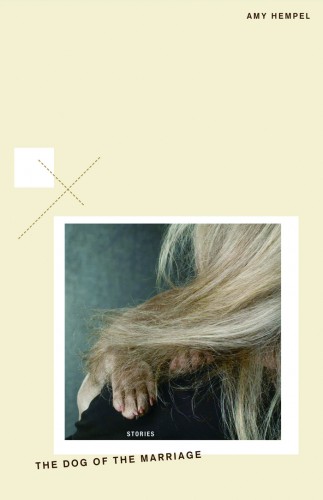
My view changed on this after reading Fight Club. This wasn’t because the language of Fight Club was so poetic, but from Fight Club I researched all I could about the author, Chuck Palahniuk. Palahniuk listed one of his favourite authors as Amy Hempel, so I went on to read all her stuff. Hempel is phenomenal – if you haven’t read any of Amy Hempel’s work, you’re missing out, and you need to get over to Amazon now and order a couple of her books. Her short story collection ‘Reasons to Live’ changed the way I think about writing – Hempel’s style is something that can’t be replicated, so intricate and subtle that, as Palahniuk says: ‘all you can do is lie on the floor, face down, and praise it.’
Fran Lebowitz still writes about the moment she first looked at a clock and grasped the concept of telling time. Hempel’s work is nothing but these flashes, and every flash makes you ache with recognition. –Chuck Palahniuk on Amy Hempel
Hempel is both a short fiction writer and a poet, with several volumes of both in circulation. The combination of the two is what makes her so brilliant – Hempel can extract the emotion from the most mundane moment and translate it into a thing of beauty. This is not ‘Hempel the Writer’, at work, it’s ‘Hempel the Poet’, but the two have become so intertwined that her prose transcends the parameters of either form. For example, here is one of my favourite Amy Hempel stories – the first story of hers I read, and the one that made me want to buy everything she’d ever written:
My heart — I thought it stopped. So I got in my car and headed for God. I passed two churches with cars parked in front. Then I stopped at the third because no one else had. It was early afternoon, the middle of the week. I chose a pew in the center of the rows. Episcopal or Methodist, it didn’t make any difference. It was as quiet as a church. I thought about the feeling of the long missed beat, and the tumble of the next ones as they rushed to fill the space. I sat there — in the high brace of quiet and stained glass — and I listened.
At the back of my house I can stand in the light from the sliding glass door and look out onto the deck. The deck is planted with marguerites and succulents in red clay pots. One of the pots is empty. It is shallow and broad, and filled with water like a birdbath.
My cat takes naps in the windowbox. Her gray chin is powdered with the iridescent dust from butterfly wings. If I tap on the glass, the cat will not look up. The sound that I make is not food.
When I was a girl I sneaked out at night. I pressed myself to hedges and fitted the shadows of trees. I went to a construction site near the lake. I took a concrete-mixing tub, slid it to the shore, and sat down inside it like a saucer. I would push off from the sand with one stolen oar and float, hearing nothing, for hours.
The birdbath is shaped like that tub.
I look at my nails in the harsh bathroom light. The scare will appear as a ripple at the base. It will take a couple of weeks to see.
I lock the door and run a tub of water.
Most of the time you don’t really hear it. A pulse is a thing that you feel. Even if you are somewhat quiet. Sometimes you hear it through the pillow at night. But I know that there is a place where you can hear it even better than that. Here is what you do. You ease yourself into a tub of water, you ease yourself down. You lie back and wait for the ripples to smooth away. Then you take a deep breath, and slide your head under, and listen for the playfulness of your heart.
It’s a perfect example of Hempel’s work – simple but complex, mundane but poetic. It isn’t straight-forward storytelling, but there is such a resonant story there, even this very short piece. It’s a connective work, the way Hempel has used language to build layer upon layer. It’s more than just prose writing, it’s another level of literary expression. And I wanted to read more.
Hempel’s work lead me onto Sharon Olds, who’s an amazing poet, one of the best I’ve ever read. Like Hempel, Olds’ work transcends the confines of what you may think poetry can be. While Olds doesn’t have the prose leanings of Hempel, her poems tell a story nonetheless, and she’s often able to tell a more powerful story than many can in novel-form. One of my favourite Olds poems is this:
Summer Solstice, New York City
By the end of the longest day of the year he could not stand it,
he went up the iron stairs through the roof of the building
and over the soft, tarry surface
to the edge, put one leg over the complex green tin cornice
and said if they came a step closer that was it.
Then the huge machinery of the earth began to work for his life,
the cops came in their suits blue-grey as the sky on a cloudy evening,
and one put on a bullet-proof vest, a
black shell around his own life,
life of his children’s father, in case
the man was armed, and one, slung with a
rope like the sign of his bounden duty,
came up out of a hole in the top of the neighboring building
like the gold hole they say is in the top of the head,
and began to lurk toward the man who wanted to die.
The tallest cop approached him directly,
softly, slowly, talking to him, talking, talking,
while the man’s leg hung over the lip of the next world
and the crowd gathered in the street, silent, and the
hairy net with its implacable grid was
unfolded near the curb and spread out and
stretched as the sheet is prepared to receive at a birth.
Then they all came a little closer
where he squatted nest to his death, his shirt
glowing its milky glow like something
growing in a dish at night in the dark in a lab and then
everything stopped
as his body jerked and he
stepped down from the parapet and went toward them
and they closed on him, I thought they were going to
beat him up, as a mother whose child has been
lost will scream at the child when it’s found, they
took him by the arms and held him up and
leaned him against the wall of the chimney and the
tall cop lit a cigarette
in his own mouth, and gave it to him, and
then they all lit cigarettes, and the
red, glowing ends burned like the
tiny campfires we lit at night
back at the beginning of the world.
This is a story, right? This is more prose-like than you’d expect a poem to be, but it’s also definitely a poem. The words carry such weight, each line is crafted and precise. Olds’ poetry taught me the importance of ‘language economics’, of the need to be concise and ensure each sentence reaches it’s full potential – there’s so much more to this poem that the words on the page. Great poetry uses the experiences and associations of the reader to build the greater context, rather than explaining it to them – which is true also of great prose writing – but nothing illustrates this point better than a great poem. One line can change everything, can hit you so hard. Poetry taught me the importance of rhythm and timing, and word placement in general. These are the tools you need to be able to communicate well. Poetry showcases those skills better than any other form.
Knowledge of poetry better informs you as a writer and helps you find better ways to communicate your story. Cormac McCarthy’s ‘The Road’ is one of the best examples of poetic description in prose form, and it’s so much more resonant because of it. A sequence like this:
By then it was already evening. Just the slow periodic rack and shuffle of the oarlocks. The lake dark glass and windowlights coming on along the shore. A radio somewhere. Neither of them had spoken a word. This was the perfect day of his childhood. This the day to shape the days upon – Cormac McCarthy, The Road
This is poetry, this is connecting emotion via language – sentence construction aligned with thought. It’s more than just the sum of its parts, than just the words alone, there’s a beauty to it’s simplicity. If I’d presented this as a poem, you’d not have thought twice about it. But it’s used in prose, in a Pulitzer Prize winning novel, no less. This is the potential of poetic expression. It’s far more than just rhyme.
With a newfound respect for poetry, I started to investigate and appreciate other forms of the medium. And while it’s often lambasted as the height of pretentiousness, spoken word poetry, when done well, can be extremely powerful. The thing that many miss is that the performance is a major part – it’s ‘performance poetry’ not a poetry reading. At the Melbourne Writers’ Festival a few years back, I remember Canadian performance poet Shane Koyczan had done a session. Koyczan had his mostly female audience swooning, all because of his delivery of lines like:
looking at you it occurred to me
I could sit around all day
wearing nothing but your kiss– Shane Koyczan, Skin 2
And one of my favourite performances was by ‘Coded Language’ by Saul Williams.
It’s passionate, resonant and again, it’s more than the sum of it’s parts, more than the words alone.
So this is why I don’t think we take the right approach to how we teach poetry, because I would have never thought to look at these things, I’d have never come across the greater opportunities of creative expression through poetry without finding it in my own way. I realise one of the main challenges of education is engagement, finding ways to get kids interested in what’s being taught, and no doubt that’s a barrier, but I feel like we need to reinforce that real poetry is so much more than rhyming couplets. Maybe I’m wrong, maybe educators are doing all they can, but there’s so much opportunity for expression through poetry, so much more than what people might interpret ‘poetry’ to be. While it’ll never be mainstream, by highlighting all these other avenues, maybe we can encourage more participation in poetic expression, and get in touch with more amazing writing as a result. At the least, knowledge of poetic expression will improve your written communication, in all forms.
You’re Not Totally Unique – and Why That’s Not Such a Bad Thing
We all like to think that our likes are interests are totally unique, right? We’re into this new show that you may not have heard about, we’ve read this new book that’s just come out – we all like to believe that our likes and interests are very different from anyone else. But they’re not. Stereotypes exist for a reason – the things you like the most probably have a large following that you may or may not be aware of. Things like Game of Thrones, for example – when that first came out, I remember thinking it was amazing, but no one was really watching it, like I’d found something that I had to share with everyone else. But actually, I was put onto it by a friend who’d read the books, and it’s now one of the most popular TV shows in the world, even though it’s full of violence and bad language and things that you’d expect might confine its audience size to some degree. Because the things people like tend to be things others will like also – your interests and cultural leanings are just not that unique.
But here’s the thing – that also means that you should trust yourself more. Remember how you were drawn to the character of Boba Fett in Star Wars even though he wasn’t one of the main players? You thought no one else paid that much attention to him, but Boba Fett was actually everyone’s favourite character. When they were doing that interview on TV the other day, you couldn’t take your eyes off the chumps in the background, smiling and waving at the camera and calling their friends at home, asking them to switch over and check them out, right? The things you notice, the details that stand out to you that you think might have been missed by the rest of the world – nope, we all noticed the same thing. What stands out to you most probably stands out to everyone else, and what this should highlight to you is that your responses are more common than you think. So trust them.
This is something that you need to understand as a writer or blogger or creator of any kind, really – the details that stand out to you will stand out to other people. This is not a bad thing, it’s actually reassuring, knowing that the world you see is shared by many other people – we’re more connected than you think. Maybe we can’t all communicate it, maybe we’re restrained in our connection with other people, but that guy on the train reading the paper, you’d probably be able to talk to him for hours about 90’s movies. That woman over ordering a juice, she’d totally relate to your anecdotes about living in a shared house. Our experiences are not as dissimilar as we train ourselves to believe, strangers are not as strange, and what this really means is that you can put more trust in yourself, more trust in your audience, and share things the way you see them. More often than not, you don’t need to over-explain, you don’t need to second-guess the way you’re communicating, people will get it. Put yourself in the position of the audience, think of how you’d respond to your work, what reaction would you have to reading this? Your viewpoint will likely be shared, and while it’s never easy to analyse your work from an impartial perspective, you need to trust yourself and rely on your instincts – if this were written by someone else, would it work for you?
Everyone else lives in the same world you do, we all experience similar things, similar problems and troubles. Everyone’s overcome difficulties, everyone feels down sometime – the things that make others happy are most likely the things that make you happy. Definitely, our overall perspectives are different, our viewpoint is ours alone, and that’s what provides opportunities for new stories, new and interesting ways of connecting, but we’re not as dissimilar as we tend to believe. So don’t stress about communicating with people, about saying the wrong things, being the right person. Remain true to yourself and trust that what you have to say is important. While you can always improve on how to do this effectively, you should also realise that you are not alone and create with that in mind.
 twenty six