Tagged: literature
lit crit
One key piece of advice that my mentor Christos Tsiolkas gave me before the publication of my first novel was this:
‘Don’t ever reply to critics’
Christos said that people are going to say what they say, and definitely, some of it is going to annoy you. But there’s no good outcome if you respond, there’s nothing you can say that hasn’t been said in the novel itself, and you’re best to just let the work have a life of its own, and be happy with what you’ve produced.
I wonder if this still applies in the modern literary landscape, where audience engagement on social media is now such a big consideration, and where publishers actually want authors to have an active presence, and be more than their work.
Because these days, who the author is matters. Where the writer came from, their life and inspirations, what they stand for, what they represent, all of these things matter more than they used to. Topicality will get you more press coverage, or at least more opportunities for interviews and discussion, while taking a definitive stance is a big part of social media resonance more broadly, due to discussion stemming from your opinions, in agreement or not, which can prompt algorithmic boosts. The modern media landscape is much more politically driven, and if you can play into that, you’ll get more coverage and awareness.
So maybe, you should respond to critics, or at least the ones who question who you are, using that as an opportunity to communicate your own stances and opinions. That could actually be a positive, but it is interesting to consider the shift in this respect.
For a lot of my favorite authors, I would have no idea who they are, beyond their work. Amy Hempel is my favorite writer, and I can’t say that I know anything much about her personal life, except that she likes dogs. Cormac McCarthy lived a fairly quiet life, though there are questionable elements of his personal history. But I have no clue what his political stances might be. I assume had he published Blood Meridian in 2025, we’d know much more about him, and that may have even tainted his legacy (if, of course, Blood Meridian would even make it to print these days).
It’s interesting to consider the shift in the way that the media handles people who come to public attention, from writers to actors and everybody else, and how we now know so much more about who they are, and what they care about, than we did in the past.
Is that a better way to approach creative talent? Do we need to know more beyond their work?
In some ways, yes. It’s good to know, for example, that J.K. Rowling has some disagreeable stances, though that does also make me a little more hesitant about supporting her work.
Is that the way that it should be, that external factors sway how we feel about their output?
Ideally, we should probably seek to judge all creative output on its merits alone, and how well the artist has expressed their vision. That would be the most pure assessment of art.
But that would also mean overlooking certain things in favor of the end result, ignoring ugly truths in favor of beautiful creations.
And that’s the way of the past, in the pre-internet era, in which predators could go unchecked for years because of their talent, and it was easier to obscure such from the public.
That’s not a good outcome either, but judging artists on anything other than the work itself also feels unfair, and could mean overlooking merit.
But in the social media era, this is more important than ever.
But if having the “wrong” opinions could kill your career, that also means that we may well be missing out on some of the best, most impactful work.
Either way, it’s another consideration in your broader literary journey, and how you maximize your opportunities.
The Intriguing, Frustrating Career of Todd Carney
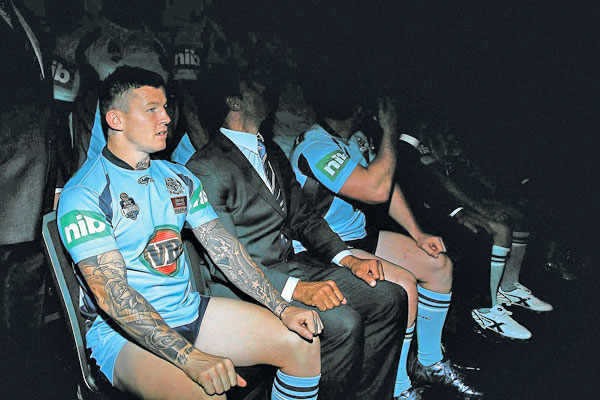
I lived in Canberra from 2006 to 2011 and while I was there I came across a story that absolutely intrigued me. I’m always fascinated by how people end up where they are, why they do what they do. When you read a story in the newspaper of how some guy, for example, murdered his wife, you’re only ever skimming the surface of the real details behind the story. But what motivates people to do such things? What could’ve happened in this person’s life to make him decide that this is the course of action he’s going to take? These questions are key to your character development efforts in your own writing – it can’t be that a person just does something, there has to be a reason why, an authenticity in their thought process.
This is how I approached the story of this NRL player that I heard about in Canberra. Being from Melbourne, I know hardly anything about NRL and have very little interest in it. I tried to go to a few games in Canberra, to experience the local culture, as it were, but it never caught on for me – I imagine people from northern states have a similar reaction to AFL. But while I was there, there was this one player who just kept doing really amazingly stupid things. This player was on $400k per season with the Canberra Raiders, had everything going for him, yet he just couldn’t stop himself from getting drunk on the weekend and punching people in the face or breaking things. I read each headline with amazement – Why was he doing this? What renders a person unable to follow basic societal norms for the sake of their livelihood, what they’d worked all their life to achieve?
The player I’m talking about is Todd Carney. You may or may not have heard of him, but he recently got sacked, again, from another NRL club. It makes no sense – he’s a great player, no one debates that, but he just can’t seem to stop himself from making dumb decisions.
For example, here’s a rundown of Carney’s career history:
2004 – Carney makes NRL debut at age 17, wins Raiders ‘Rookie of the Year’, plays for Australian junior side
2006 – Canberra Raiders leading try scorer, team finishes in top 8, selected as captain of Australian junior side. Charged with drink-driving and reckless driving, license suspended 5 years
2007 – Loses chance to play for State of Origin side due to another driving offence – refuses to stop for police, leads them on a chase through Canberra, hits a dead-end street, then flees the scene, leaving team-mate in car. Banned from driving till 2012, told he’ll go to jail if he offends again
2008 – Allegedly urinates on man at a Canberra nightclub. Gets suspended by club, whilst another investigation takes place into driving incident where he left his team-mate, with team-mate saying he was told to keep quiet about the incident. Carney suspended for season, told to accept strict management plan from Raiders – eventually sacked by club and de-listed from NRL for failing to agree to terms. Seeks contract from overseas club but can’t get a visa due to criminal history
2009 – Tries to get back in the NRL, but application denied – respond by smashing a shop window and jumping on cars in Goulburn. Receives 12-month suspended jail term. Released by Raiders to play in lower-level league in Cairns – gets in fights, sets some guy’s pants on fire, eventually signed by Sydney Roosters to new contract
2010 – Joins Sydney Roosters, has great season, wins game’s highest individual honour, the Dally M Medal – so he’s undeniably a great player, despite the off-field issues
2011 – After three separate alcohol-related incidents, Carney sacked from Sydney Roosters. After again trying to play overseas, and again being denied on visa grounds, Carney signs contract with Cronulla Sharks – estimated to be $350k per season for two years
2012 – Plays in State of Origin, has solid overall season, but sits out final games with injury
2013 – Signs on with Sharks for another five years
2014 – Sacked from Cronulla after pictures emerge of Carney seemingly urinating into his own mouth
It’s a pretty amazing record, not only for the indiscretions, but for the amount of opportunities he’s had to straighten up.
Of course, he’s not the first pro athlete to do things like this, things that frustrate us normal folk as we do whatever we can, day0-to-day, to keep our incomings higher than our outgoings. Did you know that 78% of NFL players go broke within five years of finishing their careers? The average NFL salary is $1.9 million p.a. Amazing, right? How do they do it, how can they throw such opportunity away?
Unfortunately, we’ll never be able to see things from their perspective to understand. Carney’s naturally gifted, a top-level athlete. He’s always been better than most at what he does. So while we can’t understand why he doesn’t seem to appreciate his unique position in life, he probably doesn’t understand why we can’t do what he does. Its stories like this that are the reason I write. Not Carney himself, but people, what makes people do the things they do. People will often say that there are really only a certain number of basic plots, and that all literature is just a variation on these outlines. I disagree. There’s so much complexity in people’s actions, so much opportunity, as a writer, to explore new things. Not every human has been born yet, so, to me, not every story has been told. Everyone has a totally unique perspective, different motivations for how they conduct themselves. Writing, for me, is about trying to understand those reasons, the things that cause people to respond the way they do. How people come to be who and where they are.
Cases like Todd Carney’s highlight that we don’t have – that we can’t ever know – all the answers. This is why, as writers, need to keep working to better interpret and understand the complexities of the world. Because things happen everyday that are fascinating, intriguing, amazing. By taking to time to understand them, to view things from a perspective other than your own, you’re stepping beyond the realms of what you, yourself, understand to be true and opening yourself to a wider experience of the human condition. That excites me about literature, that fires the synapses of my brain and gets me thinking, and after I get thinking, I get writing. And I love that plain, that hum you get into when your ideas expand and burst.
Whatever your opinion, whatever the real reason may be, stories like Todd Carney’s remind me of why I love to write.
New fiction: ‘Memory’

Been a good week for getting my fiction out there – Tincture Journal have published one my short fiction pieces in their latest edition. The piece is called ‘Memory’ and is one I’m particularly proud of. You can get a copy for $8 here – get one and you’ll not only get some cool, new fiction to read, but you’ll also be supporting the Australian literary community.
Where to Get Published in Australia
There’s nothing better than having something you’ve written published. There’s no better feeling than to walk into a bookshop and see your words printed on the pages of a book or magazine. It’s surreal, you remember where you wrote them, how you started with that blank computer screen. And now your words are here, for everyone to see. It’s extremely gratifying to have your work out there – whatever comes next, be it criticism or praise, you’ve already reached a level of personal success.
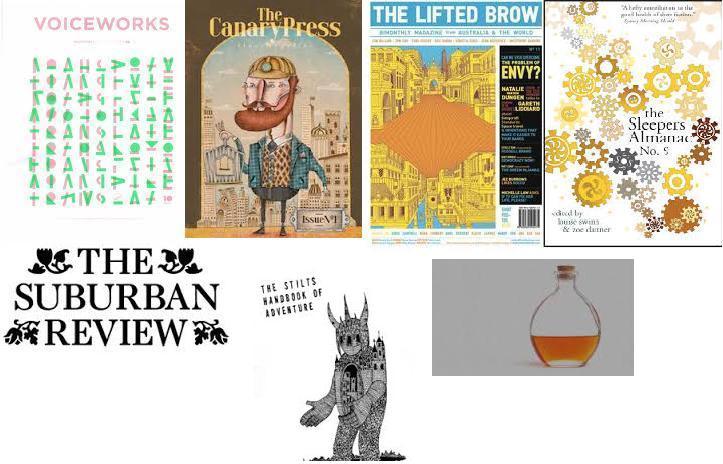
On that note, I thought it would be worth noting a few places fiction writers can get their work published in Australia. I’ve had the opportunity to work with most of these publications at some stage, and have enjoyed being involved, and I highly encourage all writers to have a look at what they publish and submit your own work.
Voiceworks
Voiceworks is produced by Victorian not-for-profit group Express Media and only publishes work by writers under the age of 25. It’s aim is to encourage new voices and provide publishing opportunities – not just for contributors, but for magazine staff also. Express Media has played a part in the development of many published authors and Voiceworks is a respected, quality publication. Writers under 25 should check out their submissions page and send something through – it could be a stepping stone to the next big break (I did a mentorship with Christos Tsiolkas via Express Media, which directly lead to the publication of my novel).
Tincture Journal
Tincture is a quarterly literary journal which is always on the lookout for new poetry and fiction. I’ve worked with the guys a couple of times and have thoroughly enjoyed the experience – they are knowledgeable, approachable and intelligent. They’ve also published some really great stuff and deserve more exposure – if you haven’t checked them out, go to their website and buy a copy – they’re priced between $5 and $8 and you can download and read them straight away (their Winter 2014 issue is also coming out very soon and features a new piece by me).
The Suburban Review
While still establishing itself somewhat, The Suburban Review is a quality publication. The artwork alone is worth checking out, but the content they’ve published so far has been high quality. Each publication is based on a theme, so you need to check out the submissions page to know what they’re after, but the guys are doing some great work and are gaining recognition for their quality and presentation. A group you want to be involved with.
Stilts
And speaking of groups you want to get involved with, Stilts are a literary collective based in Melbourne. They produce an amazing looking themed journal, but they also have regular events, columns and themed writing opportunities to get involved with. I’ve had two pieces published as part of the Stilts Monthlies series, which is a micro-fiction series based around a theme, and my experience working with the guys has been excellent, I highly recommend you check out their website and subscribe to their social media channels to stay up to date with what’s happening. Amongst these guys and The Suburban Review team are the literary leaders of tomorrow, worth getting to know them, and getting them to know you.
The Canary Press
Canary Press is probably the best looking literary journal going around. The guys have a distinct flavour, their own way of seeing things, and that’s also reflected in their content selection, but they’ve definitely made a splash on the local literary scene, and it’s worth checking out their submission guidelines and getting involved if you can. They accept pieces through Submittable, which means it can all be done online – easy, no fuss, why wouldn’t you give them a read and see if your work fits?
The Lifted Brow
The guys from The Lifted Brow have established a pretty good profile in the local literary scene, underlined by them creating a whole issue, from scratch, during the ten days of the Melbourne Writers’ Festival last year. Like Canary Press, they go for a definitive style of work, so you need to grab a previous copy to know how, or if, your work fits, but worth checking out, and a great opportunity if you can get a piece accepted.
Sleepers
The annual ‘Sleepers Almanac’ is one of the most prestigious publications for new writers in Australia. I love what Louise and Zoe do, and I’d get involved with anything of theirs I could – they are both strong supporters of new writers and genuinely love to find new, great stuff. Given the Almanac’s status, it is hard to get in, but their distribution is great and it’ll put your work in front of some of the most influential literary identities in Australia, so worth the effort. I strongly encourage everyone to support Sleepers, not only for your own publishing opportunity, but to help them continue their work in finding and nurturing great local talent.
This is by no means a complete list of the literary opportunities available – there’s also Meanjin, Overland, Best Australian Short Stories – there’s a heap of places you can submit to. It always worth checking out what they publish – if it’s a guest editor, look them up and see what they write or what they’ve edited before to get an understanding of which of your pieces will be a good fit – and always follow the submission guidelines and ensure your work is error-free. It’s important that all writers get involved in their local literary communities and groups – obviously the main aim is to get your work out there, but above and beyond that, you’re contributing to your local literary scene and helping build that local culture. The more we can build it, the more writers will be willing to get involved and the more young writers will want to take up pens and put down their own stories. As a writer, you can play a significant part in the growth of your own local community by getting involved. And the connections you can make, the readers you can reach, these can all have long term benefits for your own writing career.
New fiction published – ‘Last Night’

In what’s always exciting news, one of my short fiction pieces has been published. Melbourne literary journal The Suburban Review has published my story Last Night on their website, with excellent accompanying artwork from Ruby Knight. The guys are going to post it in two parts, so this is part 1 of the story – check it out if you get a chance.
Iggy Azalea and the Importance of Cultural Participation
Have you heard of Iggy Azalea? She’s a statuesque rapper who’s album recently debuted at number three on the US Billboard charts. She’s also Australian, though she’s not as well known here as she is in the US. Azalea (who’s real name is Amethyst Kelly) made her name in America after moving there to pursue her rap dreams at age 16. Azalea grew up in Mullumbimby in New South Wales but saw that her opportunities were limited in her home town, and home country as a whole. She decided that if she was ever going to make it, she’d need to head overseas – and the story of her success flows from there.
Azalea caught my attention recently when I read her story about leaving Australia. I could see what she was saying, could sympathise with the situation she faced. Here she was, obsessed with Tupac and desperate to be a female rap superstar, but living in a country town where others didn’t take her seriously and her opportunities for exposure were limited. While Azalea was referring to the music industry, the same can be said about writing to some degree, in that our creative culture, particularly our creative diversity, is not overly strong. In my conversations with international writers, and in the brief times I’ve spent in foreign cities, I’ve definitely felt that there’s a much bigger emphasis on creative arts and culture in other nations. Not everywhere, but in some places there is a distinct artistic undercurrent, a feel to it, and those creative communities are strong, visible and well supported. The sad reality of not having such a strong culture is that many writers end up in isolation, unsure if there’s an audience for their work or how to find it. What’s more, writers’ groups are often hard to locate and some writers are hesitant to join if they feel they’ve done nothing, like they won’t fit in.
This is not the fault of any person or group, I realise many arts organisations work very hard (and have done so for a long time) to create communities and provide writers with opportunities to join like-minded folk, but definitely my experience of larger cultural centres like London, New York, Seattle, even Vancouver, is that there’s a much bigger creative pulse, or at least, a more present one. Things like spoken word poetry have a real sense of purpose in these cities, a real pride of place, and while we do have similar communities in Melbourne, they’re much smaller, more underground – you have to be more active in seeking them out.
So what do we do about it? What can we do to foster a better literary culture and highlight opportunities for writers of all genres and styles? The answer is we all have to get involved. Joining a writers’ group is not just for your own benefit, it’s for the benefit of the wider writing community. Attending book launches, readings, spoken word events, joining discussions at your local writers’ centre – just being present and supporting these projects helps build that literary community and enhances recognition, making them easier to find. By taking part, you’re not only participating in something you’re interested in, you’re also endorsing that community, building it, helping create a wider network. This promotes more opportunities for writers to connect, which then leads to more niche writers finding others who feel the same. The rise of social media helps in this respect, as it enables people to find communities outside their geographic limitations, but it’s also important that we establish these groups locally, that we build support and acceptance for the various forms of written expression in order to create our own networks and our own localised culture.
We also need to recognise the passion and dedication that goes into all forms of writing. I’ve got little interest in the work of Matthew Reilly, but I respect the man greatly. I could go and hear him speak and get a heap out of it, regardless of whether I’ve read a line of his work. All writers have made a commitment, an effort that’s above and beyond what they have to do. We’re all in it together – we need to support each other in order to create a stronger literary eco-system, a stronger community that gives voice to more writers who might not have the confidence to ever release their efforts from their notebooks. Maybe we have writers who, like Iggy Azalea, are very talented at what they do, but they feel like there’s no chance for them – there’s no chance a female rapper could achieve significant success in Australia. That was a really sad sentiment for me to hear, and most teenagers in the same boat won’t have the tenacity to move to another nation to chase it. They’ll just give up. We have to do whatever we can to stop that, to embolden more voices and give them the confidence to chase their creative dreams, whatever they may be.
Writing events are about more than people trying to sell their books and in-crowd meet-ups. It’s about community, being part of something bigger. You have to go along to events and get involved wherever you can. Talk to people, tweet about it, tell others where you are and what you’re doing, introduce yourself – and I know it can be hard sometimes to go and get involved (my default position in such situations is ‘wall flower’) but it’s what you need to do, not only so we get to hear your voice as a writer, but so other writers, young writers especially, see what you’re doing and know they can get involved too. Writers are welcoming types, we all want to know more about the world and the people in it. We need to ensure that that openness remains part of our culture so we can encourage a stronger literary bonds and continue to see great writing emerge. So our stories remain as diverse as our society and an accurate reflection of our full creative capacity.
Creativity Without Constraint

I was once asked for my thoughts on writing controversial content, where you balance between ‘confronting’ and ‘gratuitous’. My novel ‘Rohypnol’ has a lot of graphic scenes, and it’s something I was criticised for in a few reviews, that it was gratuitous, violent for the sake of it. Some felt there was no need to go into that level of detail, that much of the horror could’ve been implied and left to the imagination. But I disagree. There was a definitive purpose to what I wrote, and there is, I believe, a reason why people need to include such detail, where warranted, within the context of their work.
One of the inspirations behind ‘Rohypnol’ was a French film called ‘Irreversible’, directed by Gaspar Noe. Noe is well-known for his controversial films and has received much the same criticism, that he glorifies violence, rather than exposes us to it. This is most evident in the extreme violence of ‘Irreversible’. In the opening scenes, there are two guys looking for another man, called La Tenia. They’re in a nightclub, looking for Le Tenia and (if you ever want to watch the film, stop reading now) when they do locate him, they get into a fight and kill him. More specifically, they kill him by beating his head in with a fire extinguisher. And you see every single hit, every detail. You feel everything in this scene. There is no escaping the violence – it’s sickening, it’s so bad you have to look away. It’s horrific and it just gets worse and worse. The viewer has no context for this scene, it’s two guys getting in a fight with another. There’s no lead-up or backstory, you’re just thrown in. The violence is the most extreme you’ll ever see on film, everything about the scene is horrific – the camera moves and swirls round amidst strobing nightclub lights and grinding bass music. The whole sequence is designed to make you sick. Not a great way to start a film, right? Why would a director want to make the audience ill, especially so early in the film?
There is method to Noe’s madness. The film is called ‘Irreversible’ because the storyline moves in reverse – we start with the horrific ending to tragic story. The point Noe’s making is that violence cannot be justified. Responding to violence with violence is not an answer, in any context – but that is exactly what Hollywood films glorify. We’ve grown up seeing revenge films, feeling for the wronged man, siding with him and hoping he’ll make the bad guys pay in the end. That’s justice, that’s what we want to see – that’s what we want to do when we’re wronged. And that’s wrong. That shouldn’t be the way violence is presented. It’s not an answer, it doesn’t solve problems. Noe’s mission with ‘Irreversible’ was to display, in graphic form, what’s wrong with Hollywood action films. Had the movie played in chronological order, you’d have seen that La Tenia had brutally raped and murdered the wife of one of the men. You’d see this, and you’d side with the man, then when they did finally catch up with La Tenia in the nightclub, you’d want him to get killed. You’d want to see him pay. But there’s no right in responding with further violence.
Noe set out to make the film as uncomfortable and violent as he could to show what violence is really like – in that scene, where you want to look away, where many people walked out of the cinema – that’s how you would feel if that situation where to happen in real life. Violence is not ‘cool’, there’s no shotgun-like sound when someone punches someone in the face. There’s no good guys and bad guys in real life. Violence is horrific and frightening – it’s something everyone wants to avoid at all costs. That’s the point of the scene. You don’t want to see this. You don’t want to condone this. We should do all we can to avoid this sort of thing happening. Seeing someone get their head beat in would affect you in ways you can’t even imagine, it would traumatise you for life – yet in most films, people get revenge, blow people up, shoot them in the head and we get nothing. It’s left to our imaginations, and we don’t picture the extreme violence that actually occurred. We just note that the bad guy got killed. Case closed. Hollywood films should not portray violence as a light, humourous, nothing event that just happens. Because that, by extension, is what we’re teaching kids. If more films portrayed violence as Noe does in ‘Irreversible’, I’ll bet you see such acts of violence reduce. Everytime I see another report of violence in nightclubs, of stabbings and glassings and beating. When I read reports of attacks getting more brutal, kids more devoid of consequence, I always think of ‘Irreversible’. Honestly, it should be on the high school curriculum.
‘Irreversible’ played a big part in the way I portrayed violence in my book. My intent was not to be gratuitous – and I absolutely don’t believe it ever crosses over that line – my goal was to be honest to the story and scenes within it. If you would feel horror, dread, happiness, joy – your responsibility as the author is to communicate that, translate those emotions into the body of the reader. Definitely, I could have left the action out, left the violence implied, but that’s not the point. If monsters like the characters I’d created actually did exist, if they committed horrendous acts like the ones presented, then feeling the detail is important. Yes, it’s confronting, yes it’s shocking, but we need to be confronted and shocked sometimes, we need to face the reality of violence as it is. This is the only way people will ever understand the impacts, the horrific nature of such crimes. And by making people aware, hopefully that inspires more people to avoid it in real life. We shouldn’t, as writers, play down violence, leave it as something that just happens, then move on with the rest of the story. If something terrible occurs, it’s important to be honest, show the necessary detail in order to make the reader feel what you felt when you wrote it. This remains true in all writing – be honest to the story you’ve created, express the reality of your world. What’s happening needs to be real – so be real, be honest with the detail, and never shy away from saying what needs to be said. Don’t be constrained by how people might respond, how people might feel, just get it down, write fuelled by your emotion, and let the story dictate the detail necessary to communicate each scene.
‘New York Times Bestselling Author’
 Have you ever noticed how many authors list ‘New York Times Bestselling Author’ in their bio? It’s alot. I started noticing it recently, when coming across people I’d never heard of on Twitter and seeing it in their profile. Of course, my not knowing who they are doesn’t mean much in context – many of them are writing about subjects I’ve no interest in, so I wouldn’t have heard of them, unless they were, say, a New York Times Bestselling Author, then I’d have heard of them, right? You have to sell a million copies, or something, to make that list. Right?
Apparently not. To make the prestigious New York Times Bestseller list you need to sell around nine thousand copies of your book in a week. So in that first week, if you push hard enough and get your book out to as many outlets as possible and spread the word as wide as you can, you only need to sell your book to about 0.003% of the American population to lay claim to the title of ‘New York Times Bestselling Author’. That’s pretty amazing, right? I’d always had this idea in my head that a New York Times Bestselling author had to have sold so many copies, that their book had to be this amazing tome, held aloft by the populous and praised by booksellers and critics alike. Turns out that’s not true. In fact, it’s even less true than that, as a lot of publishers and authors game the system to make the top of the bestseller lists – the New York Times listings take into account bulk orders, and there are services that will help distribute those bulk orders to pre-arranged buyers in order to boost the numbers in any given measurement period. Businessmen, too, will include copies in their service fees, then send them out when the book is published, again inflating their figures.
There’s obviously solid logic behind this – as noted, I’ve always been under the impression that sales required to make the list were much higher, so definitely, I’d have factored ‘New York Times Bestseller’ into my purchase decision – if it’s made that list, it must have something to it. I would think inflating the figures would definitely be of benefit and would increase your natural sales in the long run, but it was a little disappointing to discover that that claim doesn’t hold as much weight as much as I had thought.
But it still means something. If I were a New York Times Bestselling author. I’d claim it if I could, for sure, and it’s an attribution you can list forevermore in every bio and on the front of every book you write. And, of course, there are a great many authors who have made the list purely on the quality of their work alone leading to those sales figures. But it definitely made me think, and I’ll be looking a little deeper for info on books and authors that claim that title in future.
Things I’ve Learned From Doing Panel Discussions and Literary Events
In my time as a writer I’ve done a few events. It’s part of the publishing, even writing, process – at some stage, most writers will have to do a talk or a reading or an event of some kind. And at first, it’s frightening. Writing is generally a solitary pursuit, just you and the sound of a keyboard clicking away in a quiet room, so it’s a pretty big leap to go from an audience of no one to a crowded room waiting to hear what you have to say. You learn a heap from every event you do and there are some major lessons I’ve learned from my experiences – I figured they might help others in their preparation for literary events. So here’s some of the things I’ve taken in from my turns as a literary event speaker.
1. Don’t read out a totally pre-written speech. Or if you do, practise it with an audience first. I wrote speeches in intricate detail for all the early events I did. I drafted them, read them out loud, held them shivering in my nervous hands as I stood up in front of the audience. But then one day I figured something out. At all these events, I also watched other authors speak, checked out how they did it. The best of them were confident, assured characters who owned the stage. They read the crowd, they played off the energy of the room, and most of the time the didn’t read from a script. Because they didn’t have to. When you’re starting out, you get so hung up on the fact that you need to be great, you need to provide an intelligent, informative, lecture, that you start to move away from why you’ve been asked to speak in the first place. You spend so much time trying to sound like a real writer that you forget that you actually are a real writer. Your thoughts and opinions are all you need, your stories from your experiences. Definitely, it’s worth analysing the topic, writing notes, getting an idea in your head of what you might say, but you need to think about the audience, what they see. If you’re up there with your head down, scanning a print out, probably reading too quickly – do you think that’s going to be engaging for the audience? You don’t need to have intricate details, you just need an outline and some notes, then you just speak about your what you know. It comes across much more natural, more comfortable, if you can speak like a real person, rather than what you think an author should sound like. Trust me, I’ve spent ages thinking over what an intelligent author would say and trying to do that, as opposed to just saying things how I would normally speak. It’s much better to just be you.
2. The audience want to hear what you have to say. They’re not there to attack you or criticise. Most literary event audiences would love nothing more than to have the opportunity you’ve got, to be up on that stage, and they’re keen to hear what you, as a chosen panellist, can contribute to the discussion. Sometimes it’s nerve-wracking, thinking of all those eyeballs looking at you, but you have to remember, again, what it’s like sitting in the audience. Would you be judgemental of someone who was a bit nervous? Who was doing their best to present their knowledge and experience? I wouldn’t, and definitely if it was clear the person was being themself, talking about how they do things, I’d appreciate it. I’d probably relate to it. The audience wants to know you, they want to know what you do. If there’s something you’re not sure about, but that’s your experience, you should just say what you think. More often than not, people will link with your struggles, they want to hear about those details too, so no need to be nervous or hide anything or try to be something you’re not. They want to hear you, you’re good, there’s nothing to be nervous about. You’re honest and real, that will resonate with the crowd.
3. Don’t drink red wine if you’re wearing a white shirt and you’re about to go on stage. Yep, this happened. When I was at the Victorian Premier’s Literary Awards, some dude turned too quick with a glass of red and splashed my shirt, a white one I’d bought just for the occasion. That was nerve-wracking. Luckily I got most of it out and the mic stand covered the stain either way. They also used a bad photo of me that was projected onto this massive screen (you needed a picture for the entry, so I just took one of myself, not thinking there would come a time when it would be blown up to 50X and beamed into a room of tuxedoed important-types) and the host made fun of me for being nervous (in fairness, it was the perfect set-up – two very young kids had done a reading immediately before me and when I got up to the stage it was the perfect chance for him to say: ‘Geez, you’re more nervous than those two kids’ – hilarious) but the point is, be careful what you wear and what you eat if you’re going up on stage. You’re nervous already, you don’t need any more reason to be self-conscious.
4. Enjoy yourself. Literary events are fun. Yes, people paid to get in, and yeah, they’ll expect something for their money, but that’s not all on you (unless you’re doing a solo talk, in which case it is) and regardless, the event will be more entertaining if you’re relaxed. The more nervous you are, the more that’ll come across, and you’ll be able to feel it all through the room. You need to try and enjoy the moment, they don’t come around that often for most. Remember that you’ve done the hard work to get there, you are a writer, someone these people want to hear from. You aren’t a fraud, a poser whose fluked his/her way into this, you’re successful, you have experiences people want to know about. Literary events are supposed to be enjoyable and engaging. Audiences would rather you be open and alive than stuffy and academic the whole time. Relatable experiences are more resonant than hard-nosed lessons – they can read about those in any number of how-to books. Be real, be genuine, tell people about your blocks and difficulties as well as the good stuff. And have fun with it.
5. Don’t walk around flashing your ‘Artist’ lanyard expecting people to ask for your autograph. No one’s gonna’ do it, rock star. Unless you’re JK Rowling or Stephenie Meyer, no one’s going to be too bothered about who you are out on the street. Yes, you should feel proud that you got invited, but don’t get too far ahead of yourself. Ain’t no one at the food court gon’ care that you’re the keynote speaker of the day.
Overall, you need to try not to take literary events too seriously. Yes, you want to put in a good performance and no, you don’t want to go in under prepared and sound like a fool, but generally when I’ve over prepared I’ve looked more foolish than the former. You should do your research, learn what you need to know, ensure you can handle the situation. But then you’ve got to be yourself. Don’t get caught up trying to be what you think the audience want, be you. It’s the only way to truly succeed and stand out as a speaker. Authenticity will shine through much more than any lessons you’d like to impart. Trust in your ability and knowledge, share what you know, what you think the audience can learn from, and show who your are.
First Person, Second Person, Third Person – Which Perspective to Use?
One thing that a lot of writers have trouble with is perspective and tense. In itself, people can switch tense mid-sentence and some have trouble staying consistent, but a bigger and more challenging question is what perspective/tense should you use? There’s no definitive guide as to which works best for each story type – any can work if done well – but there are some basics that are worth considering:
First Person – Present Tense: ‘I wake up in a strange room, looking up at the ceiling’. This is the logging things as they happen. I’ve found this best used in action novels and faster paced books, as it’s more immediate, things are coming at you quickly. It lends itself to sharper, quicker prose, as it’s the language is progressive.
First Person – Past Tense: ‘I woke up in a strange room, looked up at the ceiling’. This is also effective in faster paced novels, but the ‘looking back’ style lends itself to more introspection by the narrator – if you’re writing a book where the main character is doing a lot of internal monologue, thinking over how he/she feels or sees things, I think this is a more effective voice to go with than First Person – Present Tense.
Second Person – Present Tense: ‘You wake up in a strange room, looking up at the ceiling’. This is also another good one for faster passed pieces, though rarely is it used for an entire novel length. The best uses I’ve seen have come in the form of chapters within a larger work, break-out switch-ups that work to amplify a segment, give the reader a sense of being drawn in.
Second Person – Past Tense: ‘You woke up in a strange room, looked up at the ceiling’. I actually don’t find much difference in effectiveness between Second Person – Past and Second Person – Present, the reader effect is similar. I would think the use of this would depend on the style of the rest of the book – unless you were using Second Person exclusively, which most authors are not.
Third Person – Present Tense: ‘He wakes up in a strange room, looking up at the ceiling’. Third person is a great way to explore more of the world your characters are in. Third Person – Present – as with all ‘present’ tenses – is good for faster moving narratives, as it keeps things immediate. Third person allows you to explore more perspectives within the story, whilst also only revealing the motivations of characters when you need, as opposed to First Person, which generally forces you to reveal the inner thoughts of your narrator all through.
Third Person – Past Tense: ‘He woke up in a strange room, looked up at the ceiling’. Similar in effect to present tense. I find most fantasy novels are written in Third Person – Past, as it allows for the writer to reveal more about the world he/she has created through historical or atmospheric exposition, which is required when you need to reveal the rules of a new world. Third Person enables you to reveal what you want when you want the reader to know it, as opposed to First Person, which is more confined to what the narrator knows.
These are obviously very quick overviews, and are in no way encompassing of the intricacies of each style, but hopefully they give you an idea of the purpose and strengths of each. Choosing the style of your piece is a big factor in determining how it will resonate with readers – each story has it’s own unique voice, and it’s important to understand the emotional arc of your tale – what you want to reveal and when – to help you determine which voice is best. Some authors will go their entire careers only writing in one style, but the best can switch between them, utilising the strengths of each to create the most compelling literature – even including sections of different styles in one work.
It’s about looking at your story plan, as a whole, and understanding what you want your reader to feel as they move through. You’ll generally be influenced by writers you admire, but always worth considering how to best use perspective and tense before you write, thinking about what’s the best fit. If your story is fast paced, then present tense is probably better. If your piece takes into account the perspectives of various characters, third person might work best. There are no definitive rules, but playing over the sentences in your mind in the different styles will eventually reveal which one is the most natural fit for your story’s voice.
 twenty six