Tagged: how to become a writer
What Writers Can Learn from Game of Thrones

As many would be aware, the teaser trailers for Season 4 of Game of Thrones have started coming through. It’s exciting to have the show return, but the pending disappointment of having to wait so long when the season ends always lingers, bittersweet. As I was watching the latest teaser, I tried to think over what makes Game of Thrones so good. Sure, the acting, the sets, there are a lot of factors involved in making the show what it is, but it started from a book series – it’s core strength is in it’s writing. So here are five elements that I think are George R.R. Martin’s greatest storytelling cornerstones in Game of Thrones – the keys to it’s success, and the lessons writers, can take from them.
1. It constantly subverts expectations. The most refreshing thing about Game of Thrones is that it doesn’t go where you expect. I remember the first season, with Sean Bean up on the platform about to be killed. I remember his daughter weaving through the crowd, the tension rising. And I remember thinking ‘Sean Bean’s the biggest star on the show, they’re not going to kill him off’. But they did. It was so great, so amazing to have my expectation smashed, and I’ve found this over and over again with GOT – as soon as you think you’ve got it worked out, that this person or that one is going to come out on top, they’re gone. Killed, maimed, chained up and mutilated. There’s a whole science to why police procedurals are so popular, that it makes people feel more intelligent when they can work out the details of each case. GOT is almost the complete opposite, and it succeeds by switching up on you every chance it gets. It’s exciting storytelling, and hard to do in the modern era, where everyone has theoretically seen every story before in some form. GOT does this better than any other show I’ve seen. The takeaway for writers: Subvert expectation, don’t go down the well-worn path. Think about what you can do that will surprise and excite your readers.
2. It’s honest to the reality in which the characters live. As a writer, you’re only true obligation is to be honest to the story and world you’ve created. You can do whatever you want, so long as the actions and consequences are honest to the rules you’ve established for the world you’re writing about. GOT does this really well – if there were a medieval type world where the strongest ruled, generally by brute force, then there wouldn’t be the usual fairytale romances and maidens in towers. The key to success in that world would essentially be a willingness to do what others would not. Backstabbers and liars would rise, those willing to kill would seize power – it would be a pretty unpleasant place where you’d have to constantly watch your back (or resign to the life of a peasant). It somewhat aligns with the first point, but in GOT, the bad guys, more often that not, win. Because they don’t have the morals, the ethics of the hero. They’ll do what they need to take and maintain power. In the reality of that world, that’s how it would be. It’s that authenticity, that conceptual depth, that Martin has harnessed so well. The key note for writers is to stay honest to the reality you’ve created. Think through the impacts to ensure things don’t jar or stand out as obvious plot devices which don’t fit into that world.
3. The story develops organically. Or more accurately, the story feels like it develops organically. Martin has created such deep, true to life characters that every action has a reaction, every step resonates with someone else. And you pretty much know how each of the characters is going to respond. There’s a real logic and humanity to each of these interactions and no one ever gets away with anything, nothing is ever confined to one plotline. The characters respond as you’d expect real people to, and that changes their story arc. Someone who was once hell bent on one course of action can be swayed by emotion, and that change shifts the entire scene. It doesn’t feel like anything is planned or set in stone, which again, adds to that unpredictability. As a storyteller, the note to take away is to consider every action, not only from a core storyline standpoint, but for how it will ripple through to the rest of your fictional world. This attention to detail will add an important layer of authenticity to your work.
4. The characters are deep. I noted this in the previous point, but it’s a key one to highlight. The characters in Game of Thrones all feel like they could have a mini-series of their own to explain their back story. Martin knows each one very well, has got into tune with who they are and what they want. All of them have a level of humanity that is tangible, allowing the audience to be taken in by them. Well, except Joffrey, I guess. The key point – you need to know you’re characters. Not just ‘he was sixteen with brown hair…’ you need to know them, know where they’ve come from, what they’ve experienced, how those things have affected their world view. Once you do, once you can conceptualize a character to this level, the writing gets a heap easier. Because you know how they’ll react, what they’ll do in response to any action. Knowing your characters is key to writing great stories – research them, understand them. Even if you do all that work and a lot of it never makes it to the page, you’ll know it and your writing will be better for it.
5. Very little of Game of Thrones is revealed in exposition. I’m talking about the TV show here, not the books (which I haven’t read) but on the show, there’s very few sections of blatant exposition – characters delivering monologues on the reasons why things have come to be in this world. This is pretty rare, particularly for these fantasy realm stories, where you need to set up the parameters. GOT pretty much throws you into the politics and lets you work it out. And it’s much better for it. I liken this to something like ‘The Wire’ – when I first started watching The Wire I had to re-check I started on episode one, cause I had no idea what was going on. But four episodes in, I was totally immersed by it. Not knowing the detail made me concentrate harder and take in more to catch up. Of course, you don’t want to make it so complex that the audience doesn’t understand, but there’s definitely something to be said about writing a story that’s lived in, where things are how they are. Your characters wouldn’t, in their reality, sit down and go over the details of why things are how they are, and often you don’t need to, and shouldn’t, do this in your writing. People are smart, they’ll work it out, just give them what they need to make them want to turn the page and you’ll have them. It’s the old ‘show don’t tell’ principle – don’t spell it out, allow your readers into it, let them see it with the characters, engage with the story in a more organic way.
Game of Thrones is an excellent example of storytelling, and there’s a heap for writers to learn from it. Keep these elements in mind as you watch, try to work out how they utilise storytelling elements – and more importantly, how you can use the same tricks in your own work.
Why Gotye is One of my Biggest Inspirations
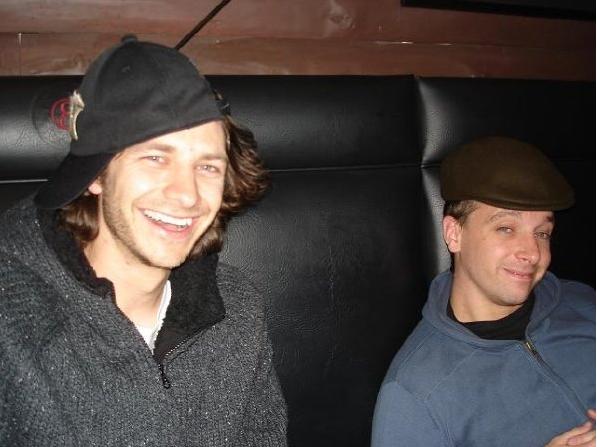
I recently had a chance to catch up with my friend Wally. Wal is one of my biggest inspirations and it’s always great to get a chance to catch up with him and talk about what he’s been working on, creative processes, inspirations, etc. What makes Wal slightly different, in context, is that he’s also known as ‘Gotye’. You know, that guy who used to know somebody? Wal is one of the hardest working and most intelligent people I’ve ever met, and his passion for what he does is infectious. But while most people would be aware of ‘that song’, many are not aware of the long road it took for Wal to become an overnight success.
I met Wally a couple of years after he’d finished high school. Wal had been in a band with some high school mates, a very good and well-known band (locally) called ‘Downstares’, but after graduation the band drifted apart, the guys moving on to their respective next things. You could see this kinda’ broke Wal’s heart, he loved music and he loved performing, but without a band he had no outlet. Wal was studying at uni and working part-time, but there was definitely something missing. He wanted to make music again.
It was around the same time that The Avalanches’ album ‘Since I Left You’ was going well, and DJ Shadow had just released his second album, ‘The Private Press’. In retrospect, I would say that these two albums were among the most influential in the Gotye project coming into being – not musically, necessarily, but in terms of them showing Wal the possibilities of sample-based music. Wal had never really considered using samples – he’s an excellent drummer and pianist, and I imagine the thought of samples seemed somewhat inferior or not as tangible as actually playing an instrument. Either way, he’d never seriously considered it, then one night he tried it out, mucking around with records, playing with sounds on his PC. Wal’s a perfectionist, so once he’d started on it, there was no stopping him, and he worked with the samples till he had something he felt was great. And it was. His first tracks were amazing, way beyond what anyone would have expected. Wal was excited, he’d found a way to make music again, now he just had to work out what to do next.
Wal read up on agents and record labels and radio stations, sifted through the phone book to find as many contacts as he could. Wal hand made hundreds of four-track CDs, printing up the CD labels and hand writing the track listing on each sleeve. I remember seeing the pile of worn down brown pencils in his room. He sent the CDs out to everyone he could, then followed each one up with a phone call. The workload was amazing – Wal was driven to do whatever he could to find an audience for his music. Early feedback was limited. Most places didn’t respond, some did but weren’t able to offer anything. Wal kept calling, kept making CDs, kept chasing, and kept making new music. Eventually, Triple J added one of his songs to their playlist, an amazing day. I still remember hearing Wal on the radio for the first time. It was an incredibly proud moment. I think some other smaller stations played a track or two, and Wal was getting mentioned in street press, nothing major, but the first stages of Gotye had begun.
Wal released two more four track CDs, all hand made (though he cut out the hand written business after the first one).They got limited attention, but music critics were highlighting his stuff in their weekly columns, even if it wasn’t getting added to radio playlists. Wal continued to get support from Triple J and he gained enough attention to develop on a live show – a small gig in a city bar with a bed sheet as a projector screen. Wal worked extremely hard to try and perfect a live show, unsure of how to do it with sample based music. And afterwards he thought it was crap (one of the difficulties of Wal’s perfectionist nature is he always notices every tiny error – in his head those errors are highlighted way more than the audience would ever notice).
Eventually a small record label agreed to distribute an album of Wal’s music, a selection of highlights from those first four-track CDs. This was another amazing milestone, Wal’s CDs were in JB Hi-Fi, in between ‘God Speed You Black Emperor’ and ‘Green Day’. I remember going into stores just to see it on the shelves. Wal was a legit superstar in our eyes, but even at this stage, Wal was still doing all the work – the label was distributing the music, but Wal still had to work on all the production and manage every aspect, along with creating new tracks. After all the work and all the effort, Wal went quiet in Gotye stuff for a little bit. He was still working on it, but he’d started playing in another band and he’d moved house and he just hadn’t been able to give his new music the time he needed for a little bit. And in some ways, I think the whole process burned him out a little. This was probably three years after he started recording music as Gotye.
We were on a group holiday on the Gold Coast when Wal first played us his new tracks. He’d put together an album, had had it all mastered, professionally done, it was a major step up from the previous stuff. The album was called ‘Like Drawing Blood’ and as soon as Wal played the first track, ‘The Only Way’, I just wanted to listen to it over and over again. ‘Like Drawing Blood’ is an amazing album, and not only good because he’s a friend, a seriously amazing album, among the best of any released that year. Rightfully, it was recognised with an ARIA Award along with many other accolades. His track ‘Hearts a Mess’ was number 8 in the Triple J’s Hottest 100 in 2006. Wal had become a fully-fledged rock star. People recognised him in the street (it’s still pretty cool seeing it, seeing people do a double-take as he passes), he played sold out shows and huge, surging crowds sang along to his tracks. And people stopped believing me when I told them I know him. For years, I’d been pushing his music at people, saying they needed to listen to his stuff, now I couldn’t even convince people that he was a mate. It was all pretty great – amazing, inspiring stuff.
Then Wal waited a couple of years, recorded his next album in amongst his other musical and professional commitments. Quietly, patently, took his time getting it right. Then he released that song. No doubt you know the rest. Wal’s first Gotye recordings were in 2001 in his basement bedroom in Montmorency. In 2011, Wal released ‘Making Mirrors’, his third album. Ten years to become an overnight success.
Why is this overly long Gotye history lesson relevant?
As noted, Wal is one of my biggest inspirations. He has taught me so much about following your dreams and allowing yourself to be creative, and about how much work it takes to achieve something great. Wal’s story highlights three important things:
1. Persistence is key. Wal had to work so hard to get recognition. There were so many times when things seemed like they might never go anywhere and Wal could easily have walked away. But he never did. No one wants to be sending out hundreds of copies of their work knowing that many of them will never even get read or listened to. No one wants to follow up with phone calls and hassle people who probably have no interest in talking to you. But this is what had to be done, and Wal did it because he was driven to succeed. He believed in what he was doing, he believed in his music, and he worked and worked and did whatever he could to get it heard. You have to be willing to put yourself out there and to put in the consistent effort required to succeed. It took a decade of persistence for Wal to achieve that ultimate success. An even now, he’s still working on his music, every day.
2. Practice makes perfect. Wal is an amazing musician, always has been, but it took time for him to work out how to perfect his sound. He had to learn a heap of new instruments, read through pages of software documentation (the worst of all documentation) and he had to practice over and over and over to get things right. One time Wal told me how about he records around 100 vocal takes for every track. He knows what he wants and he tries and tries again till he gets it exactly right. Wal practiced over and over again to get to the point where he can produce the amazing live shows he does today, none of that came easy. He’s tried, he’s failed, he’s been dejected, then he’s tried again. You have to practice to get it right. As much as you possibly can.
3. Passion is your push. No one made Wal succeed. No one pushed him, and as noted, he could’ve given up several times. But he was passionate about what he was doing, he wanted it more than anything. That’s what makes Wal the success he is. It’s not his intelligence or his natural ability – those elements play a big part, but Wal taught himself most of the skills he needed because he had the impetus to do so. Because he was totally driven by his passion. If you’re passionate about something, you can achieve great things. You work hard, there’s nothing you can’t learn to support your art. You have to be self-driven, you have to make it happen, and you have to be willing to listen and learn and take in everything you can along the way. Take risks, be strong in your self-belief, trust in your ability even when no one else does. If you do these things will that turn you into an international superstar? Probably not, but it’s these fundamental elements that position you to achieve your greatest success.
Also if you’ve been living on an island with a volleyball as your only companion for the past few years, go check out www.gotye.com and listen to Wal’s music – if you’ve read through this whole post, surely that’s enough context to pique your interest.
The Importance of Self Confidence in Writing
As with most things in life, your level of self confidence will dictate your success in writing. The difficult thing about that is, your mind is something that’s very difficult to change. Tony Robbins-type motivation will only go so far, and even then, only for certain people. For others, re-configuring the way you perceive yourself is an incredibly large hill to climb.
We’ve all seen people struggle with depression and anxiety – if changing their perception was easy, they’d be doing it. I’ve seen and heard of horrific stories of people who just couldn’t change the way they saw things, no matter how much logic was presented to the contrary. It’s heartbreaking. Changing your thinking is hard to do. Some find it impossible.
But as with most things, how confident you are in your work, how much you can make yourself believe in what you’re doing, will play the most significant part in your success. If you don’t believe in yourself, you won’t send your work out, you’ll second guess everything, you’ll think you’re not good enough. If you think that, that will most likely come across in what you do. If you don’t believe in yourself, you’re already making it difficult for anyone else to do so. So what do you do?
If you believe in something, if you feel in your heart that what you are working on is the thing that fulfils and sustain you, the thing that you could do forever and be happy, then you have to work at it. If this is the thing that you can get lost in, that you can be doing for hours on end and not even notice till you look down at the clock, the thing you feel more at home doing than anything else, then you have to go for it. A lot of people never get the chance to find that thing, that perfect merging of elements that can make them feel that this is it for them, this is what makes them happy. Not everyone finds their thing., so if you do find it, you need to explore it, you need to work at it. You need to do it.
It’s not easy. It’s not easy to push yourself, particularly when you don’t have the self confidence to maintain motivation. People are going to tell you that you can’t do it, that you’re not good enough, people are not going to be universally supportive. You can’t expect them to. The supporter you need is you. It involves taking risks, putting yourself on the line, taking the hits. You’re going to feel lost, you’re going to feel down, you’re going to make mistakes and embarrass yourself (oh, the mistakes). But you take it, you learn from it, and you move forward. As soon as you stop taking risks, you stop, period – you have to put yourself on the line, put your heart into what you do. Only you put everything in can you produce something truly great, something resonant. When you can find that plain where you’re sharing emotion, not just words, where you can feel the tension within each breath of each character and every moment in the scene. When it feels as real as anything you’ve lived. Then you know, you know in your heart that this is it for you, this is where you should be. Then you owe it to yourself to push, to keep putting in the work. The more work you do, the better you get.
Self confidence is a key element of success. Believing in yourself will sustain you when nothing else is left. You have to have the strength and courage to follow your heart, and hope that your heart leads you in the right direction. You have to believe that you can, always.
Take risks, send things out, take in the negative. Make it all part of what you do.
You have to believe, you have to work, and you have to make it happen.
You. No one else.
How to be a Better Writer
Sometimes people will ask how they can get better at writing. What do you do? How do you come up with ideas? How do you start on something? The answer to all these questions is: you write. I have been writing for as long as I can remember – I was writing hand written, 20 page horror stories in grade four. I was writing a novel when I was 15 (by page 54 I was at the end, so not really long enough). I have always been writing.
I write 1000 words, every day. Not all of it is good, quite a lot of it will never see the outside of my hard drive, but I do write, every day. It’s like when you get to that tipping point when you’re doing a regular exercise routine, where you feel guilty if you take a day off. That’s how I feel about writing, I can’t stand not doing it.
It’s one of the hard things to explain to people – the ability to write well is not something you can pick up and start straight away. Everyone can write, but not everyone can communicate through words, and even fewer can convey emotion or feeling through language. To be able to find the emotional centre of what you’re writing about and re-create those feelings in the body of the reader is incredibly difficult. Only the best can do it consistently, and that’s after years and years of work. It’s hard to explain that I can write well, because I’ve spent years doing it. And even then, I’m still working everyday to get anywhere close to that next level.
How you get better at writing is you write. And you research. You read everything you need to form an entire city of ideas inside your head, till the story flows through your fingers and daydreams come to you in complete sentences. I research everything, from the specific sound of a punch, to the smell of the inside of a jail cell. I recently wrote a piece where I light-heartedly used Shakespearean language – no one would have noticed, but I researched the differences between ‘thy’, ‘thee’ and ‘thine’ for authenticity’s sake. I love the research, I love getting to know the world I’m working in. And I love to read. And I guess that’s the key point of the whole thing.
How you get better at writing is you write, you research. And you love it. You don’t love it and your readers will know. You’re not passionate about it, your writing will be flat. You might write something quite good, but the key to great writing is that you have to love it. You have to love sentences and paragraphs and the feeling that can be captured in the smallest details. How one line can break your heart or make your day. You have to love the content, find the heart of it and bring it out. If you’re not real, if you’re not able to put humanity into what you do, you’re never going to reach that next level. It’s hard to do, and it’s difficult to open yourself up to readers and put yourself on the line. But that’s what you have to do.
How you get better at writing is you write, you research and you love it. And you make it your own.
And the key to getting better is you have to do it. Every day.
Becoming an ‘Author’

I read this excellent article by author Christopher Currie recently. It raises many of the issues and observations that I’ve found since becoming a published author, and those issues are part of the reason my second novel has been de-railed so many times. Chris is an excellent writer, and he has succinctly put into words many of the downsides of being published in a way that’s not complaining about success, which is one of the things that I’ve been most fearful of when discussing the same things.
I met Chris at the National Young Writers’ Festival in Newcastle several years ago, though Chris, I’m sure, either thinks I’m a total douche or an incoherent idiot – I treated Newcastle like a weekend off and was several beers into the night when we met. I’ve always felt bad about this, because I really like Chris’ work and his observations on writing – but this article in particular stands out to me because it’s talking of the negatives of the other side of publishing, of being an actual, published author.
As Chris notes, he is not complaining about success – and I too would never complain about being published. It’s a massive achievement and the people I’ve come into contact with have been amazing, and it’s the only thing I’ve ever really wanted to do. Writing, also, is almost an instinctive process for writers, it’s something we have to do. I can ignore it for periods, but it’s always there, stories being written in the back of my mind. Being published has opened up a heap of opportunities and it remains my dream to be a full-time author. But that’s where things get a little more complicated, and this is what Chris discusses in his article.
I guess the first, and main, point, is that becoming a published author will not necessarily change your life. When I first signed a book contract, the company I was working for was undergoing a takeover. People all about the place were stressing about losing their jobs, doing all they could to make good with the incoming managers. It was a pretty sad situation, a lot of good people, good employees, stressed because of something beyond their control. Me, I had a publishing contract. I thought I was going to have to leave work soon either way, heading off on book tours, doing talks. I was about to become a full-time author, so losing my job didn’t really matter to me too much. The idea in my head was ‘book gets published, you become full-time author’ – that becomes your job, your career. But I never really thought through how that might work.
The reality is not much changed. I was lucky enough to be retained at work and when the book was released I did a few launches and talks and interviews and then, about a month later, all was quiet again. It was back to normal life. The amount of money I made from my book was actually pretty good – I won $15,000 in the Victorian Premier’s Literary Awards on top of my book contract – but it was not enough to quit my job. I then sold the film rights, and that was massively exciting, and they signed up a director and we had meetings, wrote a screenplay, all was moving along. Then that production company folded. And by now it was several months after the book’s release so the ‘hype’ around it was gone and no other film companies were looking to pick it up (several have been interested ever since but it’s never been picked up). And life was back to normal. I wasn’t a full-time writer. Chris notes this, that you’ve only got a limited shelf life, and it’s totally true, then you’re back to where you were. I’ve seen lots of discussions and articles on this, and it’s hard to know if there is a way to fix it, but for me, I just couldn’t see how I was going to generate enough money from writing alone to be a full-time author, which was difficult to take, but that’s how it is.
The second down side, I found, was the publicity. Most of it was great, great people, good to get your name out there, have people discuss your work. But the negative reviews hurt. Bad. I only had a few, but they were in major publications. I’m pretty thick skinned with my writing, I can take people having a go at me and my work, no problem. But this was something I was immensely proud of, that not only me, but my editor, my publisher, other people had believed in and put their own hard work into. And then someone can totally trash it with a few paragraphs. It hurts, but again, that’s how it is. Not everyone’s going to like your stuff, you can’t write for every person. I’m much more comfortable with that now, but it was a learning curve.
The third issue I had was with the next book. For months after the book came out people always asked what I was working on next, and it was great, people were interested. Then the second novel got bogged down and it wasn’t working and people kept asking and in my head I was like ‘stop asking about it, it’s killing me’. This is no-one’s fault but my own, but Chris made an interesting note in his article – that he, in some ways, liked it more when he was unpublished. When there was no expectation. I can totally see where he’s coming from. I had an okay manuscript on the way by the time my first book was published. I signed a new contract as soon as it was offered, with the publication date set for a year or so later. This was what I’d always wanted, I was on my way, I could do this. I completed a first draft, had it all down, the story, everything was there. But it wasn’t great. I knew it. My publisher knew it. I went back to it, tried to fix it, but started getting myself in knots. Nothing was coming together, nothing was flowing, it wasn’t what I wanted it to be. And the most frustrating part – I knew exactly what I wanted it to be, I just couldn’t get it to work. I am still working on it, still writing that second book (among other projects), and I remain absolutely confident it’s going to be great, it’s getting closer each day. But the pressure I put on myself is what has blocked me up. I was no longer just writing something that maybe someone might read some day, maybe my friends would read – I was writing something that would be seen by a publisher. This had to be amazing. Not good, this had to be great. That expectation, my own expectation, has set such a high bar that it’s made it much more difficult to be free and flow with the story.
As I say, these are not complaints or not negative enough to ever want me to stop writing. They are more observations from the other side, which I don’t see a heap of. I can’t help but love writing. I do it every day, and I love getting that flow right, having a story form in my head, the sentences stringing together. I love having to get up and scratch around to find a pen in the middle of the night to get down some crucial sentence or note. I love everything about being a writer. And yeah, it’s hard, these points just attest to the fact that it remains hard as you go. I have no doubt that big name authors have the same challenges and issues. But it’s worth it. Nothing’s better than when everything feels right with a piece and you can’t wait for someone, anyone, to read it. When you know that you’ve been able to re-create the feeling you had when writing it in the body of another person. That communication is amazing. Nothing else comes close, for me.
And nothing beats the smell as you flick the pages of your own book.
As I work my way back into writing, getting more ideas and notes down, trying different ways to remain creative and create better work, this is what I keep in my mind. It’s tough, but you’ll get it right, it’s hard, but it’s always close to that perfect stream of a story.
 twenty six