Tagged: Creativity
He Who Must Not Be Named
One time, Christos Tsiolkas told me how he dealt with blocks, passages he’s having trouble with. He walks. He told me how he used to go out and smoke cigarette after cigarette till the sentences became clear through the smoke haze, but then he quit smoking. So now he walks. He walks all over the suburbs where he lives, just taking everything in, observing, thinking things through.
Everyone has their own way of dealing with writer’s block, or not even ‘blocks’ so much (because ‘writer’s block’ is like ‘Voldemort’ to writers – we just don’t mention it), but those points where the sentences don’t flow. When everything’s working, the words flow into each other like drops of water, washing through your head, and it’s beautiful, but with everything I work on there is at least one point where I need to re-think it. Usually I write something, then I leave it for 24 hours (if not more), then I’ll go over it with fresh eyes, see it much more like a reader would come to it, then I’ll move things around, sort out what’s not working, tighten the sentences. And in that stage there’s always a few things that I need to go over – words that don’t feel right in the sentence flow, ideas that aren’t incorporated properly. Those bits that you know don’t quite work.
When I need to think, I go out and shoot baskets in my backyard. I can sit out there for an hour, not really thinking about what I’m doing mechanically, but going over sentences, rolling them over in my mind, even speaking them out loud (not too loud), working out what fits best. I do the dishes, the washing, mundane tasks that require no real engagement from my brain, things that will just occupy me and allow me space to clarify my thoughts and get the ideas to magnetise.
The worst is when I can’t stop thinking about it. If you don’t already have one, you need a notepad or some way to note things down at all times because it’s a killer if you forget that perfect sentence. I’ve had so many great sentences and paragraphs come together in my head just before I’ve fallen asleep (interestingly, studies have shown that you’re more creative in those moments before you fall asleep, where you’re slipping between reality and dream) then I’ve totally forgotten them when I’ve woken up in the morning. Even ideas that I’ve thought were so perfect, fit so well into the piece that there’s no way I could forget them – gone. You need to keep a notepad, or your phone, nearby so you can write a note. I’ve got heaps of barely legible scribbles, hand written in darkness. They’re normally enough to recall the idea, at the least.
It’s really important that writers be out in the world. You can’t create without ideas and inspiration to mould into stories, and the best place to get them is outside of your study. Reading, too, is crucial, but you need to get out and see things, feel things. So if you’re ever feeling blocked, ever re-reading and getting to that point where it feels like it’s all cardboard and the words barely seem to link up at all, just turn off your monitor. Get out of the house. Even if it’s the middle of the night. You need to get out, get away for a moment, think it through from a distance. And you need to experience life, feel it flowing against your skin.
How to be a Better Writer
Sometimes people will ask how they can get better at writing. What do you do? How do you come up with ideas? How do you start on something? The answer to all these questions is: you write. I have been writing for as long as I can remember – I was writing hand written, 20 page horror stories in grade four. I was writing a novel when I was 15 (by page 54 I was at the end, so not really long enough). I have always been writing.
I write 1000 words, every day. Not all of it is good, quite a lot of it will never see the outside of my hard drive, but I do write, every day. It’s like when you get to that tipping point when you’re doing a regular exercise routine, where you feel guilty if you take a day off. That’s how I feel about writing, I can’t stand not doing it.
It’s one of the hard things to explain to people – the ability to write well is not something you can pick up and start straight away. Everyone can write, but not everyone can communicate through words, and even fewer can convey emotion or feeling through language. To be able to find the emotional centre of what you’re writing about and re-create those feelings in the body of the reader is incredibly difficult. Only the best can do it consistently, and that’s after years and years of work. It’s hard to explain that I can write well, because I’ve spent years doing it. And even then, I’m still working everyday to get anywhere close to that next level.
How you get better at writing is you write. And you research. You read everything you need to form an entire city of ideas inside your head, till the story flows through your fingers and daydreams come to you in complete sentences. I research everything, from the specific sound of a punch, to the smell of the inside of a jail cell. I recently wrote a piece where I light-heartedly used Shakespearean language – no one would have noticed, but I researched the differences between ‘thy’, ‘thee’ and ‘thine’ for authenticity’s sake. I love the research, I love getting to know the world I’m working in. And I love to read. And I guess that’s the key point of the whole thing.
How you get better at writing is you write, you research. And you love it. You don’t love it and your readers will know. You’re not passionate about it, your writing will be flat. You might write something quite good, but the key to great writing is that you have to love it. You have to love sentences and paragraphs and the feeling that can be captured in the smallest details. How one line can break your heart or make your day. You have to love the content, find the heart of it and bring it out. If you’re not real, if you’re not able to put humanity into what you do, you’re never going to reach that next level. It’s hard to do, and it’s difficult to open yourself up to readers and put yourself on the line. But that’s what you have to do.
How you get better at writing is you write, you research and you love it. And you make it your own.
And the key to getting better is you have to do it. Every day.
Undeniable

I was watching the 30 Seconds to Mars documentary ‘Artifact’ recently when lead singer Jared Leto said something that really stuck with me. The documentary, for those who haven’t seen it, is about how 30 Seconds to Mars had been signed to some ridiculous contract whereby despite their global success, the band members were not actually making any money at all. The band then sought to change the terms of their contract and were subsequently sued by the label for $30 million. The film looks at the challenges of the modern music industry and the issues faced by artists in trying to make money from their work, and it’s a really well made film. Their music doesn’t do it for me (though I’m not the target demographic) but the film was compelling and definitely made me empathise with the situation.
So there’s one scene where Jared Leto is talking to one of the other band members – they’re lamenting their position and debating whether they even go on as a band. They’re facing building legal costs in a battle they aren’t likely to win, things are not looking great. Then Leto says this:
‘Don’t you wanna’ make something that lives forever? That’s phenomenal. That’s great. That’s undeniable.’
For some time in writing my second novel I’ve been trying to think of a way to describe what’s been the problem with it. I’ve written several drafts, and at least one of them was okay. But it wasn’t brilliant. I’ve been working and re-working and trying to get it on track – my view is that it’s alright, but it’s just slightly off target, like a train running with its wheels off the tracks. If it were on the tracks, it would be smooth, it would flow and it would be not good, not great, but perfect. It would be undeniable. When Jared Leto said this I was like ‘Yes, that’s it, that’s what I’ve been aiming for’.
I imagine this is both the strength and weakness of writers – you want something to be great, so you do all you can and the more work you do, the better it gets, but as your own worst critic, you’re also thinking ‘is it that good? Could it be better?’ I don’t ever want to read great literature and think to myself ‘I’d be happy if I could write something close to this’, because I wouldn’t. My work should hold up when compared to other great work, that’s the way I view it. And of course, brilliance is in the eye of the beholder, one man’s genius is another man’s trash. But I know my ‘brilliant’, and I know I haven’t hit it yet with that book. I remain ever confident that I will. .
Maybe it won’t be a literary classic known the world over and held up as an example for decades to come, but as long as it is, in my eyes, something that I can honestly say ‘that is the absolute best book it could be’, that is what I aim to achieve.
The aim is to create work that is undeniable.
Jared Leto gave me to words to express that desire. Who’d have thought the drug addict from ‘Requiem for a Dream’ would serve as a source of wisdom?
Little
There’s this bell that starts ringing when the bucket is nearly full. It’s a huge bucket, massive, and it sits on top of the kids play area at the pool. It fills up then it tips, white water crashing down onto everything below and before it’s full this bell starts ringing, getting faster as it gets closer to tipping point. My daughter’s still too small, so I took her up in my arms and went to the spot just beneath the bucket, a point where the water won’t hit you, and I told her to get ready – Are you ready? Yeah. Are you sure? Yeah. Then the water crashed down all around us, a cone of liquid, just her and I inside. She flinched and ducked into me, then peeked out and watched the walls flowing down around us. Smiled those little white teeth.
Be True
There’s one certainty in writing, or in doing anything creative for that matter – not everyone is going to like your stuff. In fact, there’s always going to be people who hate what you do. It’s just not their thing, they’re not going to like it no matter how you go about it. You can’t expect everyone to be supportive or positive about your work, because it won’t happen. Same as you, people like some things, don’t like others, that’s going to be the case with editors, publishers, judges – sometimes your stuff just won’t be their thing. You can’t take it personal.
The best way to combat this is to know who you are and what you want. I was listening to a podcast by artist David Choe once, where he was talking about his life and how he became an artist. Choe was basically a juvenile delinquent, vandalising whatever he could. He talked about how he grew up doing stupid drawings of G.I. Joe figures and his early drawings that you can find online are just that, scribbles no better than anything you could do (Choe notes this himself in one of his books). But he stuck with it, and over time he developed his own personal style. His work (in my opinion) is amazing, but as impressive is his persistence and dedication to his art. It wasn’t created for anyone else, it wasn’t designed with a commercial strategy in mind – Choe has said his options were become an artist or end up in prison (he ended up doing both, but that’s another story).
What David Choe’s story highlighted to me was that you need to do your art for you. You need to know what you want and be happy with what you’re doing. And to a large degree it doesn’t matter what anyone else thinks, you stick with what you want to create, what you feel passionately about doing, and you can create something that will be wholly fulfilling. Anything can be art, any means of communication you choose for what you want to create can work, can come together, you just need to be true to yourself and be able to envision want from your work. It doesn’t matter what anyone else wants, you put your heart into something and that is something that cannot be replicated. You are putting your individuality into your work, no one else can do that. As long as you can feel happy with what you’ve created, feel that it is all it can be, then it’s right.
And that’s an important note to keep in mind – that it’s all it can be. Most times you’ll know when something’s done right, it will feel complete. You’ll also know when it’s not complete, when you haven’t given it your all. If you put out work that you know isn’t complete, that’s likely to come across, that’s the feedback you’ll get, and you have to be honest with yourself. If someone criticises something you’ve done, you have to think ‘is this the best I could do?’ Sometimes you need to be confronted with tough feedback to get the best out of your work – it’s not a stop sign, not a signal for you to give up. You need to take feedback on and use it. Keep in mind what it is you want to achieve.
My approach with my writing is that I will listen to any and all feedback from readers who want to give it to me, good or bad. If one person says they didn’t like a section, I won’t necessarily go back and re-do it (it would depend on their reasons for disliking it). But if that same section is highlighted by more than one reader, I will definitely go back and re-read it and make sure it’s communicating the story I want to tell. If I can read my work back and feel happy with it, especially if I’m reading it back months after first writing it, then I know it has something. It may need more work to polish it, but I know there’s something there and I’ll stick with it.
You, as a writer, as an artist, should never be afraid of criticism or feedback. You need to get your work out there. But you need to know your work is, at it’s core, the best it can be from your perspective. New perspectives will help you enhance it, but you need to be the one who feels confident – it’s your work. It needs to be you, not what you think someone else might want. You’re going to get rejected and criticised, but that’s how it is. All writers get rejected. All of them. Don’t let rejection get in the way of what you want. If you know that you have done all you can, that your work is the best it can be, in alignment with what you want to achieve, then you should stick with it. Keep working, keep developing your own style. You only fail as an artist when you give up.
Kevin Smith
I’ve been following with interest the production of Kevin Smith’s latest film ‘Tusk’. As you may be aware, Smith’s first steps into this project began on his weekly podcast ‘SModcast’, which he hosts with producer Scott Mosier. The idea came from an article about a man who posted a hoax ad online seeking a room-mate. The ad told the tale of a man who’d been isolated on an island for many years, whose only friend in that time was a walrus, and went on to say that the room was available rent free, provided the new tenant be prepared to wear a walrus costume on demand to remind the owner of the time he’d spent with the walrus, which he considered his true friend.
Along with the many thousands of SModcast listeners, I was witness to this first conversation Smith and Mosier had about the project. That conversation evolved into a ‘what if?’ discussion about a possible horror film, and that has now progressed into an actual Hollywood feature, ‘Tusk’, which Smith is currently editing. The progression has been amazing, not only because of how fast it’s evolved into a living, breathing thing, but that we, as the audience, have been there for every step of the ride.
Kevin Smith is a truly inspirational character. Whether you like his work or not, you have to acknowledge his place as a pop-culture icon. Smith stands as a beacon for all the would-be film-makers out there – a guy who came from nothing and made his own way to major success. Many film-makers working today quote Kevin Smith as an inspiration, and his speaking tours always sell out around the world. Smith has succeeded as a film-maker, but more importantly, Smith has succeeded as an inspirational figure.
I’m not a fan of everything Smith does – even Smith discusses his dislike of some of the films he’s made – but I am a fan of Kevin Smith as a person. He genuinely cares about his fans and about providing them with authentic content and experiences. He looks to provide opportunities and support for others (including his high-school friends who still feature in his projects). He regularly calls for his fans to start doing podcasts, start making films, spruiking the freedoms and opportunities we all have available to us in the digital age. With the progression of ‘Tusk’, he has once again shown how an idea can be realised – no, we don’t all have Smith’s connections, but the process is very similar, albeit with more hoops to jump through.
Smith has been saying for sometime that he is retiring from film-making. That he wants to make way for the next generation, that he doesn’t have anything more to say in film. He said this about ‘Clerks 3’, which is still going through the pre-production process. He said it about another film before that (‘Hit Somebody’), then ‘Tusk’ came out of nowhere. I sincerely hope Smith doesn’t retire from film-making. I hope Smith continues to go with the flow, see what opportunities come up, flow with them right through. Maybe he makes ten more films, maybe none, but just having Smith out there working, showing the next generation how things can be done, how you need to follow your heart and ideas and produce content, whether it goes somewhere or not, is something, I think, many people need. Just having Smith as an example of what can be done if you give it a shot provides so much benefit to not only his fans, but anyone working in a creative field. Just try it. Just send it out. Just have a shot, get your work out there. If you feel passionately about something, if you really want to do it, then you should do it.
One of the things Smith always says is you should be a ‘Why not?’ person, not a ‘Why?’ person. You need to surround yourself with ‘Why not?’ people. You say you want to make a film – why not? You want to write a book – why not? Why not you? Why can’t you be successful? Why can’t this thing you’re working on now be the thing. This is excellent advice and one I think we should all try to apply to our day to day lives, and not just in creative work. Anything is possible, but it has to start somewhere. Why not with you, right now?
Kevin Smith shows us that following your heart and sticking with what you love can lead to success. Working with the people you want, being true to yourself, expressing your own voice – sure, not everyone can make a career out of this, but Kevin Smith is a living example what is possible. I sincerely hope he continues to create and shine light on the path for generations to come.
Brevity
Brevity – keeping things simple, keeping the story moving – is something I always try to keep front of mind in my writing. Is the information necessary? Does it impede the story flow, rather than enrich it? Is it adding anything to the reader’s view? I generally write in a minimalist style, so brevity is important, getting in those key details and trying to find more creative, intelligent and engaging ways to communicate the story.
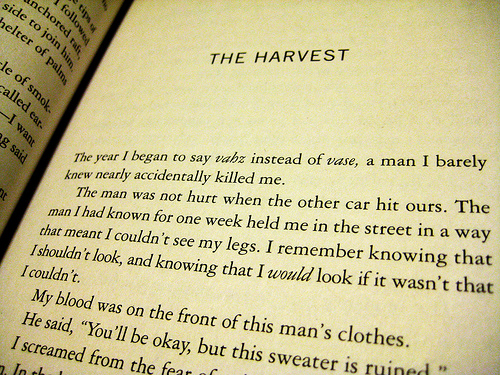
In an article by Chuck Palahniuk, he broke down minimalist storytelling, based on the work of the amazing Amy Hempel and her story ‘The Harvest’. The rules of minimalism Chuck notes are:
• The first thing you study is “horses.” The metaphor is – if you drive a wagon from Utah to California, you use the same horses the whole way. Substitute the word “themes” or “choruses” and you get the idea. In minimalism, a story is a symphony, building and building, but never losing the original melody line. All characters and scenes, things that seem dissimilar, they all illustrate some aspect of the story’s theme.
• The next aspect, Spanbauer calls “burnt tongue.” A way of saying something, but saying it wrong, twisting it to slow down the reader. Forcing the reader to read close, maybe read twice, not just skim along a surface of abstract images, short-cut adverbs, and clichés. In minimalism, clichés are called “received text.”
In The Harvest, Hempel writes, “I moved through the days like a severed head that finishes a sentence.” Right here, you have her “horses” of death and dissolution and her writing a sentence that slows you to a more deliberate, attentive speed.
• No abstracts. No adverbs like sleepily, irritably, sadly. And no measurements, no feet, yards, degrees or years-old.
In The Harvest, Hempel writes, “The year I began to say vahz instead of vase, a man I barely knew nearly accidentally killed me.”
• What else you learn about minimalism includes “recording angel.” This means writing without passing any judgments. Nothing is fed to the reader as fat or happy. You can only describe actions and appearances in a way that makes a judgment occur in the reader’s mind. Whatever it is, you unpack it into the details that will re-assemble themselves within the reader.
Amy Hempel does this. Instead of telling us the boyfriend in The Harvest is an asshole, we see him holding a sweater soaked with his girlfriend’s blood and telling her, “You’ll be okay, but this sweater is ruined.”
• Last point – “on the body.” Hempel shows how a story doesn’t have to be some constant stream of blah-blah-blah to bully the reader into paying attention. You don’t have to hold readers by both ears and ram every moment down their throats. Instead, a story can be a succession of tasty, smelly, touchable details. What Spanbauer and Lish call “going on the body,” to give the reader a sympathetic physical reaction, to involve the reader on a gut level.
These rules obviously can’t be applied to everyone’s work, but knowing them, thinking about them, will help you in being more creative and cerebral in how you communicate story. I especially like the ‘no adverbs’ rule, and I believe applying this, or at least thinking of options whenever you do use an adverb, makes you re-think what you’re saying and come up with creative solutions. I’ve noted this before, but it’s like Twitter, where you’re restricted by a certain number of characters, forcing you re-think what you want to say, abbreviate, and often you’ll find a smarter, more succinct way of wording it because you have to. You should also apply this to your writing, try to think through the best way to say what you want that is the most evocative and, as Chuck says, the most ‘on the body’, eliciting a physical and mental reaction with the reader that will better engage them with your scenes and characters.
Weekly Writing Challenge – Haiku
I haven’t tried one of these before, but I’m having a shot at the Daily post Writing Challenge this week – which is ‘Haiku Catchoo!‘, writing five haiku poems for the week. Haiku poems, as noted in the challenge post are:
‘A traditional haiku has 17 syllables or “sound units” known as morae. The syllables are broken into three lines, where the first line has five syllables, the second line has seven syllables, and the final line has five syllables (5/7/5).‘
I’ve never done one before, but here goes my five:
Lonely
Lonely, I wait for,
The time when you return to,
Hold my hand again
My Son
My son doesn’t speak,
He reaches forward, eyes closed,
And touches my face.
Rain
I can smell the rain,
Coming over the distance,
Grey clouds flood the sky.
Beach
The beach reminds me,
Of a time when I was young,
And nothing mattered.
Flowers
I don’t get flowers,
They die when not in water,
But they make her smile.
Poetry
I’ve written a couple of poems in the last couple of days. Not rhyming couplets, but free-form poetry, which is basically abbreviated storytelling (like this), boiling down a tale to it’s bear details and flow. I’m interested to see if, by doing this, I can translate some of the style back into longer form prose to tighten up descriptions and think more creatively.
It’s kinda of like how when you use Twitter you’re much more restricted, so you abbreviate and reduce and cut down you sentences and as you do so, you realise that you probaby didn’t need such a long description in the first place, as the shorter one works just as well and allows the reader to engage with the words more, as they have to think for themselves and put the image together in their own mind, rather than have it prescribed.
It’s another form of ‘active creativitiy’ I guess, keeping you creative mind active so you continue to think creatively as you go, so you remain open to creative thoughts and visualisations. I even did a couple of drawings the other day, just to see (they were petty bad). Another thing I’ve enjoyed recently has been catching the train. I’ve headed into the city a couple of times (I live about an hour outside Melbourne) and it’s been good, just sitting on the train, watching the people come and go. Takes me back to when I was a teenager, reading books at train stations and heading some place to meet some girl. I defintely feel that all these little things help maintain creativity and an active mind, and hopefully that’ll lead to some solid writing as I continue working on a couple of different projects.
Also, on creative output in different forms, did anyone see Justin Bieber’s latest ‘street art’? I have no real sense of Bieber, I’m not interested in him, but I’m not the target demographic, I get that, but recently he’s taken to doing graffiti – he got arrested in Brazil or something. He recently posted this picture:
So the message is positive, but that picture is, er, not good. I’ve seen some street artists do some amazing things with spray paint, even just looking out the window of the train as it passes I’ve seen good stuff. This is like a child’s drawing. And he felt so good about it that he posted it, so he’s pretty happy with how it looks. I mean, if he’s happy with it, he’s happy, and his fans will probably love it either way. But that is not good.
Active creativity
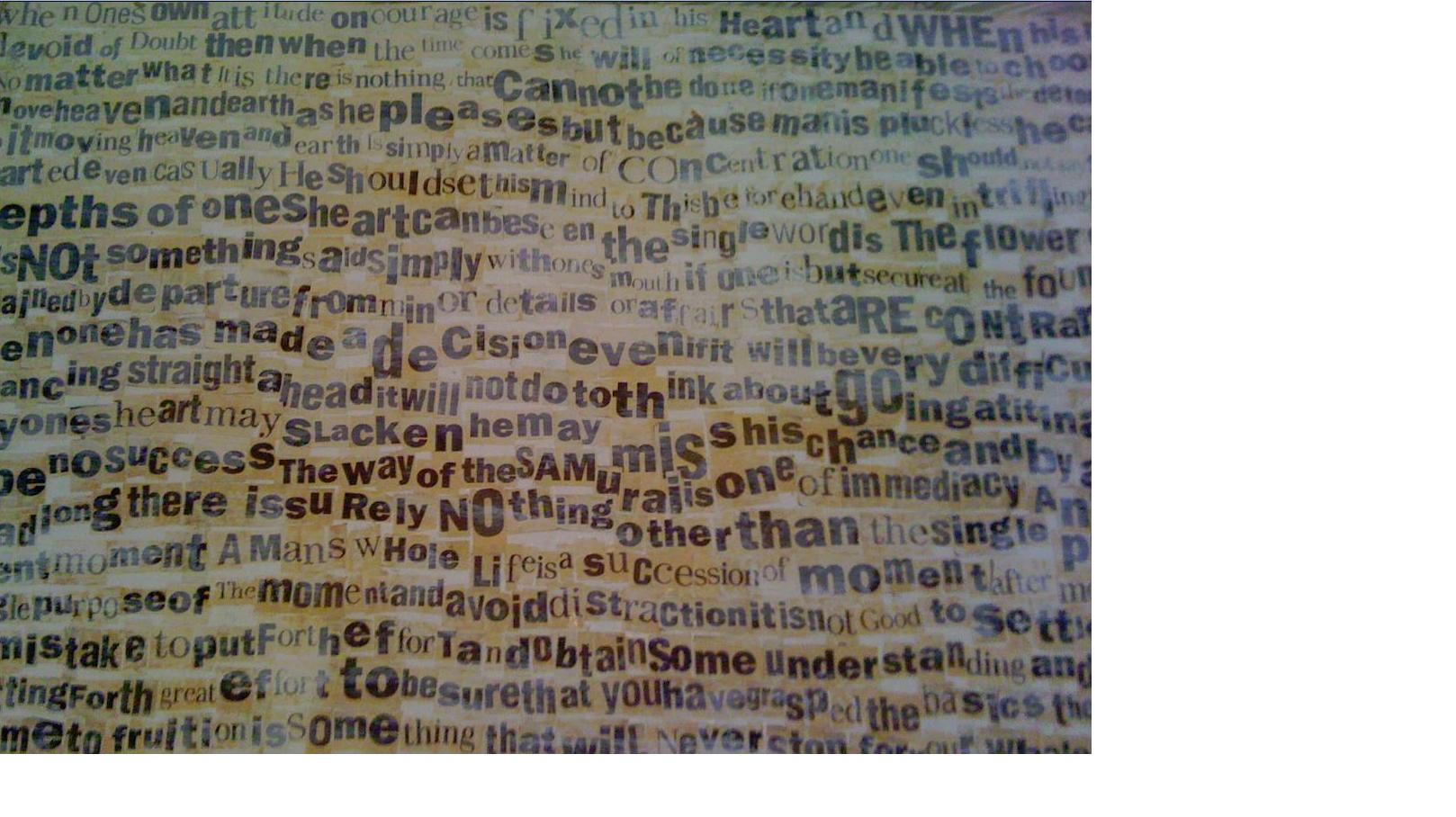
One of the hardest things, for me, is staying creative. That’s why I have to try and write 1000 words a day, to keep my creative mind open, so I can continue to see opporunities in every day life, every day things. It’s easier to ignore that imaginative side, just get on with reality, but when you’re doing something creative, you have to keep it open as best you can. I do this by watching films, reading books, writing as much as I can – sometimes making visual art pieces like the one pictured. I’ve heard that ‘1000 words a day’ target mentioned by many writers over the years, and it is true – the more you push yourself, the more you’ll find the words will come to you. There’s always hard points, times where things just won’t work no matter what you do, but writing every day, keeping that creative part of the brain active, it definitely helps.
 twenty six