Tagged: books
Meanjin
It’s pretty sad to see Meaniin being shut down, given the significance that it holds within the Australian literary landscape.
Meanjin, for those unaware, is arguably the peak literary journal in Australia, and has presented a long-running showcase of some of the top talent in the region. Founded in 1940, Meanjin has been the kicking off point for many great writers, and has helped them connect with an array of new readers. And for many authors, it has also provided ballast within the ever-challenging literary waters, in giving them a means to find community, find voice, and set the standard for literary exploration.
But now, its publishers, the (indirectly) government-funded Melbourne University Press (MUP), have decided to end Meanjin, due to poor sales.
Or more specifically (as per MUP Chair Professor Warren Bebbington):
“The decision was made on purely financial grounds, the board having found it no longer viable to produce the magazine ongoing.”
So low sales, which no longer justify MUP’s investment in the publication. Which, given that it’s funded by Melbourne University, which recieves significant government funding, is questionable, particularly when measured against its broader cultural impact, while it’s also notable that the Australian government’s currently seeking new ways to better fund arts projects through its Creative Australia initiative, which has a dedicated (yet strikingly bare) writing specific element that, presumably, would be able to assist in supporting key platforms like Meanjin. But to be clear, the call on this did not involve the government, it’s the MUP board that has made the decision.
It’s disappointing, but it’s also not a huge surprise. The Australian literary sector has been decaying for years, with fewer people willing to commit the time and mental energy into more complex, challenging narratives, thus impacting literary sales, and re-shaping the book industry.
Like all forms of entertainment, books are fighting a losing battle against social media for attention, and literary fiction has arguably suffered the most. Which, reflecting market demand, means that many great books are not being published, and many great writers are simply not getting the opportunities they once would have. At the same time, some authors are also reforming their creative approach in order to fit into the modern market, so they can make a career out of the opportunities that remain.
The end result is a less vibrant literary ecosystem, and a less engaging literary community, which ultimately means a smaller audience for all books, and a more limited scope of concepts and ideas. The loss of Meanjin will only compound this, by giving us one less outlet for high quality writing, and one less entry point for emerging writers looking to test their skills, and find a path into book publishing.
For me, Meanjin was always a lofty goal, a benchmark to prove my literary talent. I submitted a few times, never got published (understandable, considering the names I was competing against for space), but I did make it into many other literary journals and magazines, all of which helped to assure me that I did have the talent, and that I could pursue writing as a career.
That’s the role such publications serve. Sure, Meanjin was a showcase of the best published authors of the day, but it was also open to submissions from nobodies, people who hoped to get their name out there, and in front of a knowledgeable audience. It was a badge of honor, a prize in itself, and a lifeline for every writer who’s creating in isolation and hoping for their big break. Meanjin was part of the architecture of what had been a consistently over-performing Australian literary industry. And without it, our writing culture will be worse off, in a significant way.
Which is pretty disheartening, and for aspiring writers, it’s a big blow, in an increasingly challenging writing landscape.
Does that mean that you should abandon your literary dreams, or maybe change what you write for market fit?
Look, there’s always going to be a level of market consideration in any writing, as you need to create stories that are going to resonate with an audience if you ever want to generate sales and make money from your work. But should you abandon literary fiction as a result of the current state?
I would say that you should write what resonates with you, and what best reflects what makes you excited about literature, in the style that you feel best enables you to communicate what you want to say. If you write a story in a style that fits, as you want to tell it, then you’ll feel it as you’re writing. And when you come back to it later, and read what you’ve written, if it then still feels like what you wanted it to be, like something that you’d like to read, then that’s the right voice, the right style, and that’s how you get to the creative expression that best represents your perspective.
Basically, it’s easy to be negative, and if you do choose to take a negative view of things, you’ll find that there’s no end to the indicators that will reinforce that view. That literature is in trouble, that your opportunities are gone, that you have no chance of ever being published. There are far more reasons to avoid a literary career, and if you choose to see things from that perspective, every story like this will underline it even more.
But if you choose to remain true to your passion, to the writing that you love, to the stories that you want to tell, the characters, the settings, etc. If you stay true, then you’ll be on a better path to personal satisfaction and exploration, which, in all probability, is also more likely to reach an audience.
It’s also worth noting that your personal perspective cannot be replicated. The way that you see things, the way you interpret them, no other person will view things the same, which means that they also can’t subsequently communicate things the way that you can. And if you can hit that resonant frequency, where all of these creative elements align, that’s where the truly great works come from. And you can’t do that without creating in the style that speaks to you.
So while the loss of another literary opportunity is disheartening, it’s not the end of all opportunities. And eventually, readers will come back around. Eventually, publishers and producers will once again realize the true value of great writing, which tools like AI can’t replace, and things will shift.
As a writer, I would advise that your job is to find the voice of your story, and explore that until you feel like you’ve got it right.
novel influence
We vastly underrate the value of stories, and the contributions that they make to society.
Creative writing, like all arts, is often seen as an expendable funding element, and among the first option when it comes to, say, funding cuts by government bodies.
“Why should our taxes pay for this guy to sit at home and make up stories?”
I know the arguments, and anyone in any creative industry has felt the impacts of such in action. But this perspective doesn’t account for the transformative power of storytelling, and the ways in which writing, painting, music, and every other form of creative pursuit can influence the way that we live.
Put simply, novels are the closest that you will ever get to experiencing the world through somebody else’s eyes.
On the surface, that may not seem like a major thing, but in all of human history, it’s stories that have changed minds, more than anything else, be it in books, movies, short videos on YouTube, etc.
This is why literature is inherently political, because in the telling of stories from varied perspectives, we highlight how people live, and how they experience the world. And that can then sway opinions on social topics, though at the same time, I don’t believe that art should be overtly political in this respect, with a specific aim of reinforcing a political point, or underlining a topical stance.
Artists have a responsibility to the work itself, and nothing else. You could argue that they also have a responsibility to their readers, in ensuring that they remain true to the world that they’ve created, but I would say that this is part and parcel of the first consideration, that in order to create a resonant art work, you need to remain committed to its creation, and stay true to the parameters within which it exists.
That’s where the truth comes from, in being honest about your characters and the situations that they inhabit, exploring the true nature of the work, then presenting that to an audience. It doesn’t have to be ‘good guys versus bad guys,’ it doesn’t have to showcase a specific perspective. An artist should remain attached to the vision of the work, and explore that with a commitment to sharing the characters’ perspective, no matter what direction that may lead.
By presenting things as they are, whether it’s in fiction, non-fiction, in painting, or anything else, you’re then allowing the reader to engage with another perspective. And from that, they can decide how they feel about it.
And that choice is powerful. Depicting rich aristocrats, for example, doesn’t need to be caricatures and clichés, which is the most obvious choice for a general audience, because an honest depiction of who they are, and how they live, will then inevitably also lead to sharing how they view the world, and why they do what they do.
And the reader can judge that for themself.
This is how art changes minds, and highlights society as it exists.
Even in science fiction, remaining true to the parameters of the world that you’ve created will inevitably lead to parallels that mirror real world thinking. The ‘why’ of the story is the driving force, and we read books to get a better sense of why characters do the things that they do, which is influenced by where they come from, what they’ve seen, and how they’ve been treated.
This is how we learn more about the world around us through books, and in my opinion, no other medium is as immersive in sharing somebody else’s perspective as a novel.
The stories may be made up, but the human center of the best fiction is what will always connect us to it.
lit crit
One key piece of advice that my mentor Christos Tsiolkas gave me before the publication of my first novel was this:
‘Don’t ever reply to critics’
Christos said that people are going to say what they say, and definitely, some of it is going to annoy you. But there’s no good outcome if you respond, there’s nothing you can say that hasn’t been said in the novel itself, and you’re best to just let the work have a life of its own, and be happy with what you’ve produced.
I wonder if this still applies in the modern literary landscape, where audience engagement on social media is now such a big consideration, and where publishers actually want authors to have an active presence, and be more than their work.
Because these days, who the author is matters. Where the writer came from, their life and inspirations, what they stand for, what they represent, all of these things matter more than they used to. Topicality will get you more press coverage, or at least more opportunities for interviews and discussion, while taking a definitive stance is a big part of social media resonance more broadly, due to discussion stemming from your opinions, in agreement or not, which can prompt algorithmic boosts. The modern media landscape is much more politically driven, and if you can play into that, you’ll get more coverage and awareness.
So maybe, you should respond to critics, or at least the ones who question who you are, using that as an opportunity to communicate your own stances and opinions. That could actually be a positive, but it is interesting to consider the shift in this respect.
For a lot of my favorite authors, I would have no idea who they are, beyond their work. Amy Hempel is my favorite writer, and I can’t say that I know anything much about her personal life, except that she likes dogs. Cormac McCarthy lived a fairly quiet life, though there are questionable elements of his personal history. But I have no clue what his political stances might be. I assume had he published Blood Meridian in 2025, we’d know much more about him, and that may have even tainted his legacy (if, of course, Blood Meridian would even make it to print these days).
It’s interesting to consider the shift in the way that the media handles people who come to public attention, from writers to actors and everybody else, and how we now know so much more about who they are, and what they care about, than we did in the past.
Is that a better way to approach creative talent? Do we need to know more beyond their work?
In some ways, yes. It’s good to know, for example, that J.K. Rowling has some disagreeable stances, though that does also make me a little more hesitant about supporting her work.
Is that the way that it should be, that external factors sway how we feel about their output?
Ideally, we should probably seek to judge all creative output on its merits alone, and how well the artist has expressed their vision. That would be the most pure assessment of art.
But that would also mean overlooking certain things in favor of the end result, ignoring ugly truths in favor of beautiful creations.
And that’s the way of the past, in the pre-internet era, in which predators could go unchecked for years because of their talent, and it was easier to obscure such from the public.
That’s not a good outcome either, but judging artists on anything other than the work itself also feels unfair, and could mean overlooking merit.
But in the social media era, this is more important than ever.
But if having the “wrong” opinions could kill your career, that also means that we may well be missing out on some of the best, most impactful work.
Either way, it’s another consideration in your broader literary journey, and how you maximize your opportunities.
back to it
Okay. The time has come to write about writing once again.
Why now? Because I miss talking about writing and literary theory, and I don’t get to do it anywhere else.
In terms of published work, I’m currently in a state of semi-forced hiatus, because the publishing industry isn’t really looking for what I write.
That doesn’t mean that it’s bad, necessarily, but right now, thrillers and crime novels (and recipe books) are selling, literary fiction is not. Topical books, books with expanded social commentary, books from people of marginalized backgrounds, these are the types of things that readers, and what remains of the reading audience are seeking out.
Which is good, in many ways, in giving opportunity to a wider scope of writers. But less good for me at present.
So I don’t have anything on the horizon for publishing, but I do have several manuscripts that I’ve completed to first draft, and several ideas that I’m exploring. Indeed, I write a novel a year, because I love writing, but I’m less attached to the literary industry and the scene type stuff that draws many wannabe authors in.
Of course, if someone offered me a publishing contract, I’d take it, don’t get me wrong. But also, I’m an introvert and a quiet person, and I’m happy to not have to do the circuit. So it’s good and bad.
Though that also means making less money from my fiction work, and ideally, that would be a real career path. But it’s not a realistic one, for almost any author in Australia. The average income for a fiction writer in Australia is $18,200 per year, and that’s probably at the higher end of what most writers make for their fiction work alone. So really, it would be considered a hobby, even for the names that you recognize on the bookstore shelves.
Yet, even so, I, like many others, write for the love of it, and the need to get these stories out of my head. And things change, literary trends shift, book popularity ebbs and flows.
Maybe something I write will align with the right trend at the right time at some stage.
But as I say, I still write, I still read as much as I can, and I still like to talk about the craft of writing, and learning how to become a better writer.
So I’m gonna’ go back to writing about that.
In some ways, it feels less impactful at this stage, because if my own writing isn’t selling, what can I offer in terms of valuable writing advice? But I do know writing, and what works, in general terms, versus what doesn’t.
And hopefully, if you read along, we’ll both learn some new things.
Amy Hempel and ‘The Man in Bogota’
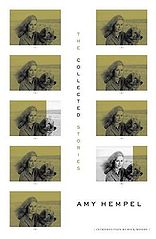
As I’ve raved about many times, I love the work of Amy Hempel. I came to Amy Hempel via Chuck Palahniuk, which seems an odd connection, but a direct one, Palahniuk also cites Hempel as one of his major influences. If you’re a writer or aspiring writer and you’ve never read any of Hempel’s work, I can’t put enough emphasis on how much I think it’s worth seeking her out – the paperback of her collected stories is less than $13 on Amazon, which is criminally cheap.
Hempel is both entertainer and educator in her writing. You wanna’ learn what show don’t tell means, she’ll teach you. Her stories are stripped down, her sentences constructed carefully, every single word is another brick added to the whole. Even describing her work doesn’t do it justice, so here’s an example of Amy Hempel – this is a complete story, six paragraphs in total. I challenge you not to read it and feel caught up by the strength of it.
The Man in Bogota
The police and emergency service people fail to make a dent. The voice of the pleading spouse does not have the hoped-for effect. The woman remains on the ledge – though not, she threatens, for long.
I imagine that I am the one who must talk the woman down. I see it, and it happens like this.
I tell the woman about a man in Bogota. He was a wealthy man, an industrialist who was kidnapped and held for ransom. It was not a TV drama; his wife could not call the bank and, in twenty-four hours, have one million dollars. It took months. The man had a heart condition, and the kidnappers had to keep the man alive.
Listen to this, I tell the woman on the ledge. His captors made him quit smoking. They changed his diet and made him exercise every day. They held him that way for three months.
When the ransom was paid and the man was released, his doctor looked him over. He found the man to be in excellent health. I tell the woman what the doctor said then – that the kidnap was the best thing to happen to that man.
Maybe this is not a come-down-from-the-ledge story. But I tell it with the thought that the woman on the ledge will ask herself a question, the question that occurred to that man in Bogota. He wondered how we know that what happens to us isn’t good.
More information on Amy Hempel.
National Novel Writing Month (NaNoWriMo)

National Novel Writing Month – or NaNoWriMo – begins this weekend, spurring all those would-be authors willing to put themselves on the line to write 50,000 words in 30 days. It’s an excellent initiative, and has now become grown into a global event. For those of you who are considering joining in, or have heard about NaNoWriMo and thought ‘that sounds kinda’ cool, I really should look into that’, here’s the what and the why of how it works.
History
NaNoWriMo started in 1999 in San Francisco with 21 participants. It was originally held in July, but moved to November because the weather in the US is worse then, inspiring more people to stay indoors and write. The event was started (‘accidentally’) by freelance writer Chris Baty, who organised the event up till 2011, when he quit to write full-time, largely based on the works and contacts he’d made through his work with NaNoWriMo (Baty now teaches at Stanford University, amongst his various creative pursuits). The ethos of the event was not only to inspire those who’d always wanted to write a novel, but to also build communities of like-minded folk, to get writers to connect with one another.
The event has grown year-on-year and is now a truly international event. In 2013, 400, 000 people participated in NaNoWriMo – including 4, 400 from Australia. The collective word count from those 400k writers was close to 3 billion, a massive achievement. Many of these stories would’ve never seen the light of day, but they’re now out there, being worked on, being discussed and connecting people in a discussion about the written word.
Rules
The rules of NaNoWriMo are as follows:
- Starting at 12:00 am on November 1st, novels must reach a minimum of 50,000 words before 11:59:59 pm on November 30th, local time.
- Planning and extensive notes are permitted, but no earlier written material can go into the body of the novel, nor is one allowed to start early and then finish 30 days from that start point.
- Participants write either a complete novel of 50,000 words, or simply the first 50,000 words of a novel to be completed later.
To ‘win’ NaNoWriMo, participants need to write an average of approximately 1,667 words per day. Organizers say the aim of the event is simply to get people writing, using the deadline as an incentive to get the story going and to put words to paper. There is no fee to participate in NaNoWriMo, registration is only required for novel verification.
No official prizes are awarded – anyone who reaches the 50,000 word mark is declared a winner.
Do any of these books get published?
Yeah, they do. More than 100 NaNoWriMo novels have been published since 2006, including the New York Times Best Seller ‘Water for Elephants’ by Sara Gruen, which was later adapted into a Hollywood film. Many established novelists have used NaNoWriMo as an impetus to get their novels done, along with the thousands of first timers – just having it set aside as a time to write has kept many writers going.
How do you get involved?
You can visit the official NaNoWriMo website to register and put down details of your project and aim for the month. There are a heap of resources on the site, worth checking them out and reading through the various notes on inspirations and ideas. From the site, you can connect to the home for your region, where you can find info on events happening in your city and ways to connect with other NaNoWriMo folk – the Melbourne community page is here.
You can also follow NaNoWriMo on Twitter (there are also various regional handles if you look up ‘NaNoWriMo’ and filter by the ‘Near You’ option) or on Facebook for further info.
There are a heap of resources and posts online documenting people’s experiences and inspirations for NaNoWriMo, if you’re not sure about participating, have a look and you’ll be able to get a better idea of whether it’s for you.
Almost everyone has thought about writing a novel at some stage. Everyone has an idea in mind, a story they’d love to get down but they never have the time to actually do it. NaNoWriMo is a great initiative to help give people that push, that impetus they need to get it down – and it’s only for a month, you only have to make the commitment to write for 30 days. The bottom line is that a writer writes. That’s what you do – if you’re not writing, you’re not a writer. NaNoWriMo could be the first step towards getting your story together, to making something from nothing, creating a whole world of characters and happenings, right there on your screen. It all starts with you and the blank page.
If you’ve ever thought about it, maybe this year’s the one that you actually sign up.
Are You a Writer?
Why are we afraid to call ourselves writers? This often comes up if you’re in a writing course or at a writing event, if you were to ask the room ‘who here would identify themselves as a writer?’ you’ll see a lot of hesitancy. People aren’t sure they have the right to take that label. It’s as if saying you’re a writer is aggrandising yourself, as if, by owning it, you’re immediately putting yourself up alongside Hemmingway and Tolstoy and writers you’ve idolised your whole life. ‘What right do you have to such a title? Because you ‘try’ to write?’
Why are we afraid to say ‘I’m a writer’?
Here’s a couple of things to consider:
There are billions of great stories in the world, more than could ever be told in the history of time. There are not billions of great storytellers. That’s the way it is, not everyone’s a great writer destined to produce works of literary brilliance. Almost everyone has at least one great story to tell, but for the majority of us, that story will never be heard or written. For every great film or book you read, there are probably thousands more you’ll never experience, because they simply don’t exist.
There are billions of writing tips and strategies and people who’ll tell you what, in their experience, is the best way to go about creating stories. But they’re not all right. There is no ‘right’ way to go about producing literature. There are certain things that you should do – like writing everyday, reading everything you can, learning and taking on feedback – but no one can say ‘you do these things and you’ll become a published author’. Because there is no one way to go about it. If there were, everyone would do it. It always reminds me of Mark Haddon’s ‘The Curious Incident of the Dog in the Night Time’, a novel which includes pictures as part of the text. Next time you go to your writing class or group, you put your hand up and ask whether you should put images in as part of the text in your novel. No doubt you’ll hear scoffs and someone will tell you ‘no, absolutely not’, which makes sense, you would advise against it. But that book sold more than 10 million copies worldwide. There are no definitive rules on how to write great literature. You can make anything work, within reason.
The thing is, if people are afraid to own the label ‘writer’, people are at least somewhat afraid to write. At the least, people are afraid to show their work to people, because ‘it’s just something silly I’ve been working on, nothing really, forget about it’. If people are afraid to be writers, we’re missing out on great stories. You need to do it, you need to put your words down, do what you feel. You need to get it out there – yeah, you might get criticised, but that’s part of the process. Every author gets rejected and trashed and hurt. You take on what you can while staying true to yourself, want to achieve. What you think makes your work great. You only have to answer to yourself, know that you’re doing the best you can to achieve what you want.
We need people to own that label, to stand up and say ‘I’m a writer’, because we don’t want to miss out on great stories. It’s quite possible that the greatest novels of all time have never been put to paper, and that’s a massive shame. And maybe your stuff isn’t going to change the literary landscape, sell millions of copies, affect the lives of people in generations to come. But it might. Why not you? Kurt Vonnegut sold cars before he became ‘Kurt Vonnegut’. JK Rowling was a secretary. Great writers are people, just like you, doing the same things you are. Why can’t you succeed like them?
And that’s the one thing to keep in mind.
There are billions of people in the world. But there is only one you. No one else can write what’s in your head. And if you write, you are a writer. So be it.
I am a writer.
Maybe one day, you’ll read my stuff.
 twenty six