Tagged: better writing
National Novel Writing Month (NaNoWriMo)

National Novel Writing Month – or NaNoWriMo – begins this weekend, spurring all those would-be authors willing to put themselves on the line to write 50,000 words in 30 days. It’s an excellent initiative, and has now become grown into a global event. For those of you who are considering joining in, or have heard about NaNoWriMo and thought ‘that sounds kinda’ cool, I really should look into that’, here’s the what and the why of how it works.
History
NaNoWriMo started in 1999 in San Francisco with 21 participants. It was originally held in July, but moved to November because the weather in the US is worse then, inspiring more people to stay indoors and write. The event was started (‘accidentally’) by freelance writer Chris Baty, who organised the event up till 2011, when he quit to write full-time, largely based on the works and contacts he’d made through his work with NaNoWriMo (Baty now teaches at Stanford University, amongst his various creative pursuits). The ethos of the event was not only to inspire those who’d always wanted to write a novel, but to also build communities of like-minded folk, to get writers to connect with one another.
The event has grown year-on-year and is now a truly international event. In 2013, 400, 000 people participated in NaNoWriMo – including 4, 400 from Australia. The collective word count from those 400k writers was close to 3 billion, a massive achievement. Many of these stories would’ve never seen the light of day, but they’re now out there, being worked on, being discussed and connecting people in a discussion about the written word.
Rules
The rules of NaNoWriMo are as follows:
- Starting at 12:00 am on November 1st, novels must reach a minimum of 50,000 words before 11:59:59 pm on November 30th, local time.
- Planning and extensive notes are permitted, but no earlier written material can go into the body of the novel, nor is one allowed to start early and then finish 30 days from that start point.
- Participants write either a complete novel of 50,000 words, or simply the first 50,000 words of a novel to be completed later.
To ‘win’ NaNoWriMo, participants need to write an average of approximately 1,667 words per day. Organizers say the aim of the event is simply to get people writing, using the deadline as an incentive to get the story going and to put words to paper. There is no fee to participate in NaNoWriMo, registration is only required for novel verification.
No official prizes are awarded – anyone who reaches the 50,000 word mark is declared a winner.
Do any of these books get published?
Yeah, they do. More than 100 NaNoWriMo novels have been published since 2006, including the New York Times Best Seller ‘Water for Elephants’ by Sara Gruen, which was later adapted into a Hollywood film. Many established novelists have used NaNoWriMo as an impetus to get their novels done, along with the thousands of first timers – just having it set aside as a time to write has kept many writers going.
How do you get involved?
You can visit the official NaNoWriMo website to register and put down details of your project and aim for the month. There are a heap of resources on the site, worth checking them out and reading through the various notes on inspirations and ideas. From the site, you can connect to the home for your region, where you can find info on events happening in your city and ways to connect with other NaNoWriMo folk – the Melbourne community page is here.
You can also follow NaNoWriMo on Twitter (there are also various regional handles if you look up ‘NaNoWriMo’ and filter by the ‘Near You’ option) or on Facebook for further info.
There are a heap of resources and posts online documenting people’s experiences and inspirations for NaNoWriMo, if you’re not sure about participating, have a look and you’ll be able to get a better idea of whether it’s for you.
Almost everyone has thought about writing a novel at some stage. Everyone has an idea in mind, a story they’d love to get down but they never have the time to actually do it. NaNoWriMo is a great initiative to help give people that push, that impetus they need to get it down – and it’s only for a month, you only have to make the commitment to write for 30 days. The bottom line is that a writer writes. That’s what you do – if you’re not writing, you’re not a writer. NaNoWriMo could be the first step towards getting your story together, to making something from nothing, creating a whole world of characters and happenings, right there on your screen. It all starts with you and the blank page.
If you’ve ever thought about it, maybe this year’s the one that you actually sign up.
When do You Become an Adult?
I caught up with an old friend yesterday, someone I’d not seen in thirteen years. And it was fine, normal, we just caught up like nothing much had changed, despite us both having had kids, got married, acquired mortgages, etc. It made me reflect on something I’d thought about on and off, and that’s the huge role our teenage years have on our sense of self and self-worth. We actually talked about this, how it didn’t feel like we were in high school so long ago, the experience felt much closer. What is it that binds us to those formative years, that still lingers decades after? More importantly, when do we grow up and become adults?
This was interesting to consider from a writing perspective, the fact that many people never truly feel like grown-ups. We resist growing up, we idealise our time as care-free children and fun motivated teens. Because who wants to think about work and responsibility? Life was more fun when we didn’t have such obligations and as your existence becomes evermore complex, your memories of those years become more rosy. Sure, there were bad times too, but sitting around talking with friend till dawn, finding new music that changed your perspective, hanging out and doing absolutely nothing. Those memories are hard to shake.
As a writer, you’re seeking to capture the emotion of the moment, to tell stories that fully transport the reader to a different world. That immersion, that perfect progression that allows you to capture attention and hold it, is why people read. Like the idyllic world of our youth, people want to escape, they want to be taken away from their day-to-day repetition. A powerful tool which can help you capture such emotion is to consider those resonant moments from your youth. What were the incidents that really stayed with you, the things that really hit you? Those emotions, while immature, are still very relevant, and normally very raw, as many of them would’ve been your first experiences with such feelings. How you felt at those times is important and has played an important part in shaping your adult self. Recalling those times and translating them to scenes and characters in your work is a great way to capture real emotion and add honest depth to your work.
Thinking of this also reminded me of the importance of writing. There’s a lot to take in in our adult lives, a lot to deal with. It’s important we write because people need an escape. People need to be able to step outside of themselves and experience something different, something new. You can never transfer your consciousness into another body – the closest you can get to viewing the world from someone else’s perspective is to read. And it’s important people read, it’s important that people have the opportunity to experience more than their own life. Your writing enables that, your honesty, your experiences, your real worlds created on paper are important. We need to write not just to get our own story out, but to allow others to experience it.
Author Erica Baurmeister had interesting quote on this:
“Adults need to have fun so children will want to grow up”
We hold on so tight to our childhood memories, to those perfect times when nothing mattered. Sometimes we can hold on too tight. It’s important we allow ourselves times to have fun, to live and experience life as adults too. Reading is a good way to do this, sharing stories is good, but also, don’t take yourself too seriously. Do what you need to do to enjoy life (so long as that doesn’t involve harming anyone or anything else). It’s important that we lead the way for kids, that we show them that being an adult is also fun. Part of doing that is chasing your dreams and doing what you love. Like writing. So write.
Criticism is a Challenge – How Will You Respond?
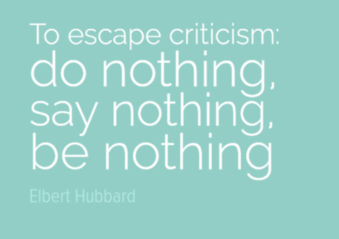
Criticism is a big part of becoming a better writer (or a better anything, really). More specifically, how you deal with criticism plays a major role in your improvement and ultimately, the level of success you’ll achieve with your work. As noted in a recent post, a large part of this is your internal critic, your ability to distance yourself from your work and analyse your output, but external criticism, while sometimes difficult to take, is just as important, and how you interpret feedback, how you respond, is the actionable element of the process, the part you need to excel at.
I was playing basketball once and we were up against the best team in the competition. This was a group of guys who had played at a really high level, much higher than the competition we were in, and they were well better than the rest of our league, won the grand final season after season. I was talking to a teammate before we played them one time and he was like ‘I hate playing this team, coming out on a cold night just to get your ass kicked’. And he was right, it was annoying – it’s no fun going into a match knowing that you’re about to get destroyed – but my view on this was actually the opposite of his. I told him I like playing these guys – the problem is more that we only get to face them once every eight weeks. Playing them was an opportunity, a chance to see how you matched up and to try and work them out, maybe even get a few over on them. Yes, they were going to win, but maybe we could put some pressure on them, hit a few shots, remind them not to leave us open. Playing against them was an opportunity to improve – because if you didn’t, you were just gonna’ get trampled over and over again. You either worked harder or you gave up – it was that simple. I wasn’t prepared to give up and drop down to the next grade below, so the only other option was to take them on, keep trying. The only thing you could do was to keep working to improve.
This is how I view criticism. Critiques force you to improve. Just as an athlete trains and works out and builds herself into a better player, you need to read, you need to edit and you have to put in the work, every day. The more you do this, the more you’ll improve. Criticism is an important element of this, because while it’s not always right, it’s worth taking in, worth listening to, even just as motivation to prove them wrong. The more you face up to criticism and accept it as a challenge, something to improve and aspire to, the better off you’ll be. And here’s the thing – you will improve. You see it all the time in sports, players improve year-on-year, they get better because they have to. Because the only other option is to give up. The only way criticism will defeat you is if you give up. If you accept it, if you agree with it, and if you decide you don’t have the energy to put in the effort anymore, then you’ll have decided your own fate. But if you believe you can, that you want to succeed despite whatever odds you face, then you will. You just need to put in the work. You need to train, analyse, study successful people in your field and build an understanding of what it takes to get to that next level.
Writing is work, it’s consistent effort, consistent reading and practice to understand and improve. The only way you stop improving is when you stop. Period. If you’re happy with where you’re at, that’s fine, no need to put in any more work. If you think those professional writers and authors on bookstore shelves are well above your standard, that they’re too high to even consider comparing your work against, then you’re right. But if you really want to succeed, if you take criticism as a call to action, rather than a cue to shut down, then you will improve. And you’ll keep progressing towards that next level of success.
Poetry May Not Be What You Think It Is
I’m not sure we take the right approach in how we teach kids poetry. From a young age we’re exposed to poems via nursery rhymes and what we’re taught is that poetry is rhyming couplets. Dr Suess tells us, then later pop music – the only real exposure we get to what poetry is rhyme, repeated patterns and verse. And that’s fine, in no way would I ever disparage the skill it takes to create great rhyming poetry, but it’s also a very narrow view of what poetry is and can be. The problem is, we’re given such limited exposure to other forms of poetry. What’s more, while there are many brilliant examples of rhyming poetry, it is a true skill to master, and there are even more examples of bad rhyming couplets – and let’s face it, even amidst the greatest rhyming poems there’s normally a couple of laboured lines and references that have been jammed in, in order to stay in theme.
My issue with this is that we might be restricting people’s view of what poetry is by teaching them only one narrow view of the form. When people hear poetry, they think ‘Roses are red…’, that sort of light, generic, often tacky, form of expression. They think of jokes, of rhythmic language that’s used in movie clichés. They think of kids books, that poetry is something for kids, when really, the means of expression via poetic form are so wide, so unrestricted, and rhyming verse is only one small part of the equation. Poetry is the closest thing to connecting thoughts through language. It’s translating emotion, creating connections in the readers’ brains that connect on a higher level than the language alone. Poetry can be transformative and transcendent and more than most people might think it to be.
I know how many people view poetry. I know, because I once viewed it that way too – I’m a story writer, and have always been focussed on story. Poetry was like a joke to me – you put a few words together that may or may not mean something and if you can find the right balance between being vague enough that people can find their own meaning, and so vague that the words don’t even connect, then you’ve got yourself a poem. I even tested this in high school – we were doing poetry in English and one of my classmates asked how you do it. I wrote a poem about crying in the rain, with deliberately vague lines like: ‘My optimistic pessimism’. It got published in the school paper, then it got published in a state-wide street press publication:

This reinforced my view, poetry was easy and not to be taken seriously.
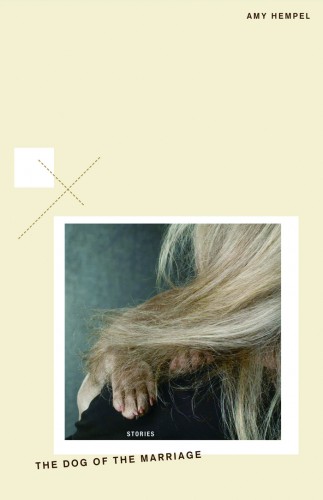
My view changed on this after reading Fight Club. This wasn’t because the language of Fight Club was so poetic, but from Fight Club I researched all I could about the author, Chuck Palahniuk. Palahniuk listed one of his favourite authors as Amy Hempel, so I went on to read all her stuff. Hempel is phenomenal – if you haven’t read any of Amy Hempel’s work, you’re missing out, and you need to get over to Amazon now and order a couple of her books. Her short story collection ‘Reasons to Live’ changed the way I think about writing – Hempel’s style is something that can’t be replicated, so intricate and subtle that, as Palahniuk says: ‘all you can do is lie on the floor, face down, and praise it.’
Fran Lebowitz still writes about the moment she first looked at a clock and grasped the concept of telling time. Hempel’s work is nothing but these flashes, and every flash makes you ache with recognition. –Chuck Palahniuk on Amy Hempel
Hempel is both a short fiction writer and a poet, with several volumes of both in circulation. The combination of the two is what makes her so brilliant – Hempel can extract the emotion from the most mundane moment and translate it into a thing of beauty. This is not ‘Hempel the Writer’, at work, it’s ‘Hempel the Poet’, but the two have become so intertwined that her prose transcends the parameters of either form. For example, here is one of my favourite Amy Hempel stories – the first story of hers I read, and the one that made me want to buy everything she’d ever written:
My heart — I thought it stopped. So I got in my car and headed for God. I passed two churches with cars parked in front. Then I stopped at the third because no one else had. It was early afternoon, the middle of the week. I chose a pew in the center of the rows. Episcopal or Methodist, it didn’t make any difference. It was as quiet as a church. I thought about the feeling of the long missed beat, and the tumble of the next ones as they rushed to fill the space. I sat there — in the high brace of quiet and stained glass — and I listened.
At the back of my house I can stand in the light from the sliding glass door and look out onto the deck. The deck is planted with marguerites and succulents in red clay pots. One of the pots is empty. It is shallow and broad, and filled with water like a birdbath.
My cat takes naps in the windowbox. Her gray chin is powdered with the iridescent dust from butterfly wings. If I tap on the glass, the cat will not look up. The sound that I make is not food.
When I was a girl I sneaked out at night. I pressed myself to hedges and fitted the shadows of trees. I went to a construction site near the lake. I took a concrete-mixing tub, slid it to the shore, and sat down inside it like a saucer. I would push off from the sand with one stolen oar and float, hearing nothing, for hours.
The birdbath is shaped like that tub.
I look at my nails in the harsh bathroom light. The scare will appear as a ripple at the base. It will take a couple of weeks to see.
I lock the door and run a tub of water.
Most of the time you don’t really hear it. A pulse is a thing that you feel. Even if you are somewhat quiet. Sometimes you hear it through the pillow at night. But I know that there is a place where you can hear it even better than that. Here is what you do. You ease yourself into a tub of water, you ease yourself down. You lie back and wait for the ripples to smooth away. Then you take a deep breath, and slide your head under, and listen for the playfulness of your heart.
It’s a perfect example of Hempel’s work – simple but complex, mundane but poetic. It isn’t straight-forward storytelling, but there is such a resonant story there, even this very short piece. It’s a connective work, the way Hempel has used language to build layer upon layer. It’s more than just prose writing, it’s another level of literary expression. And I wanted to read more.
Hempel’s work lead me onto Sharon Olds, who’s an amazing poet, one of the best I’ve ever read. Like Hempel, Olds’ work transcends the confines of what you may think poetry can be. While Olds doesn’t have the prose leanings of Hempel, her poems tell a story nonetheless, and she’s often able to tell a more powerful story than many can in novel-form. One of my favourite Olds poems is this:
Summer Solstice, New York City
By the end of the longest day of the year he could not stand it,
he went up the iron stairs through the roof of the building
and over the soft, tarry surface
to the edge, put one leg over the complex green tin cornice
and said if they came a step closer that was it.
Then the huge machinery of the earth began to work for his life,
the cops came in their suits blue-grey as the sky on a cloudy evening,
and one put on a bullet-proof vest, a
black shell around his own life,
life of his children’s father, in case
the man was armed, and one, slung with a
rope like the sign of his bounden duty,
came up out of a hole in the top of the neighboring building
like the gold hole they say is in the top of the head,
and began to lurk toward the man who wanted to die.
The tallest cop approached him directly,
softly, slowly, talking to him, talking, talking,
while the man’s leg hung over the lip of the next world
and the crowd gathered in the street, silent, and the
hairy net with its implacable grid was
unfolded near the curb and spread out and
stretched as the sheet is prepared to receive at a birth.
Then they all came a little closer
where he squatted nest to his death, his shirt
glowing its milky glow like something
growing in a dish at night in the dark in a lab and then
everything stopped
as his body jerked and he
stepped down from the parapet and went toward them
and they closed on him, I thought they were going to
beat him up, as a mother whose child has been
lost will scream at the child when it’s found, they
took him by the arms and held him up and
leaned him against the wall of the chimney and the
tall cop lit a cigarette
in his own mouth, and gave it to him, and
then they all lit cigarettes, and the
red, glowing ends burned like the
tiny campfires we lit at night
back at the beginning of the world.
This is a story, right? This is more prose-like than you’d expect a poem to be, but it’s also definitely a poem. The words carry such weight, each line is crafted and precise. Olds’ poetry taught me the importance of ‘language economics’, of the need to be concise and ensure each sentence reaches it’s full potential – there’s so much more to this poem that the words on the page. Great poetry uses the experiences and associations of the reader to build the greater context, rather than explaining it to them – which is true also of great prose writing – but nothing illustrates this point better than a great poem. One line can change everything, can hit you so hard. Poetry taught me the importance of rhythm and timing, and word placement in general. These are the tools you need to be able to communicate well. Poetry showcases those skills better than any other form.
Knowledge of poetry better informs you as a writer and helps you find better ways to communicate your story. Cormac McCarthy’s ‘The Road’ is one of the best examples of poetic description in prose form, and it’s so much more resonant because of it. A sequence like this:
By then it was already evening. Just the slow periodic rack and shuffle of the oarlocks. The lake dark glass and windowlights coming on along the shore. A radio somewhere. Neither of them had spoken a word. This was the perfect day of his childhood. This the day to shape the days upon – Cormac McCarthy, The Road
This is poetry, this is connecting emotion via language – sentence construction aligned with thought. It’s more than just the sum of its parts, than just the words alone, there’s a beauty to it’s simplicity. If I’d presented this as a poem, you’d not have thought twice about it. But it’s used in prose, in a Pulitzer Prize winning novel, no less. This is the potential of poetic expression. It’s far more than just rhyme.
With a newfound respect for poetry, I started to investigate and appreciate other forms of the medium. And while it’s often lambasted as the height of pretentiousness, spoken word poetry, when done well, can be extremely powerful. The thing that many miss is that the performance is a major part – it’s ‘performance poetry’ not a poetry reading. At the Melbourne Writers’ Festival a few years back, I remember Canadian performance poet Shane Koyczan had done a session. Koyczan had his mostly female audience swooning, all because of his delivery of lines like:
looking at you it occurred to me
I could sit around all day
wearing nothing but your kiss– Shane Koyczan, Skin 2
And one of my favourite performances was by ‘Coded Language’ by Saul Williams.
It’s passionate, resonant and again, it’s more than the sum of it’s parts, more than the words alone.
So this is why I don’t think we take the right approach to how we teach poetry, because I would have never thought to look at these things, I’d have never come across the greater opportunities of creative expression through poetry without finding it in my own way. I realise one of the main challenges of education is engagement, finding ways to get kids interested in what’s being taught, and no doubt that’s a barrier, but I feel like we need to reinforce that real poetry is so much more than rhyming couplets. Maybe I’m wrong, maybe educators are doing all they can, but there’s so much opportunity for expression through poetry, so much more than what people might interpret ‘poetry’ to be. While it’ll never be mainstream, by highlighting all these other avenues, maybe we can encourage more participation in poetic expression, and get in touch with more amazing writing as a result. At the least, knowledge of poetic expression will improve your written communication, in all forms.
Four Ways to Be Your Own Best Critic and Greatly Improve Your Writing
One of the biggest factors contributing to the success of your writing is how good of an internal critic you are. How objectively can you view your own work? How much are you able to put yourself into the mind of your readers when you edit and re-write? This is crucial and probably the most significant difference between a good writer and a great one – it’s one thing to be able to write a story, it’s another to view that story as someone else would, and to be able to cut and edit your sentences from that point of view. With that in mind, here are a few tips to help improve your own editing process.
1. Let everything you write rest before editing
Nothing increases objectivity like distance – it’s like when you end a relationship and it’s devastating and you’re a wreck, but then over time you start to see things more clearly, see the issues and problems that existed beneath your rose-coloured memories. Writing is the same – you’ve spent a long time thinking about the piece, you’ve worked on it in your head, it’s kept you up at night going over it and some of those sentences have arrived to you in such pristine fashion, there’s no way they won’t make the final cut. Once you’ve let something sit, you’re able to review it without that level of emotional attachment. The longer you can leave it, the less likely you’re going to be blinded by personal connection and the more likely you’ll be able to view it as just another piece of writing – and that’s the best way to edit. If you can read your own work as if it’s someone else’s, like you would any other piece, then you can truly unlock your objectivity and see flaws for what they are. And then you can correct them.
2. If your mind’s drifting as you re-read, there’s a problem
I’ve spoken to writers who’ve justified this, to some degree, by saying they might have trouble focussing on the piece because they wrote it, they’re intimately familiar with the story. If you created it, it’s going to be harder for you to be excited or engaged, right? In the vast majority of cases, I don’t believe that way of thinking is correct. If your thoughts are wandering as you read, it’s likely your readers are going to drift too, and if they drift, then your work hasn’t connected and you’ll lose them very quick. Don’t dismiss flow issues or engagement lapses, they’re all indicative of problems you need to, at the least, re-assess. If a section loses you, you need to review the structure and understand why the sequence seems off. You can go crazy on this, I know, you can get hung up on small issues that’ll never feels quite right, but it’s important that you do investigate and understand any areas where things don’t sit as they should. It’s like when you get feedback – you take in all feedback, listen to what the person has to say, then you re-read the section. If it communicates what you intended, that’s fine, but even if you don’t agree with their criticism, it’s worth re-assessing, ensuring the message is delivered as you want.
3. Editing is going to take you way more time than writing
If it doesn’t, you’re either extremely lucky or you’re not maximising the potential of your work. I was reading an interview with a musician once who talked about how he’ll do more than 50 vocal takes for every track he creates to ensure that he gets the best version for his final piece. This is ‘the work’, as he explained it, and he’d seen many musicians who weren’t willing to do ‘the work’ fall by the wayside because they would do three takes, feel one of them was perfect, then want to move on. Attention to detail is the difference between good and great. This is true in everything, but very much so in writing. How many times has a small error in a piece stood out to you? How many times have you seen an error in a piece by an accomplished writer? Attention to detail is a sign of professionalism, and while people can get over a minor mistake here or there (everyone makes them, I probably have in this post), you don’t want to give your readers anything that could divert their attention from the piece. A small mistake is like a bump in the road, it can distract you from the main narrative momentarily. Too many bumps, and they become the narrative themselves. You should always edit, then edit, then edit again before you even think about releasing your work, because you’ll always, always, always find issues, no matter how naturally gifted you think you are. Always.
Accepting that editing is just as significant a part of the writing process is important, but ideally, you also need to make yourself just as excited about the editing process as the writing itself. How? By thinking of your readers, by keeping in mind why you’re doing ‘the work’. Because the better it is, the better it’ll be received and the more likely you’ll reach a wider audience. And it can be an engaging process – you’ve written your first draft, but now you get to go back and find ways to improve it, to make it even better. That’s genuinely exciting, it’s great to read through and find ways you can make sentences better, to think over progressions and words and improve the final product. You are not only the writer of each piece you create, you’re the first reader, and you have the chance to shape that story into what you want. How many times have you watched a movie and thought ‘it would’ve been better if…’ The more objective you can be, the more you can actually do this with your own drafts.
4. Is that how you would say it?
One of the more common pieces of writing advice is to ‘write like you talk’. And like most tips (e.g. ‘write what you know’) there’s really more of a middle ground truth to this. Definitely, you should review your writing and ensure it flows naturally. The reader will have a voice in their head as they read, and if that voice sounds inauthentic or starts saying things that stumble in the flow, it’s another bump in the road that could, potentially, turn them off. I highly recommend reading your work out loud to ensure the flow is right – it’ll highlight things no other method can, and the more you do it, the more your internal monologue gets attuned to sentence flow, and you’ll make fewer mistakes in your initial drafts. But you need to also ensure that you’re communicating effectively for each piece, which is not always exactly like you talk. For example, if you’re writing fiction, it’s crucial that you write how the characters would talk, not you. For non-fiction, you can’t use slang as you might in regular conversation for every piece. There’s a level of self-awareness required to accompany this advice – it’s not necessarily how you would talk, it’s how you would talk to the intended audience of the piece.
The most common errors I see on this front are things like ‘you are’ when it would read better as ‘you’re’, ‘it is’ instead of ‘it’s’. These types of common contractions are very much in tune with how we communicate – a simple sentence like ‘it is crucial that you are aware of this’ is grammatically correct, but no one would say it like that in real life. Your words are translated into a voice in the reader’s mind, and it’s important you communicate like a real person to avoid any chance of losing their attention.
Being able to distance yourself and view your own work with a critical eye is integral to your success as a writer. If you write one draft, don’t re-read, and send it out, I guarantee you will fail. No one, no writer in the world gets it perfect in one try. You need to embrace editing and improve your self-awareness by benchmarking your work against the best (as a comparison, not in admiration) and come to it as the first reader of your content. The better you can do this, the more likely you’ll make your work the best it can possibly be.
Author Interview: James Phelan

In my time at writing and literary events, I’ve had opportunity to meet a lot of authors. Most of them are pretty quiet, all of them have been pretty nice, normal people, but a couple have become genuine close friends. It’s great to have a few writer friends, some people who know what it’s like to commit yourself to such a solitary act. It’s also great to have them to bounce ideas off, talk about your frustrations or concerns, just share with folk who’ve gone through a lot of the same things.
One of those people, for me, is James Phelan. I met James at the Newcastle Writers Fesitval in 2006 and we hit it off straight away. What’s always been really interesting for me is James writes in a completely different style to what I do. James’ novels are action/thrillers, and I’ve never been able to get into them. But hearing such a difference perspective on writing and the writing/publishing process has always fascinated me. James is the guy I go to when I need to ramble about writing and the challenges I’m having, the guy I seek out if I don’t know how this or that works in the industry. He’s also a close friend whose always been willing to listen to my ramblings.
I asked James to answer a few questions on writing and his writing process:
When did you decide to pursue a career as a writer?
I was 15 when I knew I wanted to be a novelist but I thought you had to be an old dude to do it. So, I figured I’d give it a try when I retired from a “real job”. I studied architecture and worked for a couple of firms, and by 20 I knew that I had to give writing a serious try. I wrote my first novel by 21, got a job at a newspaper, did an MA and PhD in Lit, and had my first novel published published at 25.
What’s the most challenging aspect of being a full-time writer?
Deciding what to do next. I’ve written series for adults, young adults, and kids, and each has its pros and cons. The adult stuff has complete freedom, YA slightly less so, and the kids stuff has a whole bunch of things that the publishers tell me I can’t do or say on the page. The YA and kids stuff involves way more PR, on average a day per week, and while that’s great in terms of meeting enthusiastic readers, it sucks time away from writing. Publishing books for adults is more about Crystal, Maybachs, diamonds on your timepiece, jet planes… you know the rest. Publishing books for kids sells about 10x more.
What’s the key to ongoing success?
Working hard. It’s easy for a writer to procrastinate, and there’s creative merit in that, sure. I write every day, starting early in the cafe nearby. Depending on which stage of writing I’m at, I’ll be sitting with my notebook or laptop or print out. Every day. That’s the writing side. The business side – you need good agents (and an accountant) who you trust will give you good advice when you need it, look over your contracts, and support you through the process.
Best tip for keeping ideas flowing and avoiding/beating writers’ block?
It’s my belief that if you write every day you’ll keep things moving along. That, and knowing your ending. Whether I’m writing a short story or a 40,000 word novel for kids or 90,000 for adults, I always know how I want my ending to play out. Not so much beat for beat, but in my ending I need to know the feeling that I want to create in the reader, be it comedic, dramatic, tragic etc. Usually by the time I write the ending, it will play out different to how I envisaged, but that value will stay always the same, and by knowing where I was going I managed to get there. I’ve been a full-time novelist since 2007, and it’s all about working hard.
Best tip for writers starting out?
Don’t ever sign a 13 book deal. Only recently have I finished all my contracts, and the freedom is incredible. So, enjoy your freedom, while it lasts. Write what you want to write. Make it shine through revisions, then decide what you’re going to do with it. I still think that agents are worth their commission, so get one of those. How? By getting published. How do you get published? By having an agent, or already being published. I know, right? Oh, and don’t forget to read as much as you can and as broadly as you can. Good luck.
[Note: Not everyone’s as luck to be offered a 13 book deal, and I’m sure most would jump at the chance, but as noted by James, it can be double-edged]
James Phelan’s latest adult thriller is ‘The Spy‘, and the first books of his YA series ‘The Last Thirteen‘ are also available now. He’s also on Twitter.
Also, this punch really hurt him.

How Would You Write if the End Result Didn’t Matter?
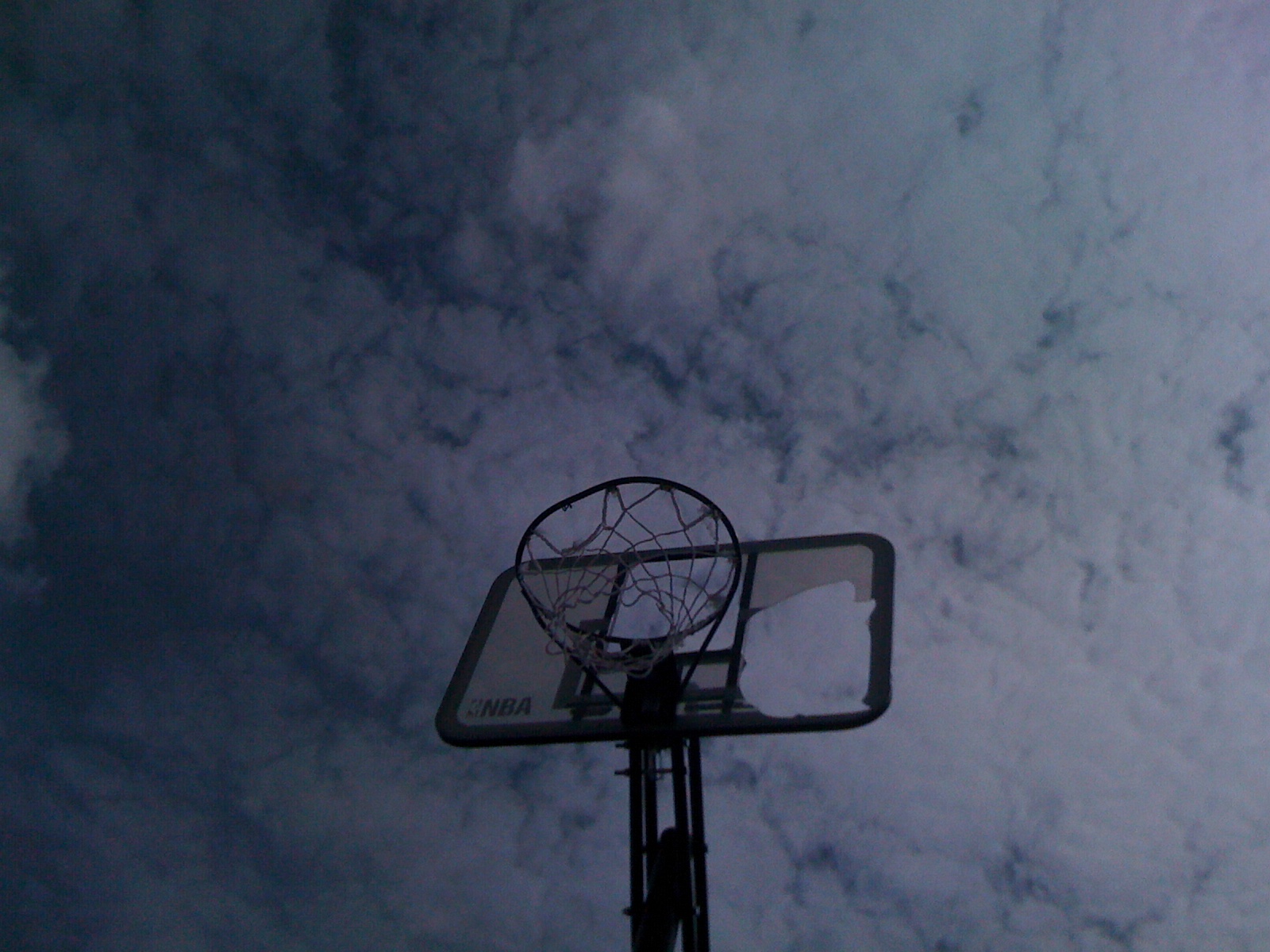
It’s amazing how much state of mind plays in success. I’ve been playing basketball since I was fifteen, still play a couple of times a week (I’m now 34) and I was talking with a team-mate recently, saying how we play so much better in training than we do in our actual games. Why would that be? The reason is because we approach them differently – in training, we’re playing with mates, guys we’ve played with and against for years and we’re comfortable around. If we win a training match, great, if not, no one cares, so we’re much more likely to take shots we’d think twice about in a real game, much more relaxed, and this, generally, means we play better. Because we’re not over-thinking the importance of making the play or how to beat this or that defender. In training, we’re relying more on instinct, and we’ve been doing it for such a long time that our instincts are pretty good.
The difference between practice and game is totally in our own heads. The opponents we play against aren’t better than the guys we train with, but in our heads, we put more emphasis on it, we get more caught up in doing the right things and not making mistakes. We stress, and that stress makes us tighter, makes us think that little bit too much about the process rather than just allowing ourselves to do it, and we make more mistakes because we get caught up in the detail. We make the situation more difficult for ourselves because of our own self-doubt and mentality. There’s no actual difference in the physical process.
I’ve heard sports stars say this over the years when talking about the difference between the highest levels and the lesser ranks. They always say the psychology is what you have to master, the approach. For a long time I didn’t understand it, but in recent years I’ve come to realise what they mean. There’s a famous quote from Henry Ford which goes: ‘Whether you think you can, or you think you can’t – you’re right’. That pretty much sums it up – if you go out on the court and you think you’re going to get beat or you’re going to play bad, you’re probably going to. If you take to the floor and you’re getting caught up in who your opposition is and stressing over what might happen, you’re starting off on the back foot. You need to be able to change you’re thinking on it, relax yourself, even enjoy playing the game. You need to think ‘how would I play in practice?’, ‘How would I feel right now if the opposition were all guys I know?’ You need to think: ‘How would I play if the end result didn’t matter?’ If you can change your mindset, you can allow your instincts to take over – that’s what the big name sports stars are able to do. Despite the crowds and the money and the expectation lumped on their backs – the best players are able to block it all out and play just like they did on the schoolyard, just like they would any other time. In doing this, they allow themselves to maximise their natural instincts and abilities.
So why the long sports analogy on a writing blog? Well, the next tangent I thought of is how this also relates to my writing. As writers, we often put too much pressure on ourselves, always thinking this isn’t good enough, or we get caught thinking ourselves round in circles trying to work out the best way to explain certain elements or details. Just as in sports, we’d often do better to trust our instincts and rely on the skills and knowledge we’ve developed – you know you can write, you know you can do this, so why are you being held up? Why can’t you get it out the way you want? Just like Michael Jordan, with thousands of fans screaming on all sides, would rise up and take the shot, same as he’s done for years and years, you can write, free of what others might think, clear of expectation and self-doubt.
Some people talk about the benefits of free-writing, where you just get the story down as fast as you can – no editing, no re-reading, just go. I’ve heard several authors praise this process, saying it frees them up and allows them to get down sentences they’d never have come up with if they analysed and agonised. However you go about it, the important thing you need to focus on is writing what you want to write. You’ve read lots, you’ve written a heap, you know, instinctively, what it is you want to do. So just do it, trust in yourself and block out any other influences in your mind – write like you’re just doing a story for your friends, no one else. Write like no one will ever see it, if that helps.
Success or failure depends so much on our mental approach. The thing to remember is, everyone is human. Everyone makes mistakes, everyone mis-steps – no one knows everything. You are just as good as anyone else, you can achieve whatever you want. Definitely, you need to work for it, you need to work at it and build your skills, but if you’ve done the preparation, if you’ve done the research and you know what it is you’re trying to achieve, then the only thing holding you back is you.
How would you write if the end result didn’t matter? If no one cared, if no one was going to judge you or your work? At some point, it will matter, you’ll need to edit and refine – but at the first stage, it can help to alleviate the self-doubt and blocks if you write as freely as possible. Don’t think about where it might go next, don’t think about publishing or competitions. Write instinctively, like you’d have done when you were a kid. Relieve the pressure and expectation and might just open yourself up enough to produce your best work.
Colour/Character Association
An aspect that you need to keep in mind when writing is what you want your readers to feel as they read each section. Fiction writing is, essentially, trying to re-create the emotion you feel for the scene within the body of the reader, and in that, you need to always be aware of how you’re communicating the details. Importantly, what you need to be careful of is what words you use. Sometimes an out of place word can ruin a perfectly good set up – you wouldn’t have the word ‘chook’ in the middle of a scene of romantic resonance, for example. Careful word placement, and even word themes, can help build scene depth, and characters individually.
Here’s something that’s worth trying – assign each character in your story with a colour, based on their personality and traits, what you know of them. Once you have the colours down, write down words you associate with those colours – make a word cloud of 10-20 words that you’d link to it. For example, red might be associated with fire, stop, heat, fast. Once you have your words down, as you write, try to use those words in your descriptions of those specific characters and their actions. What this does is it builds a theme around that specific person – you associate those words with that colour for a reason, and readers will to. With red, anytime those references come up, people will have an association with them, and thus, the character, which creates more of a theme or personality type for each. This can help develop a distinctive persona, making them identifiable in more than just physical attribution. Those words form part of who the person is, and this can help develop depth and definition in a character’s being.
This won’t work for all writers, some may even find it restrictive to their process, but it’s worth trying, even with just a short piece, just to help build more presence around each participant in the story. Even try it in real life – think of someone you know and what colour you would attribute to them. What words do you link to that colour? Do they relate to the person? Normally, you’ll find they do, and this adds to the emotional linkage between character and reader.
It’s worth trying out, just to see what comes of it – even if it’s not for you, it might help open your mind to another way of thinking and improving character depth.
The Power of the Mind (and How to Use it to Your Advantage)

It’s amazing how much your mental state can influence every element of your being. People can convince themselves of almost anything, can think themselves into having heart attacks – their thoughts manifesting themselves in physical form. I’ve seen people held totally captive by their own thoughts, crippled with fear and anxiety and absolutely unable to see things any other way. Their minds have been made up, and once that happens, it can be a very hard thing to change.
I read an article about something similar recently, about how our minds can be tricked into seeing one thing or another in an optical illusion – but once our mind is made up on what we see, it’s almost impossible to change it back and see it another way. It highlights how easy it is for our brains to get locked onto one path and how hard it can be for people to break from that and change their perspective. We always see the worst of ourselves, we always see weaknesses and flaws and imperfections that might be totally oblivious to anyone else. Skin care company Dove ran an advertising campaign based around this very notion, that what we see is not how we’re seen by others. This is never more clearly evident than seeing someone in the midst of depression. The way they see life, the hopelessness they feel, it’s an all encompassing thing. They can’t see out of that tunnel they’re in, can’t see anything there for them to cling to. No matter how you try to tell them otherwise, their minds are locked. It’s scary to see, a heartbreaking thing to witness, and I feel for anyone whose ever been afflicted by such all encompassing sadness.
This is something that affects many writers. We can easily get locked into the idea that we’re no good, that our writing will never be good enough. We’ll read work by other authors and just feel so small, so distant from that level of quality that it can seem like all hope is lost. But what you’re seeing in your work is not necessarily what everyone else reads. Just like an optical illusion, there’s another side that you’re tricking yourself out of, another way of seeing it that you just can’t get your head around. But if you try, if you push yourself, there might be a way. If your brain is strong enough to totally convince you of one thing, why can’t it be trained to also convince you of the opposite?
This is a great challenge for anyone, to convince your brain to look at things from another perspective. Very few people are able to see things from other vantage points, but that’s something we, as fiction writers, do all the time. We see stories from the perspective of other characters, you just need to do that in real life, with your own work, from time to time. Definitely, you need to be objective – writing is a solitary pursuit and most of the time you’re your number one critic, so you need to keep that edge, you can’t go too easy on yourself. But just ask yourself ‘why not?’ Why can’t you do this? Make your brain see it differently and think ‘why can’t I write great literature?’ If you can convince yourself that you can, it makes it easier to commit yourself to the necessary work you’ll need to do to make it happen.
Writing takes self-motivation, you need a level of positivity and belief to push yourself. But you also need to get your work out there, you need to take the feedback you get – some of it won’t be good, but you need to push through and take in the benefits of negative feedback also. It’s not to say you should convince yourself that you’re always right, it’s that you need to take it easy on yourself, don’t see things from the negative point of view all the time, take on any notes and feedback and keep pushing on. Because why can’t you do it? Why not you?
The human brain is a powerful thing, if you can keep it from getting locked into any one way of thinking, you can remain open to all possibilities. And in that state, anything can happen, even things you’ve convinced yourself will only ever be in dream.
Every Decision Stems from Somewhere
One of the main reasons I write is because I’m fascinated by people. The things people do, decisions people make every day – I love to look into them and try to understand, try to see why this or that person would do things they way they did. People you pass in the street, people on the train, they’ve lived an entire life with a completely different perspective to yours. I’m always intrigued by what shapes a person’s life, what things they’ve lived.
This is what drove me to write my first novel – I’d heard stories about the increasing amount of people drugging and raping girls in nightclubs and I couldn’t understand it, couldn’t imagine why someone would ever do that. From that, I tried to imagine a scenario where such horrific crimes could come about and how a person could get involved. To me, everything in life can be explained. Everything that happens, everything a person does is the result of the path their life’s taken. You might read a story about some guy who killed three people and that’s pretty much all you’re ever going to know about the case – the murder and maybe the basic motivations and lead-up events. But if you could know more, if you could see his entire personal history, you’d see things that happened, things that lead to this person making a decision to do something unfathomable to you. It doesn’t mean such acts can be justified, but knowing the full story helps understand why things happen the way they do. That’s what I love, trying to understand, trying to see things through another person’s eyes and rationalise their decisions. It’s fascinating to find those connections, the bread crumbs that lead to a person doing what they do.
This, I think, is a crucial element in developing character depth. People don’t just wake up one day and decide to steal a car or pick a fight with a neighbour or tell somebody they love them out of the blue. The things that have happened in their lives have formed them – their actions, good or bad, are a result of their experiences. I read a quote once that was something like ‘the human brain is perfect when we’re born – it’s what we put in that changes it’. On top of that, of course, there are natural tendencies and abilities that will also play a part in the process, but I do believe that is correct – who you are is a result of your inputs. In terms of character development, it’s important that you know these motivations and know how and why your characters would respond to each situation. It’s also where, I believe, the idea that characters sometimes write themselves stems from. They don’t, and they never will, but the more you know them, the better you understand each character’s history – what’s been put into their brain – the more you’ll know how they’d respond to each twist and situation. You need to have an understanding of where each character comes from, what’s happened to them in their lives, and what’s lead them to where they are. From there, you’ll better understand what they’d do next.
It’s actually an interesting exercise – next time you read a newspaper story, try to think of what each person’s motivations were that lead to them making the decisions they have. What might have happened, why might a person do what they’ve done in this instance? This type of thinking helps open your mind to possibilities and will better enable you to creatively elaborate on character motivations and choices. Don’t just read the headline, try to think of the why, what could have made this person see things the way they have, make them decide to take this course of action.
Everyone has a book in them, so the saying goes, but we’ll only ever hear a fraction of a percentage of those stories, because not everyone will have the opportunity to communicate them. With that in mind, isn’t it fascinating to think of all the stories that haven’t been told? Doesn’t it make you think there’s so much opportunity in the world, so much we don’t know? Trying to understand these questions is part of being a writer – an inquisitive mind, and need to know more than what you can see on the surface. You need to do all you can to embrace and build on this, let you mind ask questions, go with them, try to understand all you can. Not only is this the critical to being a better writer, more understanding is key to being a better person in general. If we could all take the time to see things from each other’s perspective, the world would be a much more understanding place.
 twenty six